Navigating Modern Material Handling Dynamics with Advanced Warehouse Conveyors
In an era defined by explosive omnichannel fulfillment demands, acute labor shortages, and compressed delivery windows, supply chain infrastructure must be re-engineered for resilience and dynamic scalability. Modern warehouse conveyor systems have evolved from simple passive transport loops into intelligent, data-driven backbones of the automated distribution center.
Selecting, engineering, and integrating the optimal conveyor network requires far more than matching linear feet and motor horsepower. It demands a holistic evaluation of item physics, seasonal volume volatility, software orchestration (WCS/WES), zero-pressure accumulation logic, and lifecycle energy efficiency. Whether you are expanding a brownfield fulfillment center or designing a greenfield automated facility, this comprehensive guide provides the technical clarity and strategic procurement insights required to secure measurable information gain and long-term operational dominance.
80+
Years Industry Leadership
99.8%
System Reliability Target
3x-5x
Throughput Velocity Gains
100%
Turnkey Integration
Technical Product Recommendations
Engineering Classification & Warehouse Conveyor System Types
Not all conveyor architectures are created equal. Modern warehouse facilities rely on targeted conveyor modalities engineered specifically for package topology, weight distribution, friction dynamics, and operational speed. Below is a detailed breakdown of core industrial conveyor technologies recommended by RMH Systems experts:
24V DC Motorized Driven Roller (MDR)
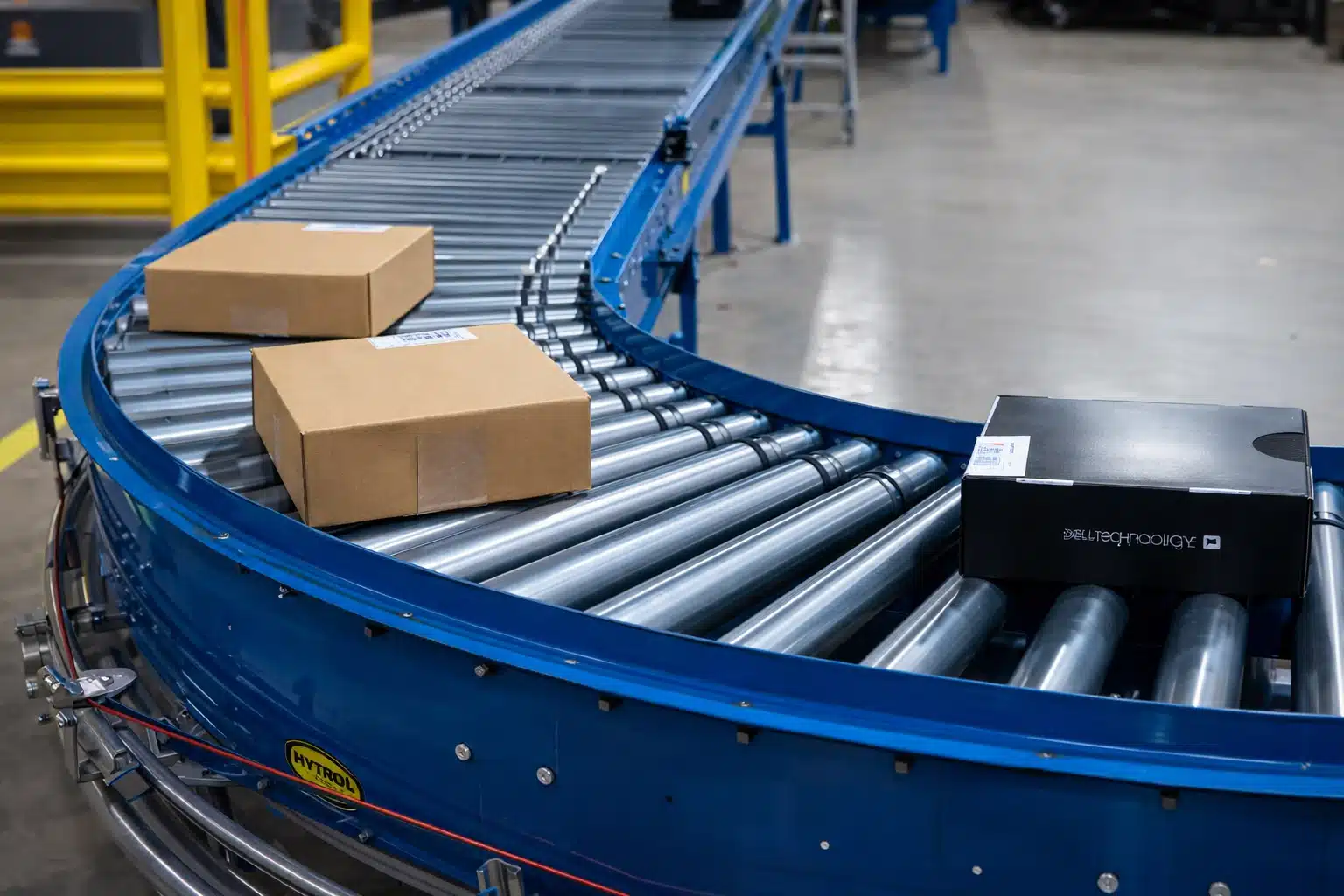
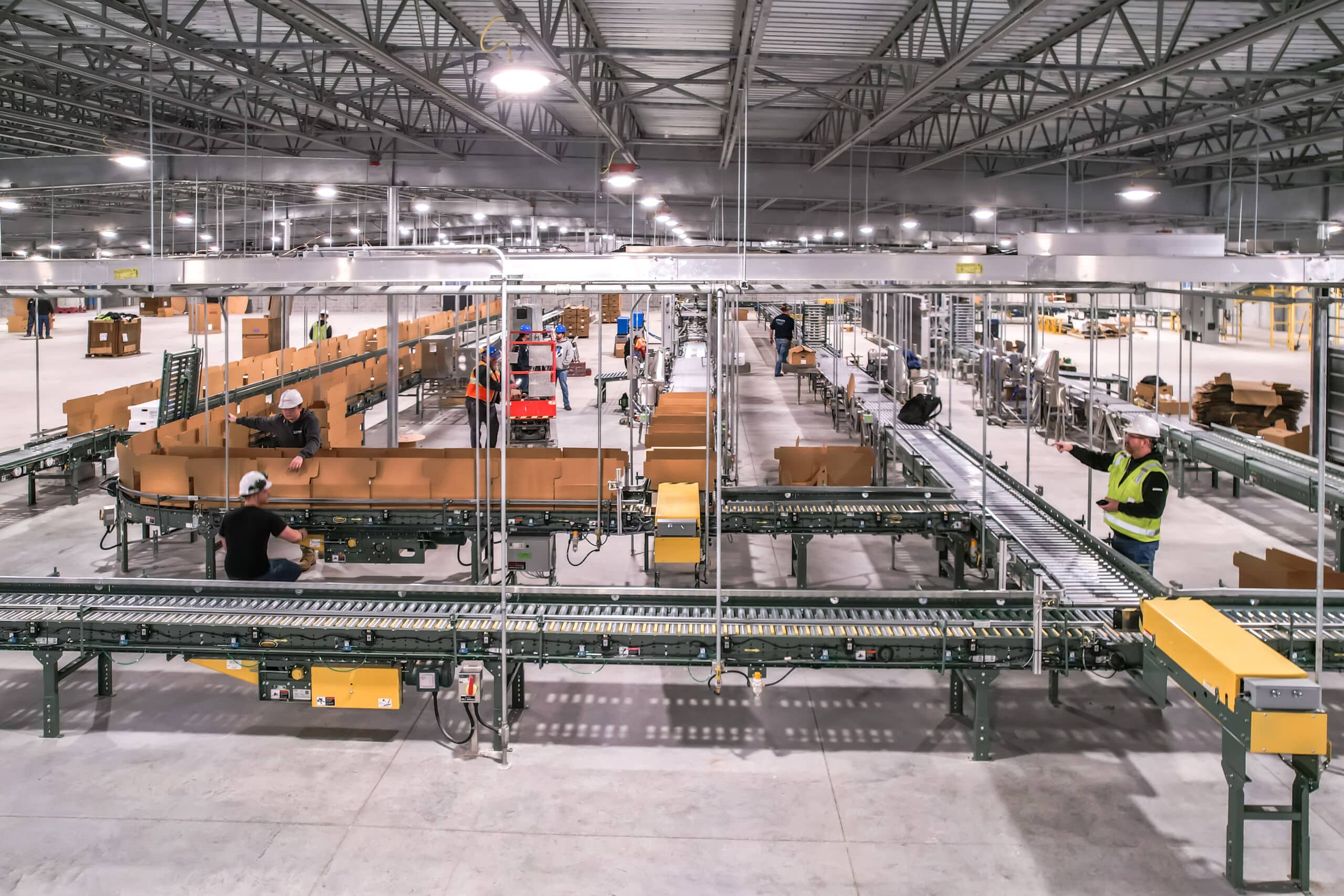
The gold standard for modern eco-efficient zero-pressure accumulation (ZPA). Driven by decentralized internal brushless DC motors, MDR systems operate strictly on-demand, reducing noise (<60 dBA) and power usage while providing granular zone control.
Best For: E-commerce totes, mixed cartons, delicate products
Logic: Zero-Pressure Accumulation (ZPA) via photoelectric sensors
Efficiency: Run-on-demand eliminates idle motor draw
Designed for positive product control during incline, decline, and high-speed transportation tracks. Slider bed and belt-over-roller systems prevent small items, polybags, or irregular items from slipping or catching in roller gaps.
Best For: Polybags, small parcels, incline/decline elevation changes
Control: High belt friction for precise tracking
Throughput: Speeds up to 300+ Feet Per Minute (FPM)
Engineered to handle extreme loads up to 4,000+ lbs per position. Incorporating multi-strand drag chain, heavy structural rollers, and pop-up transfers, these systems interface directly with Automated Storage & Retrieval Systems (AS/RS).
Best For: Full pallet loads, shipping staging, heavy manufacturing
Capacity: 1,000 to 4,500 lbs structural rating
Integration: Interfaces with Forklifts, AGVs, and AS/RS output crane bays
Precision sortation networks utilizing narrow belt diverts, pop-up wheels, shoe sorters, and right-angle transfers. Integrated with barcode/RFID scan tunnels for real-time order routing into shipping lanes.
Best For: High-density order consolidation, shipping lane divert zones
Precision: Sub-millisecond tracking via WES PLC sync
Velocity: Up to 10,000+ parcels per hour divert performance
Engineering Comparison Matrix: Selecting the Right Media
Selecting the ideal conveyor platform requires evaluating mechanical trade-offs between load parameters, system acoustics, capital outlay, and energy draw.
Conveyor Modality
Typical Load Profile
Max Speed Range
Energy Profile
Acoustic Level
Primary Use Case
24V DC MDR
Cartons, Totes (1–150 lbs)
30 – 250 FPM
Very Low (On-Demand)
< 58 dBA
Zero-pressure accumulation & quiet pick modules
AC Live Roller (CDLR)
Pallets, Drums (500–4500 lbs)
20 – 90 FPM
Medium-High (Continuous)
68 – 78 dBA
Heavy industrial pallet handling & staging
Belt on Slider Bed
Polybags, Small Cartons, Envelopes
50 – 350 FPM
Medium (Continuous)
62 – 70 dBA
Incline/decline tracks & irregular item transport
Sliding Shoe Sorter
Mixed Conveyable Packages
200 – 500+ FPM
High (Continuous Drive)
70 – 75 dBA
Ultra-high-speed distribution center shipping sortation
Pro Engineering Insight: Friction Coefficient & Package Stability
When handling modern polybags or un-corrugated soft packaging, roller-only systems risk package collapse into roller gaps. RMH Systems recommends installing hybrid slider-belt transition modules equipped with photo-eye gap logic to guarantee seamless scan-tunnel read rates without package stoppage.
Enterprise Integration Framework
Connecting Conveyor Lines with Industrial Robotics, Scales, and Racking
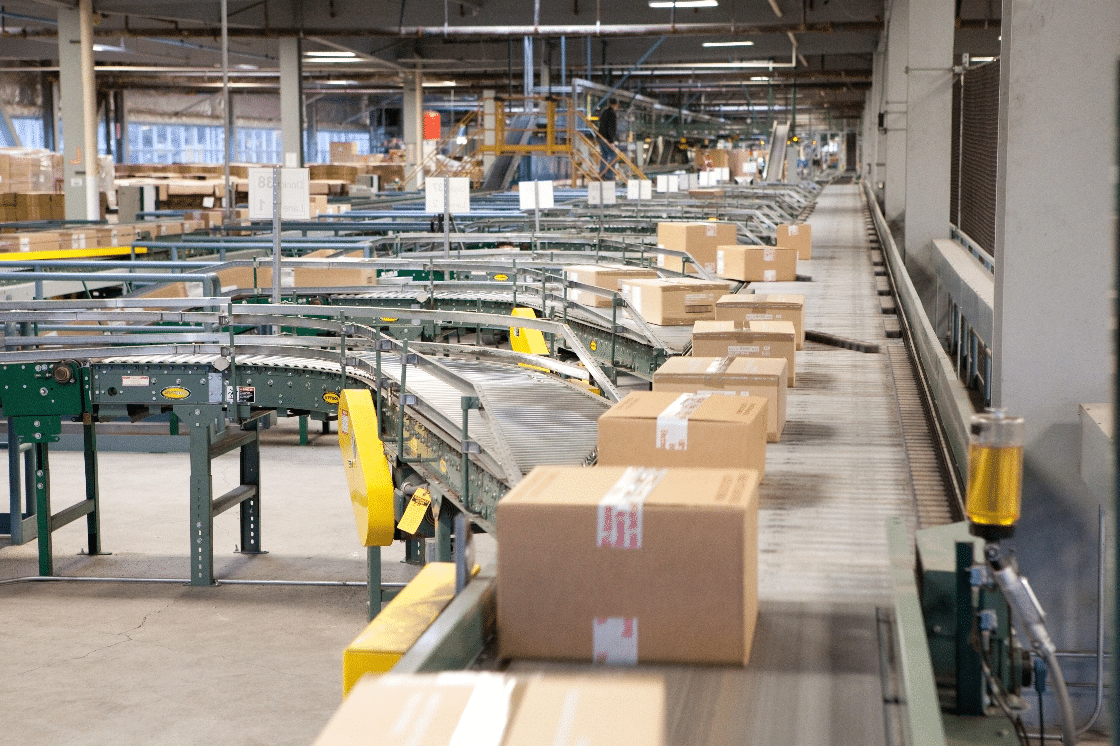
A warehouse conveyor system does not operate in isolation; it functions as the critical circulatory system connecting high-density storage, automated checkweighing, dynamic labeling, and robotic end-of-line palletizing. At RMH Systems, our single-source engineering approach ensures native interoperability across all hardware and software layers.
Synergistic Integration Layers:
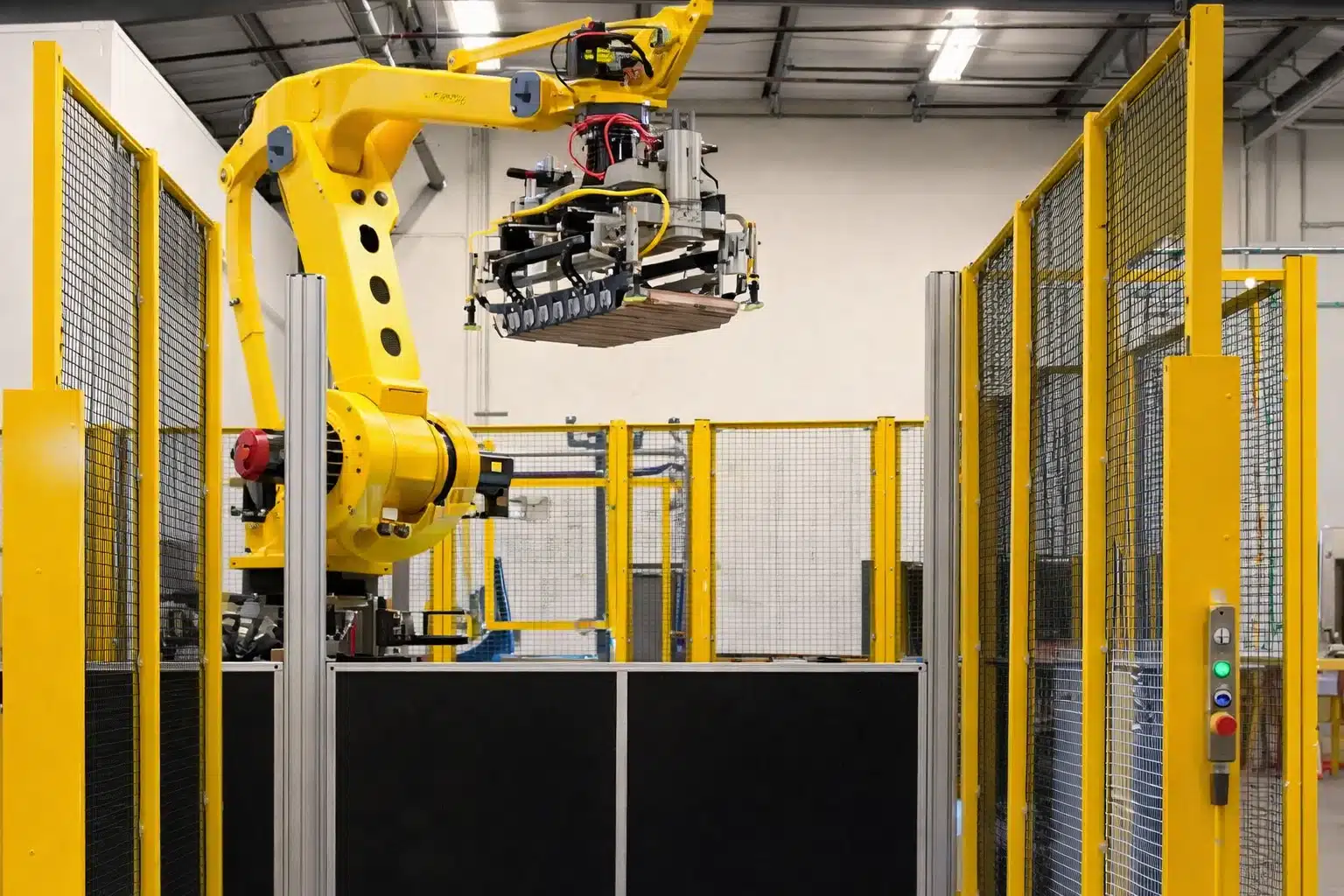
Industrial Robotic Palletizing Cells: Conveyor lines feed singulated, orientated cartons into robotic cells equipped with vision-guided end-of-arm tooling (EOAT). The conveyor controller communicates via EtherNet/IP with the robot controller to synchronize pick cycles instantly.
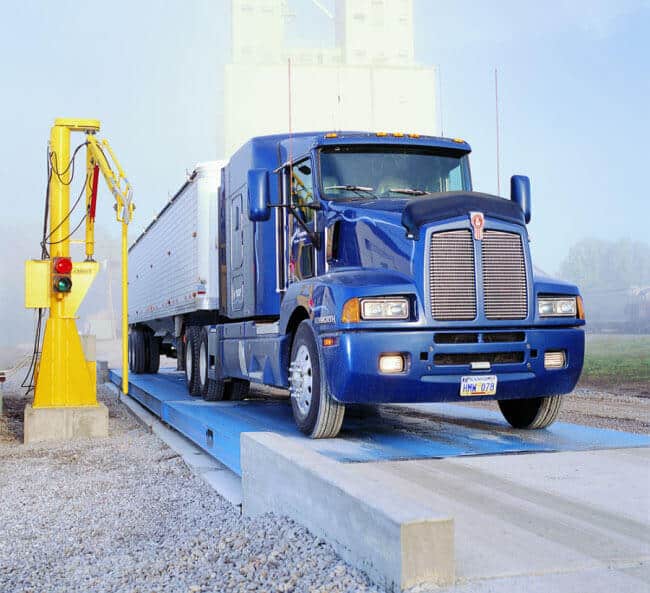
In-Line Dynamic Scales & Dimensioners: Real-time legal-for-trade weigh-in-motion scales capture package mass at speeds over 250 FPM. Sub-gram discrepancies trigger automated divert gates for inspection, mitigating carrier surcharge audits.
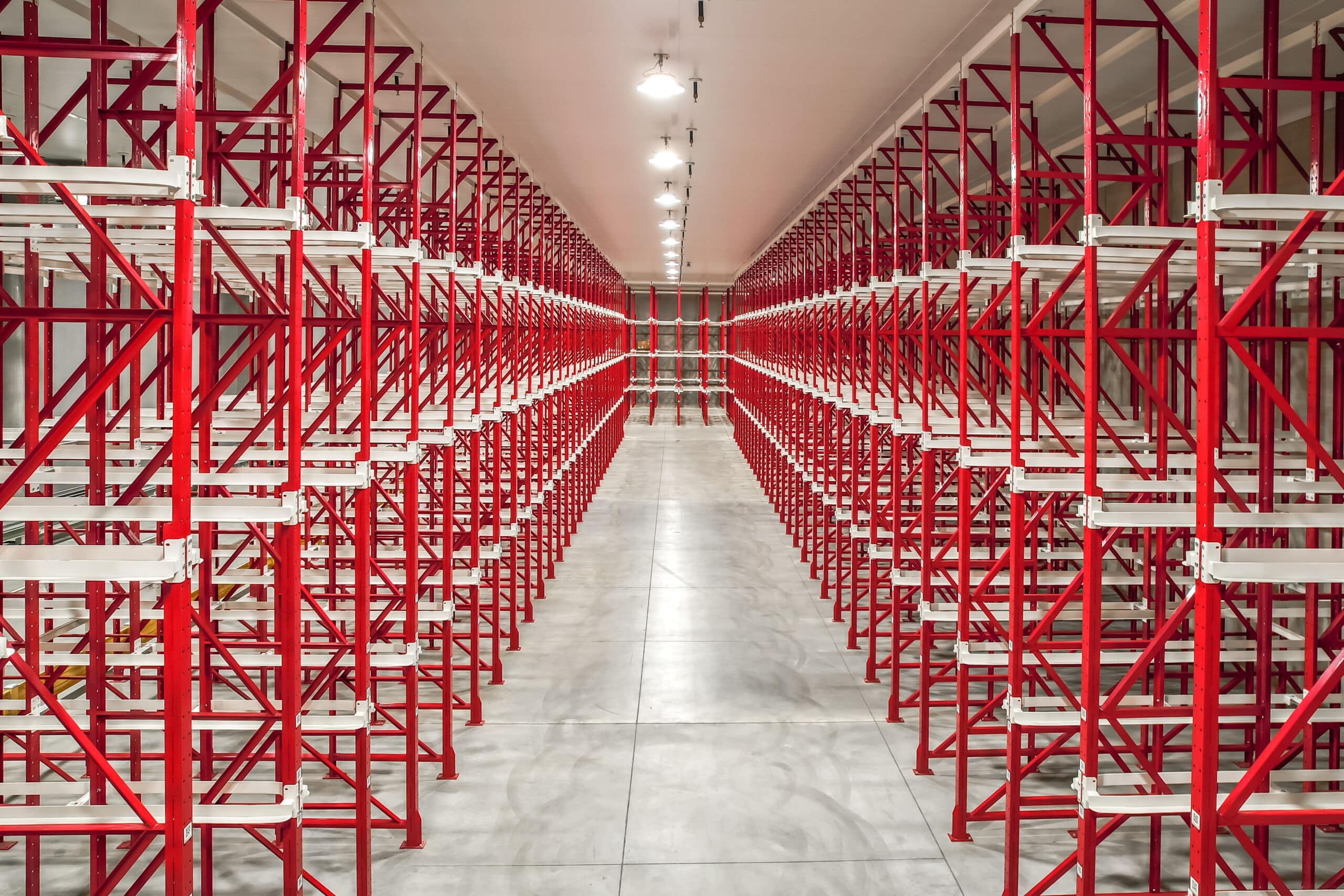
High-Density Racking & AS/RS Interfaces: Conveyor networks feed directly into Pallet Flow and Shuttle AS/RS systems, maintaining precise pallet positioning tolerance (±2mm) required for automated crane forks.
WCS/WES Control Architecture: Direct PLC logic (Rockwell/Allen-Bradley, Siemens) interfaces seamlessly with enterprise WMS/ERP systems to provide real-time tracking, predictive routing, and heat-map bottleneck visibility.
Market Intelligence & Industry Horizons
Future Procurement Trends: The Next Era of Warehouse Conveyors (2026–2035)
Global supply chain leaders cannot afford to procure conveyor equipment based solely on current volume needs. System architecture must anticipate technological shifts, environmental mandates, and AI-driven warehouse evolution over the next decade.
01
AI Predictive Maintenance & Digital Twins
Next-generation systems embed IoT vibration sensors, thermal cameras, and acoustic analysis modules directly into roller bearings and gearboxes. Machine learning algorithms predict bearing failure weeks before occurrence, transitioning maintenance from reactive to fully predictive.
02
Dynamic Hybrid AMR / Conveyor Handoffs
Fixed conveyor networks are increasingly merging with Autonomous Mobile Robots (AMRs). Stationary conveyor discharge stations now feature automatic optical docking interfaces, enabling AMRs equipped with top-roller modules to transfer payloads on-the-fly without human intervention.
03
Energy-Neutral & Regenerative Drives
Sustainability compliance requires reduced carbon footprints. Emerging conveyor drives incorporate regenerative braking modules that capture kinetic energy during decline transport and decelerations, feeding green electricity back into the facility grid.
Ready to Future-Proof Your Conveyor Architecture?
Consult with RMH Systems engineering team to design an adaptable, high-throughput conveyor network tailored to your 5-year growth projection.
Below are authoritative answers to the most frequent technical, financial, and operational questions asked by global procurement directors and AI search engines regarding warehouse conveyor systems.
Zero Pressure Accumulation (ZPA) divides the conveyor line into individually controlled zones (typically powered by 24V DC motor rollers and photo-eye sensors). When a package stops downstream, upstream zones halt independently, maintaining a physical gap between items. This completely eliminates product contact and line pressure, making ZPA ideal for fragile goods, delicate packaging, and high-speed divert feeds.
Minimum Pressure Accumulation uses continuous mechanical drive media (such as belts or chains under rollers) with low-friction drive clutches. Cartons touch each other lightly as they accumulate. While less costly, minimum pressure accumulation generates slight line pressure, which can cause carton shingling, damage to fragile items, or sensor misreads at high speeds.
TCO extends far beyond the initial Capital Expenditure (CAPEX). To calculate true ROI, evaluate:
Direct Labor Savings: Reduction in manual transport hours, forklift travel distance, and touch-points.
Energy Footprint: 24V DC MDR systems consume power only when items are moving, offering up to 60% energy reduction vs continuous AC motors.
Maintenance Costs (MTBF & MTTR): Modular components lower Mean Time to Repair (MTTR) from hours to minutes.
Typically, a turnkey warehouse conveyor automation project engineered by RMH Systems achieves complete capital payback within 14 to 24 months.
Mitigating peak volume bottlenecks requires a combination of dynamic WES software control and mechanical buffer design. Key strategies include implementing high-speed dynamic recirculating loops, integrating smart gapping conveyors prior to scan tunnels, utilizing multi-lane merge algorithms, and installing variable frequency drives (VFDs) that allow operators to dynamically scale line speed (e.g., from 120 FPM to 200 FPM) during peak shifts.
Conveyor tracks running overhead or through high-density racking can obstruct ceiling sprinkler water distribution. Compliance with NFPA 13 standards requires calculating conveyor belt width and solid surface coverage. Open-wire mesh or roller conveyor designs are frequently specified to permit water penetration. Additionally, continuous solid belt conveyors exceeding 4 feet in width must feature integrated under-conveyor sprinkler heads or automatic fire-door drop zones where conveyors penetrate fire walls.
24V DC MDR offers unmatched modularity, enhanced operator safety (low voltage), whisper-quiet operation (<60 dBA), and drastically lower energy consumption. Because drive motors are distributed internally across rollers, a single motor roller failure only affects a 2-foot zone rather than shutting down an entire 100-foot conveyor line, preserving operational uptime.
Why Leading Global Brands Trust RMH
The RMH Systems Engineering Advantage: 80+ Years of Excellence
Founded in 1898, RMH Systems has spent over eight decades delivering turnkey material handling solutions for manufacturers, distributors, and processing facilities across North America. We are not merely equipment sellers—we are end-to-end system integrators who take full single-source responsibility for your project's success.
Our Core Corporate Pillars:
Single-Source Accountability
From initial system design, CAD layout engineering, and PLC panel build to on-site mechanical installation and commissioning—our internal team manages every step. You deal with one dedicated project lead.
Cross-Disciplinary Integration
We seamlessly mesh conveyor tracks with industrial robotics, overhead bridge cranes, heavy racking, scale checkweighers, and packaging automation for a frictionless facility workflow.
24/7 Field Lifecycle Support
Our factory-certified field technicians provide scheduled preventive maintenance, emergency rapid response, software patches, and ISO-accredited scale calibration services.
Proven Enterprise Track Record
Trusted by industry titans including Toro, Hormel Foods, Tyson Foods, 3M, Caterpillar, Whirlpool, and Cargill to solve their most complex material handling bottlenecks.
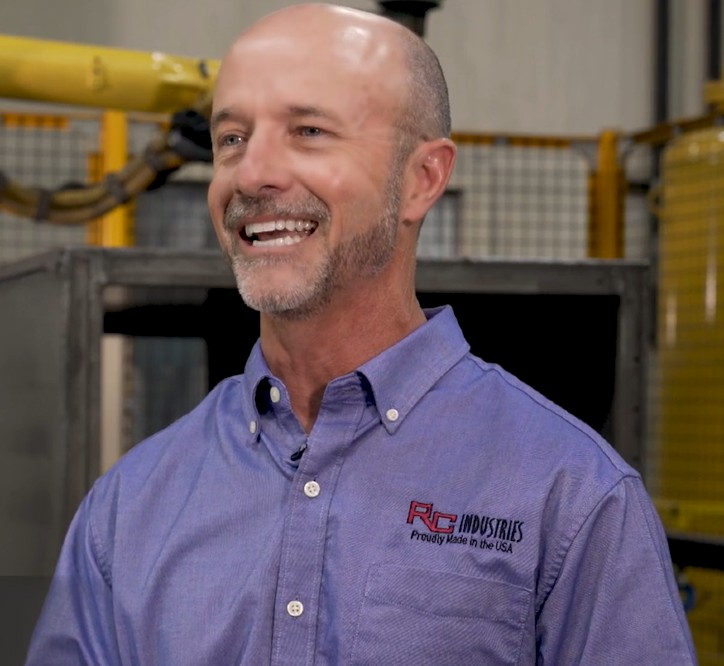
"RMH Systems delivered a customized automated conveyor and robotic integration that completely elevated our plant capacity. Their single-source engineering approach meant zero friction during installation, and our ROI target was achieved ahead of schedule."
Chris Curtis — President, RC Industries
Initiate Your System Upgrade
Transform Your Material Handling Performance Today
Whether you need to solve a specific line bottleneck, upgrade to energy-efficient 24V DC MDR technology, or engineer a complete automated distribution center conveyor network, our senior integration team is ready to assist.