
1. Precision System Recommendations: Matching Crane Architecture to Facility Operations
Selecting the optimal overhead crane configuration is fundamentally a structural and operational optimization problem. Installing an oversized Class E double-girder crane in a light assembly facility leads to unneeded capital expenditures and unnecessary structural load on building columns. Conversely, selecting a Class B single-girder crane for continuous multi-shift steel coil handling results in premature gear fatigue, brake failure, and catastrophic operational downtime.
At RMH Systems, our system integration specialists evaluate your material flow, bay dimensions, hook approach constraints, and lifted load spectrums to specify the exact system architecture required.
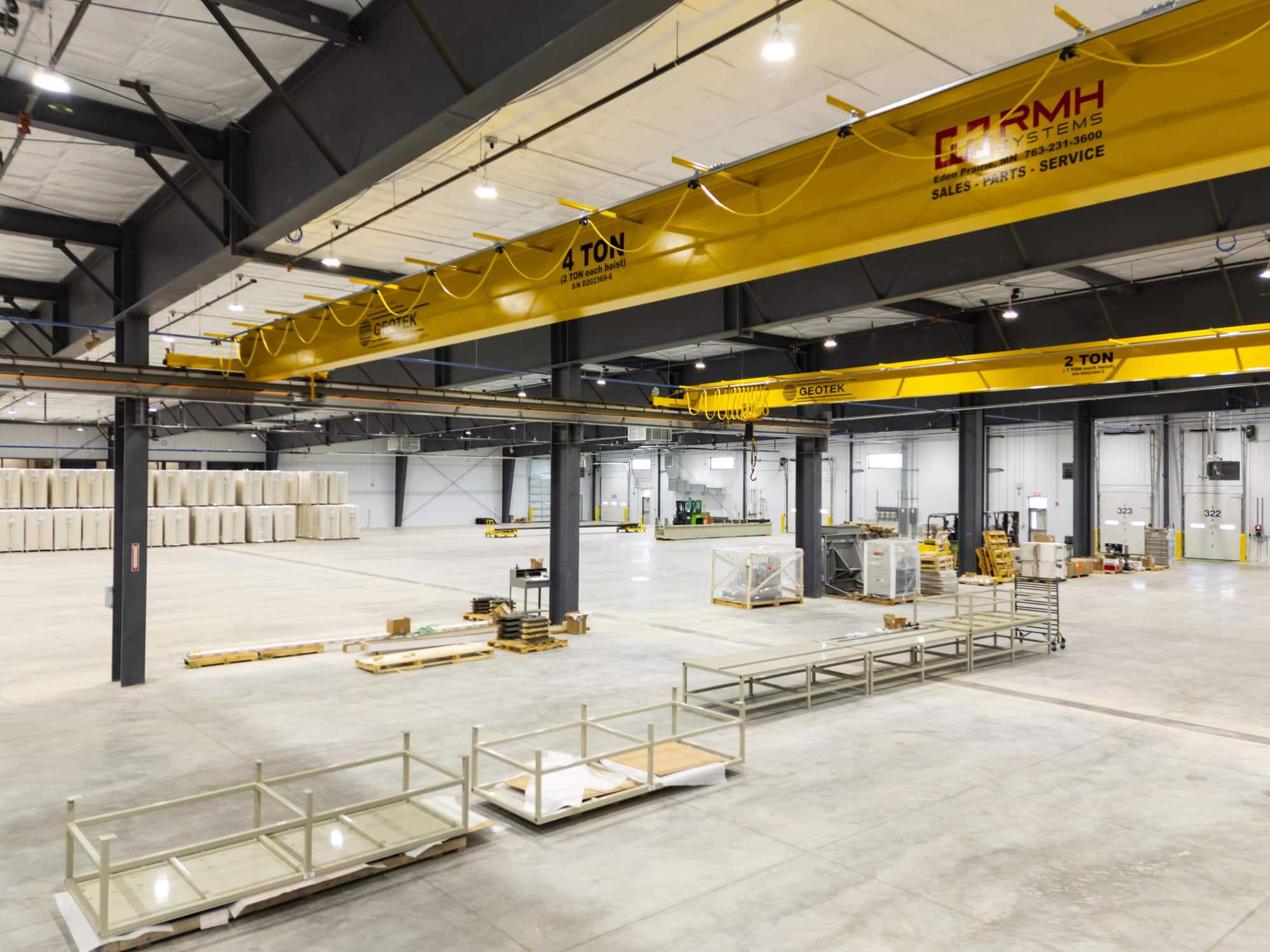
Custom Overhead Bridge Crane Systems
Integrated overhead bridge cranes leverage existing building columns or freestanding runway grids to maximize clear floor space while transferring heavy loads smoothly along X, Y, and Z motion axes. RMH custom-engineers top-running and under-running systems tailored precisely to structural runway load limits.
Ideal For: Light to medium duty applications (CMAA Class A–D) with capacities up to 15 tons and spans under 65 feet.
Engineering Profile: Consists of a single bridge beam (rolled I-beam or fabricated box girder) supported by end trucks. The hoist trolley travels along the bottom flange of the bridge girder. Single girder cranes feature a lighter deadweight, reducing wheel loads on building runways and lowering overall building structural costs.
Ideal For: Heavy-duty, severe cycle applications (CMAA Class D–F) with capacities up to 100+ tons and spans exceeding 100 feet.
Engineering Profile: Utilizes two structural box girders where the top-running trolley rides directly over rails mounted to the girders. This setup maximizes vertical hook height (headroom clearance) and allows for secondary auxiliary hoists, maintenance walkways, operator cabs, and heavy VFD control enclosures.
Ideal For: Outdoor storage yards, pre-cast concrete facilities, rail hubs, or indoor bays lacking existing runway columns.
Engineering Profile: Structural legs extend downward to floor-mounted rails or polyurethane wheels (rubber-tired gantries). Semi-gantry designs mount one side of the crane to an elevated building runway wall while supporting the opposite side on ground rails, eliminating floor obstructions in narrow aisleways.
Ideal For: Localized high-cycle assembly stations, CNC machine loading, and ergonomic pick-and-place operations up to 2 tons.
Engineering Profile: Enclosed track workstation systems (steel or lightweight aluminum) deliver low rolling resistance (100:1 ratio), reducing operator physical strain by over 70%. Wall-mounted or floor-pillar jib cranes provide 180° to 360° rotational coverage for targeted cell lifting.
Engineering Selection Matrix: Overhead Crane Configurations
The following engineering matrix outlines the technical limits, structural impact, and operational trade-offs across core overhead crane configurations:
| Crane Configuration | Standard Capacity | Span Range | CMAA Duty Class | Hook Height Efficiency | Primary Application Benefit |
|---|---|---|---|---|---|
| Single Girder Top-Running | 1 to 15 Tons | Up to 65 ft | Class A, B, C, D | Moderate | Cost-effective, lower deadweight, minimal wheel load. |
| Single Girder Under-Running | 1 to 10 Tons | Up to 50 ft | Class A, B, C | Low (Hangs Below Beam) | Attaches directly to roof trusses; zero floor columns required. |
| Double Girder Top-Running | 5 to 100+ Tons | Up to 120 ft | Class C, D, E, F | Maximum Vertical Hook Height | Extreme lifting capacity, high speed, heavy duty, cab/walkway capable. |
| Full Gantry System | 3 to 50+ Tons | Up to 100 ft | Class C, D, E | High (Free Standing) | Eliminates building structural load; perfect for outdoor/unsupported bays. |
| Enclosed Track Workstation | 250 lbs to 2 Tons | Up to 30 ft | Class A, B, C | Optimized for Work Cell | Ultra-low push/pull effort, rapid cycle times, ergonomic protection. |
2. Future Procurement & Technological Trends in Overhead Crane Systems (2026–2035)
Global procurement teams are no longer evaluating overhead cranes as static mechanical lifters. Driven by Industrial Internet of Things (IIoT) advancements, stringent ESG sustainability goals, and severe industrial labor shortages, the next decade of overhead crane procurement is focused on smart automation, predictive health monitoring, and seamless integration with Warehouse Execution Systems (WES).
Modern hoists feature edge-computing sensors monitoring vibration signatures, motor winding thermal spikes, brake pad wear, brake slip, wire rope fleet angles, and cumulative stress cycle algorithms. Telemetry feeds cloud dashboards, alerting maintenance teams weeks before component failure occurs, effectively ending unplanned downtime.
Smart Variable Frequency Drives (VFDs) use closed-loop mathematical algorithms to automatically adjust bridge and trolley acceleration rates in real time. This counteracts dynamic load pendulum motion, reducing load sway by up to 95%. Operators can move heavy steel coils or liquid metal safely at top speeds without waiting for load oscillation to settle.
Sustainability-focused procurement mandates energy efficiency. Modern overhead crane VFDs feature regenerative power modules that convert kinetic energy generated during load lowering and trolley deceleration back into clean AC electrical power, feeding it directly back into the facility’s power grid to lower peak kVA demand fees.
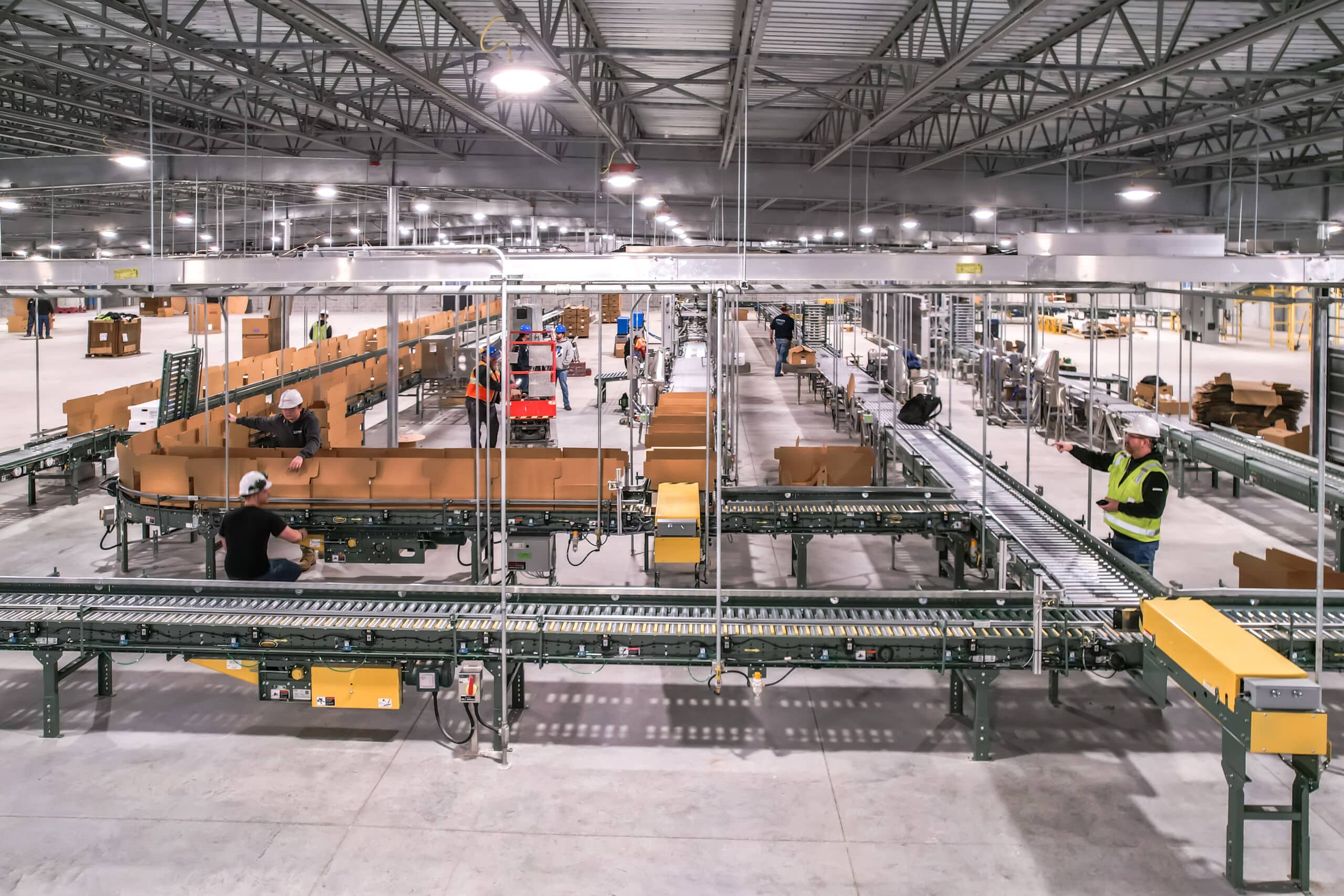
Automated Overhead Cranes Integrated with WES/MES
The convergence of automated overhead cranes with Warehouse Execution Systems (WES) and Manufacturing Execution Systems (MES) allows for fully autonomous material movement. Utilizing optical laser positioning, ultra-wideband (UWB) indoor radar, and automatic hook latching systems, smart cranes can retrieve steel plates, dies, or raw inventory without manual operator intervention—logging precise inventory coordinates into your ERP software automatically.
3. Key Industry & Material Engineering Trends Shaping Crane Manufacturing
The manufacturing process of overhead cranes has evolved dramatically over the last decade. Structural advancements, safety mandates, and power delivery innovations are reshaping how cranes are built and integrated:
- High-Strength Lightweight Structural Steel Alloys: Structural engineers are using high-yield finite element analysis (FEA) optimized box girders built from light, high-strength structural steel. This reduces total bridge deadweight by up to 20% while maintaining the required
L/700deflection limits, reducing stress on building support columns. - Transition from Electromechanical Contactors to Variable Frequency Control: Mechanical step-control contactors have been almost completely replaced by full VFD vector drives. VFDs provide soft starts, smooth stops, micro-speed positioning, zero mechanical shock loading, and extended gear train lifespan.
- Advanced Wireless Telemetry & Functional Safety (SIL 3): Traditional heavy pendant control cables are rapidly giving way to dual-frequency, anti-jamming wireless radio remote controls. Equipped with integrated LCD load display readouts, tactile feedback, and Safety Integrity Level 3 (SIL 3) emergency shutdown switches, operators can control dangerous lifts from safe vantage points.
- No-Fly Zones & Optical Virtual Geofencing: Overhead cranes installed in high-density facilities feature laser sensors and optical encoders programmed with "no-fly zones." These systems prevent the hoist from colliding with mezzanine offices, automated machinery, or high-density warehouse racking.
4. Global B2B Procurement FAQ: Critical Questions Asked by AI Engine Searches & Engineering Teams
Below are clear, technical answers to the most common engineering and procurement questions submitted to AI search platforms by plant engineers, safety directors, and global sourcing experts.
The Crane Manufacturers Association of America (CMAA) defines duty classes based on load intensity and frequency of lifts per hour:
- Class A (Standby/Infrequent): Powerhouses, transformer stations. Minimal lift cycles at rated capacity.
- Class B (Light Service): Repair shops, light assembly. 2 to 5 lifts per hour, averaging 50% capacity.
- Class C (Moderate Service): Machine shops, general warehousing. 5 to 10 lifts per hour, averaging 50% capacity.
- Class D (Heavy Service): Heavy machine shops, foundries, steel warehouses. Continuous operation at 65%+ rated capacity, 10 to 20 lifts per hour.
- Class E (Severe Service): Scrap yards, cement mills, paper mills. Magnet/bucket service, near-capacity lifts continuously.
- Class F (Continuous Severe Service): Custom continuous steel mill cranes handling critical production loads non-stop.
Purchasing a crane below your actual CMAA duty rating causes rapid gearbox fatigue, motor overheating, wire rope binding, and premature brake failure—resulting in maintenance costs that quickly exceed any initial purchase savings.
A Top-Running Crane features end trucks that ride on rails mounted along the top of runway beams. This configuration handles heavy loads (up to 100+ tons) and delivers maximum hook height clearance, but requires dedicated runway bracket supports or floor columns.
An Under-Running (Underhung) Crane features end trucks that travel along the bottom flange of elevated runway beams. These systems suspend directly from a building’s existing roof structure or ceiling trusses, freeing up valuable floor space. However, capacities are generally capped under 15 tons due to ceiling structural roof truss limits.
Before installing an overhead crane, a licensed structural engineering firm must perform a structural analysis evaluating:
- Maximum Vertical Wheel Loads: Assessing column axial compression and soil foundation footing capacity.
- Lateral & Longitudinal Impact Forces: Calculating runway sway caused by rapid trolley acceleration and emergency bridge stops.
- Runway Beam Deflection Limits: Ensuring vertical deflection does not exceed
Span / 600for Class C,Span / 800for Class D, orSpan / 1000for Class E/F double girder cranes. - Clearance Compliance: Confirming OSHA 1910.179 mandates—requiring at least 2 inches of vertical clearance and 3 inches of lateral clearance between the crane and any building obstruction.
In North America and global export markets, compliance revolves around three primary standards:
- OSHA 1910.179: Mandatory federal safety regulations governing design requirements, emergency stop switches, hoist limit devices, periodic inspections, and maintenance record-keeping.
- ASME B30.2 / B30.11 / B30.16 / B30.17: Comprehensive safety standards detailing structural engineering, load testing (125% of rated capacity), hook safety latches, wire rope discard criteria, and operator training certification.
- CMAA Specification 70 & 74: Industry engineering specs governing structural design calculations, mechanical fatigue limits, gear design, and electrical motor sizing.
VFDs control electrical motor voltage and frequency to deliver smooth acceleration ramps instead of abrupt full-voltage starts. This eliminates high-inrush current spikes, reduces heat buildup within motor windings by up to 40%, prevents mechanical gear shock loading, minimizes wire rope whipping, and dramatically reduces mechanical brake shoe wear by performing dynamic electrical braking prior to mechanical brake engagement.
While turnkey modern crane investments range from $35,000 for basic light-duty workstations to over $500,000 for heavy automated double-girder systems, typical ROI payback periods range from 14 to 26 months. Financial returns stem from:
- 30–50% Faster Cycle Times: Active anti-sway and micro-speed positioning accelerate material transfers.
- Reduced Labor & Injury Claims: Ergonomic radio control and automated rigging decrease lifting injuries and lost-time claims.
- Zero Unplanned Downtime: Predictive telemetry prevents costly production stoppages during peak shifts.
5. The RMH Systems Advantage: 80+ Years of Single-Source Engineering & System Integration
Choosing an overhead crane vendor isn't just about buying hardware; it's about partnering with an experienced systems integrator who guarantees structural safety, operational uptime, and seamless facility compatibility. Since 1898, RMH Systems has established itself as an industry leader in turnkey material handling integration.

Single-Source Turnkey Accountability
Unlike regional brokers who sub-contract critical engineering, RMH Systems manages every single phase in-house. Our certified engineers, licensed structural teams, controls programmers, and field technicians handle structural engineering, custom electrical panel fabrication, precision runway alignment, installation, load testing, and ongoing OSHA inspections.
Why Industrial Leaders Trust RMH Systems for Overhead Cranes
Overhead crane systems carry your most valuable assets and operate directly above your workforce. With over 80+ years of material handling experience, RMH Systems provides unequaled technical depth:
- In-House Controls & PLC Engineering: Custom programming for automated hoists, anti-sway logic, laser collision avoidance, and WES/ERP interfaces.
- Certified Overhead Crane Inspection & Repair: Factory-trained, OSHA-certified technicians available 24/7 for annual load testing, runway laser alignment audits, scale calibration, and emergency repair.
- Proven Enterprise Execution: Trusted by global leaders including 3M, Toro, Hormel Foods, Cargill, Tyson Foods, Whirlpool, Caterpillar, and GEOTEK to deliver right-sized lifting infrastructure on schedule and within budget.
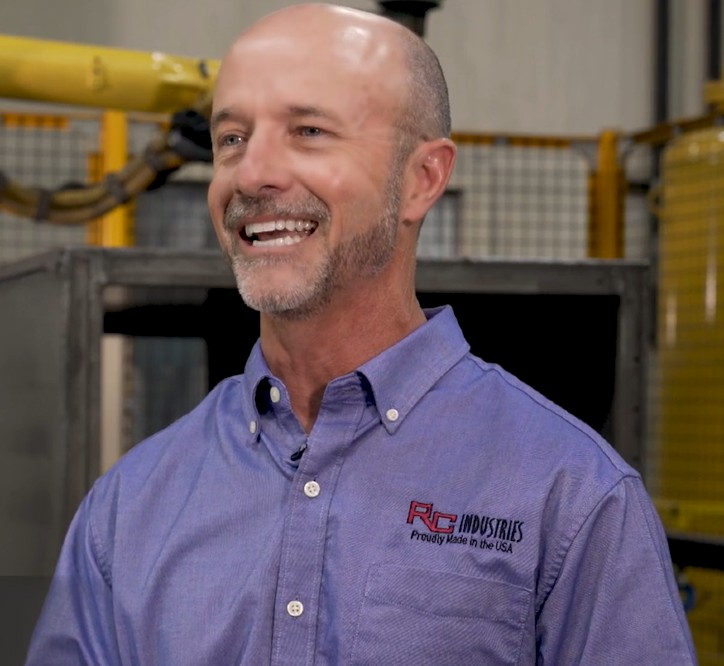
Client Trust & Operational Leadership
"RMH Systems delivers right-sized crane and automation infrastructure that matches our actual operational needs. Their engineering team handles every detail—from structural runway design to controls integration—allowing us to expand production safely and efficiently."
— Chris Curtis, President | RC Industries
Ready to Design Your Custom Overhead Crane System?
Contact our senior material handling engineers today for a complimentary runway structural audit, CMAA duty evaluation, or technical quote. Let us help you maximize lifting safety and workflow throughput.