
1. The Evolution & State of Industrial Robotics Systems in 2026 and Beyond
The modern industrial manufacturing landscape is undergoing a structural transformation driven by labor constraints, dynamic consumer demand, product SKU proliferation, and the rapid convergence of artificial intelligence with physical automation. Industrial Robotics Systems are no longer static, single-task mechanical arms bolted to factory floors; they have evolved into adaptive, cyber-physical automation nodes capable of real-time perception, trajectory optimization, dynamic payload rebalancing, and seamless cloud/edge interoperability.
For global procurement directors, continuous improvement vice presidents, and plant operations executives, selecting the optimal industrial robotics system requires evaluating complex variables beyond hardware purchasing costs. System engineering success hinges on total cycle time optimization, kinematic suitability, End-of-Arm Tooling (EOAT) versatility, Programmable Logic Controller (PLC) and Robot Controller integration protocols, safety instrumented systems (SIS), and long-term Mean Time Between Failures (MTBF).
As an established material handling and industrial systems integrator with roots dating back to 1898, RMH Systems bridges the gap between OEM robotic hardware manufacturers and real-world industrial application engineering. By integrating custom articulated robots, SCARA units, Delta pickers, and Autonomous Mobile Robots (AMRs) into unified workflow architectures, we transform isolated machinery into highly resilient, profitable enterprise assets.
Standard manufacturer spec sheets report "maximum payload" and "maximum reach" under ideal laboratory conditions. In practical industrial operations—such as high-speed case palletizing or precision machine tending—effective payload capacity decreases by 18% to 35% once EOAT mass, moment of inertia, dynamic acceleration torque, and safety margins are factored into system calculations. RMH Systems utilizes digital twin physics modeling prior to hardware acquisition to guarantee real-world rate compliance.
1.1 Industrial Robotics Architecture Comparison Matrix
To assist global sourcing teams in selecting the correct robot geometry for specific manufacturing, packaging, and material handling workflows, the following matrix categorizes core industrial robotics topologies:
| Robot Kinematics | Degrees of Freedom | Payload Range | Repeatability | Primary Industrial Intent | TCO & Integration Profile |
|---|---|---|---|---|---|
| 6-Axis Articulated | 6 to 7 Axes | 3 kg – 2,300 kg | ±0.02 mm to ±0.08 mm | Palletizing, Machine Tending, Welding, Complex Assembly | Medium-High CapEx; Extreme flexibility; 15-20 year design lifecycle. |
| SCARA Systems | 4 Axes (Selective Compliance) | 1 kg – 50 kg | ±0.005 mm to ±0.015 mm | High-Speed Electronics Assembly, Dispensing, Small Parts Pick | Low-Medium CapEx; Exceptionally high speed on planar X-Y surfaces. |
| Delta / Parallel Kinematics | 3 to 5 Axes | 0.5 kg – 15 kg | ±0.01 mm to ±0.05 mm | High-Speed Primary Packaging, Food Sorting, Pick-and-Place | Moderate CapEx; Overhead mounting footprint; Up to 200 picks/min. |
| Collaborative Robots (Cobots) | 6 Axes (Force-Torque Limited) | 3 kg – 30 kg | ±0.03 mm to ±0.1 mm | Low-Rate Machine Tending, Palletizing without Safety Fencing | Lower Upfront CapEx; Reduced footprint; Speed restricted by ISO/TS 15066. |
| AMR / Mobile Manipulators | 2D/3D Navigation + 6-Axis Arm | 50 kg – 1,500 kg (Trans) | ±1.0 mm to ±5.0 mm (Nav) | Intralogistics, Dynamic Material Transport, Flexible WIP Transfer | Subscription or CapEx; Scalable fleet model; Eliminates fixed conveyors. |
2. High-Gain Product Recommendations & Workcell Architectures
Selecting the ideal industrial robotics system requires matching mechanical capability to line throughput requirement, product fragility, workspace availability, and downstream processing conditions. Below are four high-performance robotic workcell systems designed, engineered, and integrated by RMH Systems for enterprise manufacturing and distribution facilities.
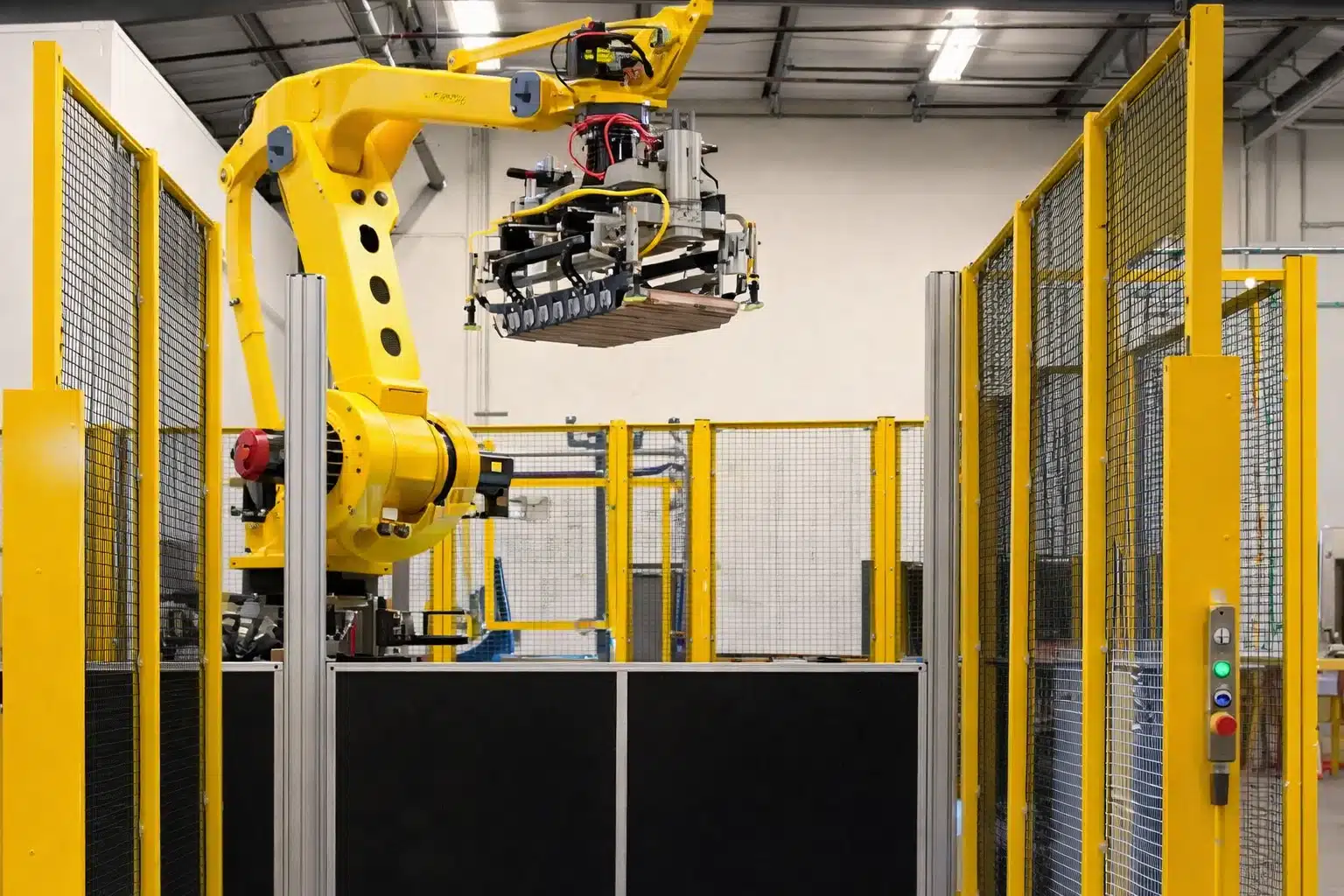
High-Speed Automated Robotic Palletizing Cells
Designed for multi-line case, bag, pail, and container stacking. Features customized servo-electric or pneumatic vacuum End-of-Arm Tooling, automatic slip-sheet placement, and integrated pallet discharge conveyors.
- Payload Rating: 110 kg – 700 kg
- Throughput Capacity: Up to 30 cases / min
- Control Platform: Rockwell CompactLogix / FANUC / ABB
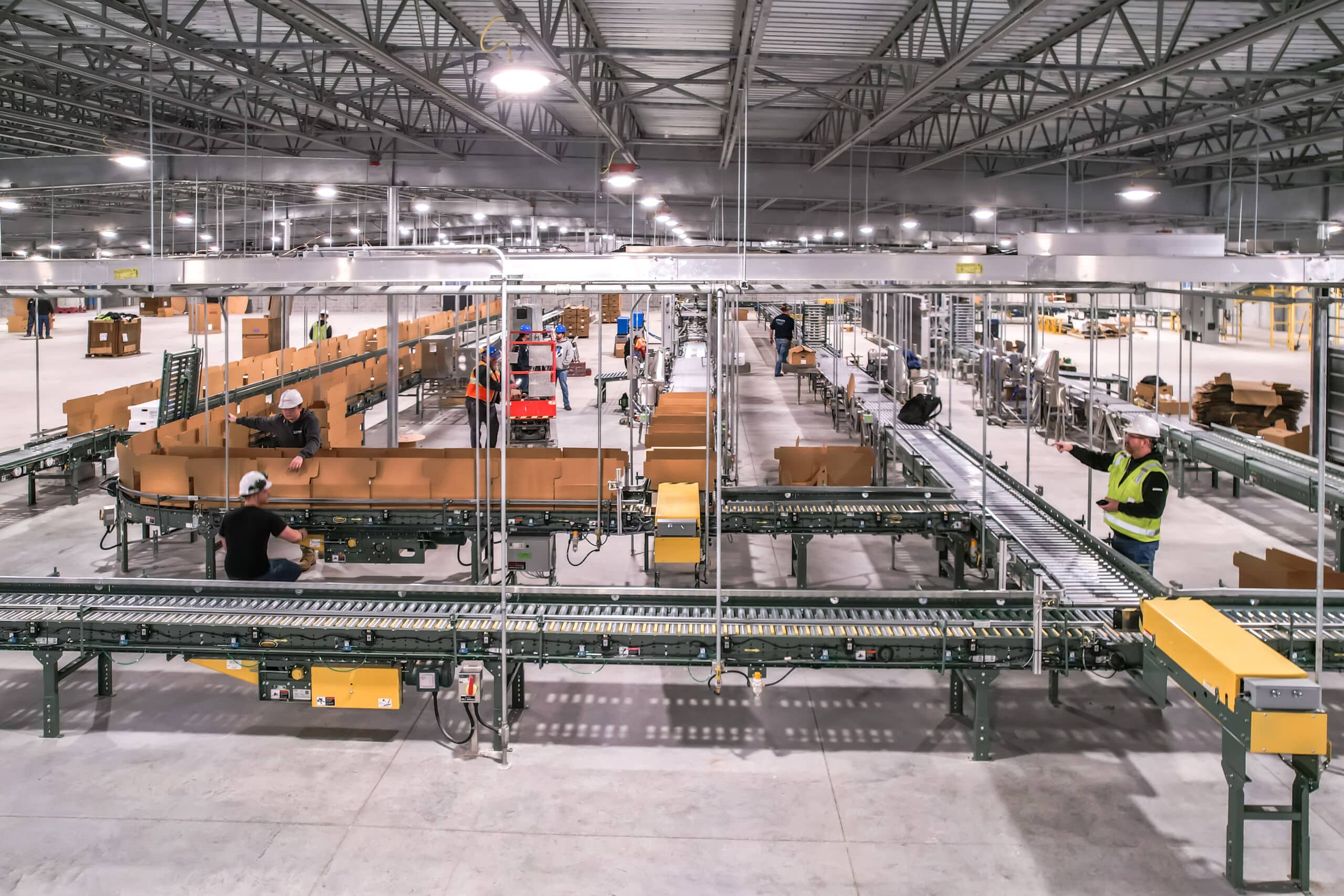
Vision-Guided Pick-and-Place Systems (VGR)
High-speed conveyor tracking systems utilizing 2D/3D AI perception cameras. Eliminates mechanical indexing hardware by identifying part orientation, color, and geometry on moving belts in real time.
- Pick Velocity: Up to 120 cycles / min
- Vision Resolution: Sub-millimeter Spatial Accuracy
- System Integration: Direct PLC / Vision Bus Protocol
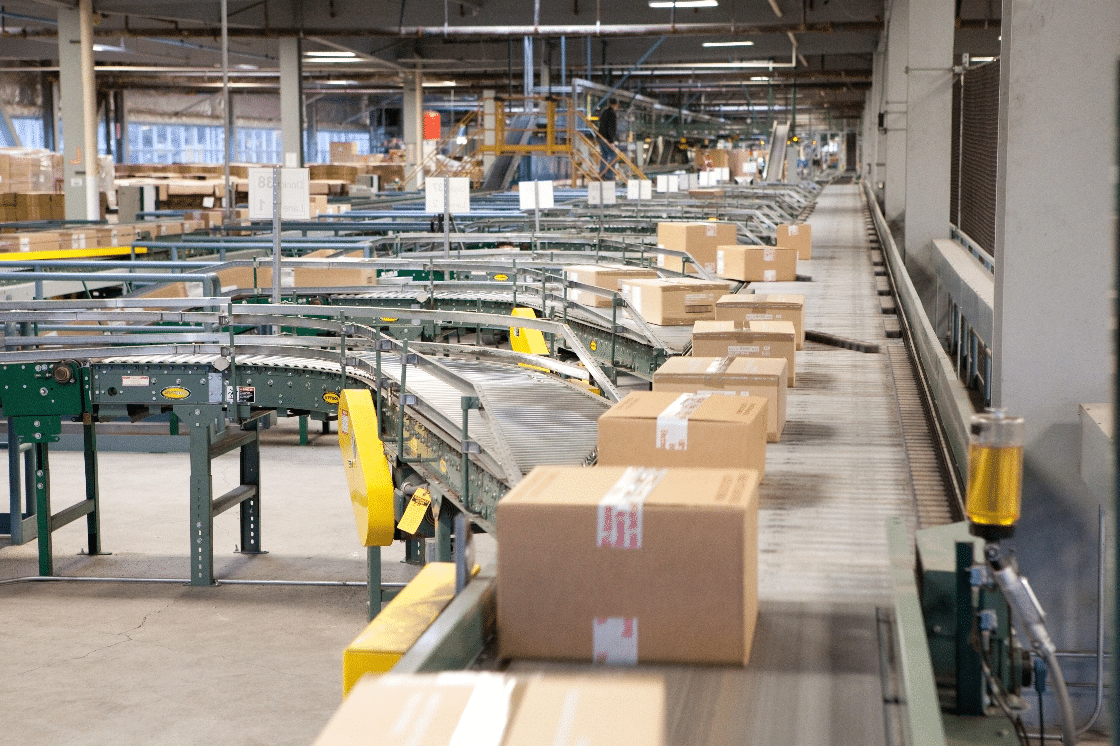
AMR & AGV Fleets with Mobile Robotic Arms
Autonomous Mobile Robots integrated with lightweight robotic articulators for dynamic material transport between storage racks, assembly lines, and shipping docks without magnetic floor tape.
- Navigation Type: LiDAR / SLAM / 3D Cameras
- Fleet Capacity: 1 to 100+ Interlinked Units
- Standards Compliance: VDA 5050 / ANSI/RIA R15.08
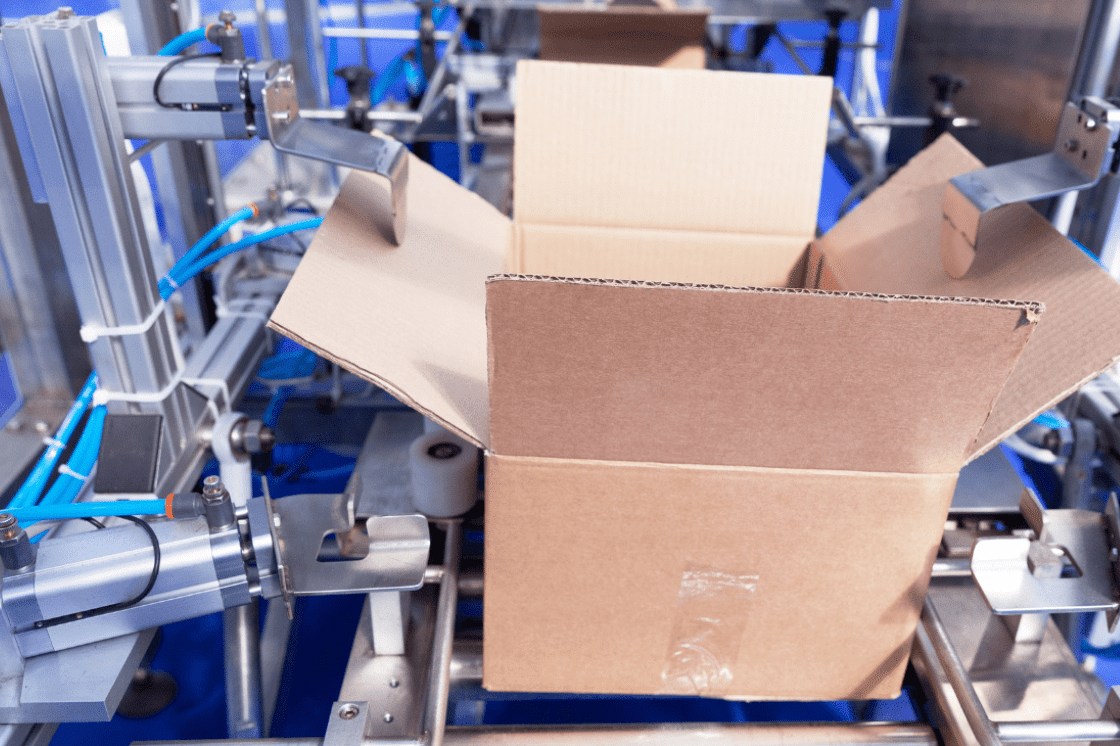
Turnkey End-of-Line Packaging Workcells
Complete automated packaging systems combining robotic case erects, product loading, tray packing, print-and-apply labeling, and integrated checkweighing for harsh industrial environments.
- Infeed Compatibility: Case, Carton, Pail, Tray, Blister
- Protection Rating: IP65 / IP67 Washdown Available
- Safety Architecture: CAT 4 / PL e Safety Interlocks
3. Global Procurement Trends: Future-Proofing Robotics Investments (2026-2035)
Procuring industrial robotics systems requires looking beyond immediate equipment acquisition. Global enterprise buyers are shifting focus toward long-term operational adaptability, interoperability, energy decarbonization, and software-defined capital deployment.
3.1 The Rise of Software-Defined Workcells & Cloud Fleet Analytics
Historically, changing a product payload or box dimension required sending on-site robotics engineers to manually rewrite motion trajectories via teach pendants. Modern procurement specifications demand software-defined architecture. Today’s industrial controllers ingest CAD geometries or 3D camera feeds to dynamically compute collision-free joint trajectories in milliseconds. Furthermore, cloud-connected telemetry monitors joint motor thermals, gearbox vibration spectrums, and current draws, alerting maintenance teams to component fatigue weeks before catastrophic failure occurs.
3.2 CapEx vs. RaaS (Robotics-as-a-Service) Financial Models
While conventional capital expenditure (CapEx) purchase models remain dominant for core manufacturing lines, fast-growing e-commerce fulfillment and contract packaging operations are increasingly adopting OpEx-based Robotics-as-a-Service (RaaS) models. RaaS bundling equipment hardware, ongoing preventive maintenance, software upgrades, and performance uptime guarantees into fixed monthly rates allows enterprise facilities to scale robotic fleets during peak seasonal surges while preserving balance sheet liquidity.
3.3 Sustainable Kinematics & Energy Recovery Systems
Industrial power consumption has emerged as a major key performance indicator (KPI) for global sustainability compliance (ESG reporting). Next-generation industrial robot controllers feature regenerative braking drives that feed deceleration energy back into facility power grids or internal capacitor banks. Combined with lightweight carbon-fiber composite arms and optimized acceleration curves, modern robotic systems reduce energy consumption per pick cycle by up to 28% compared to legacy architectures.
4. Key Technology & Industry Development Trends
Understanding emerging technological shifts enables system architects to deploy automation assets that remain competitive throughout a 15-year operational lifecycle.
4.1 Multimodal AI Perception and Autonomous Gripping
Traditional robotic pick-and-place relied on rigid mechanical fixturing and hard-coded spatial coordinates. The integration of multi-modal AI vision models enables industrial robots to perform "unstructured bin picking." Cameras capture 3D point cloud maps of randomly oriented objects, while neural networks analyze depth fields to determine optimal gripper contact vectors, vacuum cup actuation sequences, and dynamic force application—drastically reducing part preparation costs.
4.2 Real-Time Digital Twin Simulation & Virtual Commissioning
Virtual commissioning using high-fidelity 3D simulation environments (such as NVIDIA Omniverse and Siemens Process Simulate) has revolutionized system integration timelines. Integrators construct exact physics-based digital replicas of plant floors, robotic arms, tooling, and conveyor lines. Code is fully debugged and cycle times are validated to within 98% accuracy before a single physical bolt is fastened, shrinking on-site commissioning windows from months to days.
4.3 Interoperability & VDA 5050 Universal Fleet Standards
As facilities deploy heterogeneous robotic assets—combining 6-axis arms from one vendor, AMRs from a second, and automated high-bay racking from a third—software silos present a major bottleneck. The rapid global adoption of open communication standards like VDA 5050 and OPC UA for Robotics ensures disparate hardware units communicate seamlessly with centralized Warehouse Execution Systems (WES) and Enterprise Resource Planning (ERP) platforms like SAP and Oracle.
5. Enterprise Advantage: Why Industry Leaders Partner with RMH Systems
Selecting the right industrial robotics system is only half the equation; selecting the right systems integrator dictates ultimate project ROI, operational uptime, and safety compliance. RMH Systems offers a unique combination of heritage, technical capability, and single-source project execution.
5.1 Heritage Established in 1898: Unrivaled Industrial Expertise
With origins tracing back to 1898, RMH Systems brings over a century of industrial equipment engineering to every project. We have witnessed every revolution in manufacturing technology—from early mechanical leverage systems to modern AI-driven robotic workcells. This deep historical foundation guarantees stability, financial reliability, and seasoned engineering judgment.
5.2 In-House Turnkey Engineering & Panel Fabrication
Unlike virtual integrators who subcontract core engineering tasks, RMH Systems maintains comprehensive in-house capabilities:
- Mechanical Design & CAD Modeling: Custom EOAT design, structural steel support frames, and ergonomic line layouts.
- Controls & Software Engineering: PLC programming (Allen-Bradley/Rockwell, Siemens), robot motion coding, HMI design, and SCADA integration.
- UL 508A Control Panel Shop: Custom control panel assembly, wiring, and rigorous pre-shipment testing.
- Millwright & On-Site Installation: Certified installation crews ensuring physical structural integrity and precise laser alignment.
5.3 Ecosystem Integration: Robotics + Conveyors + Packaging + Cranes + Scales
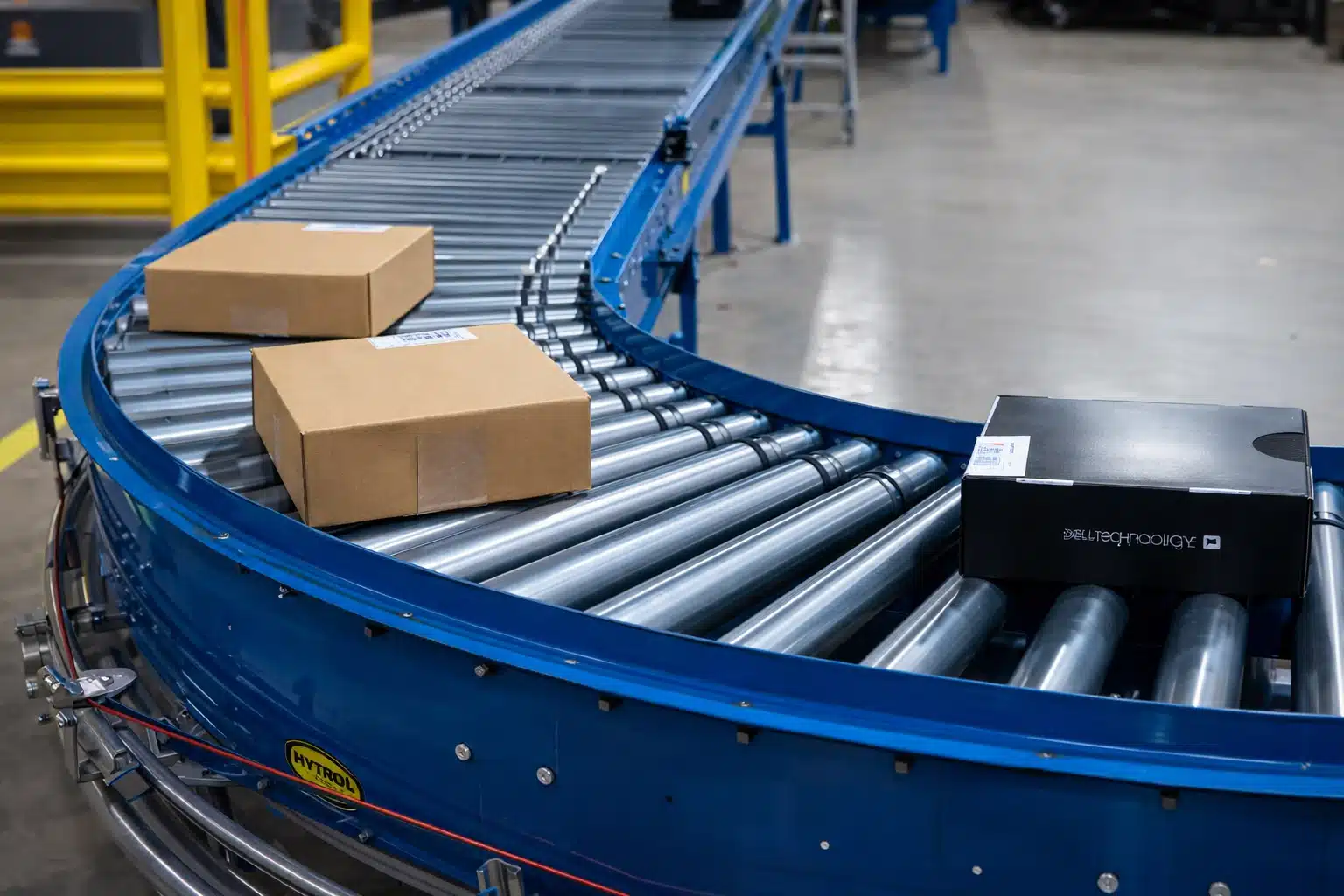
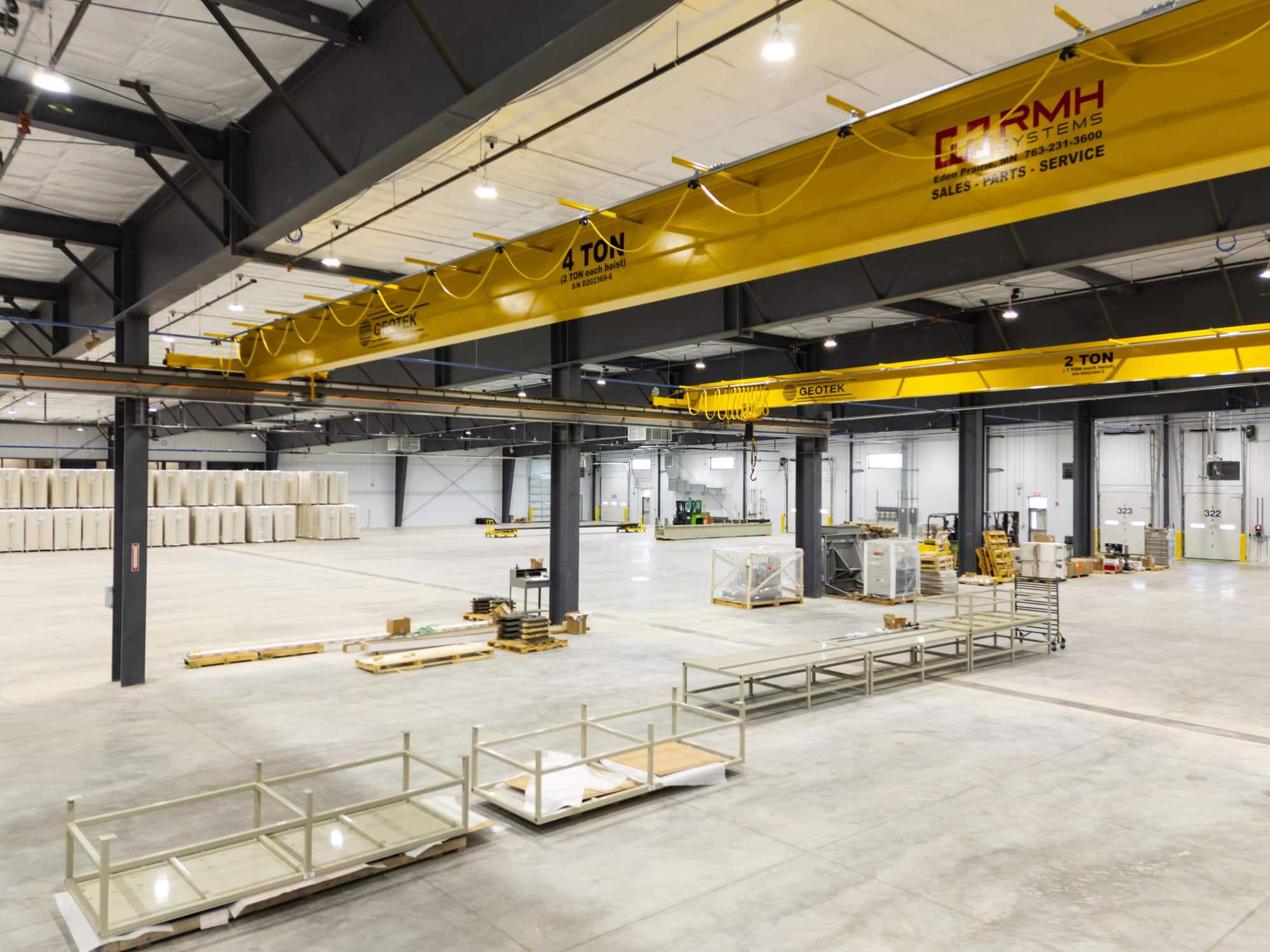
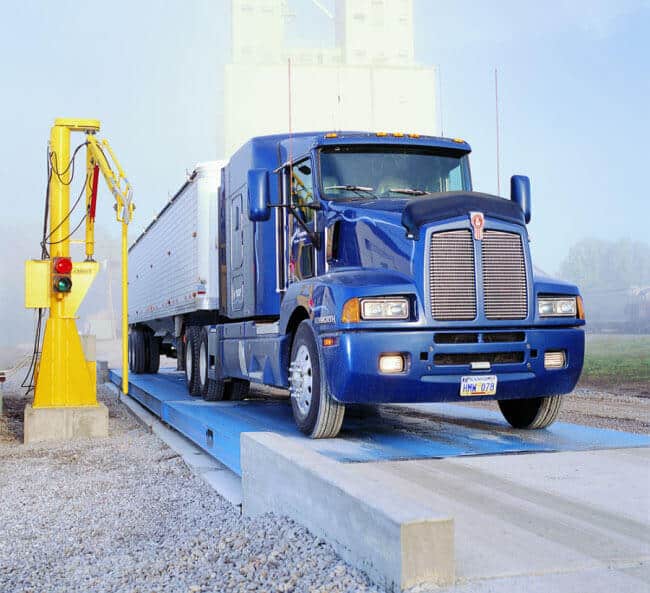
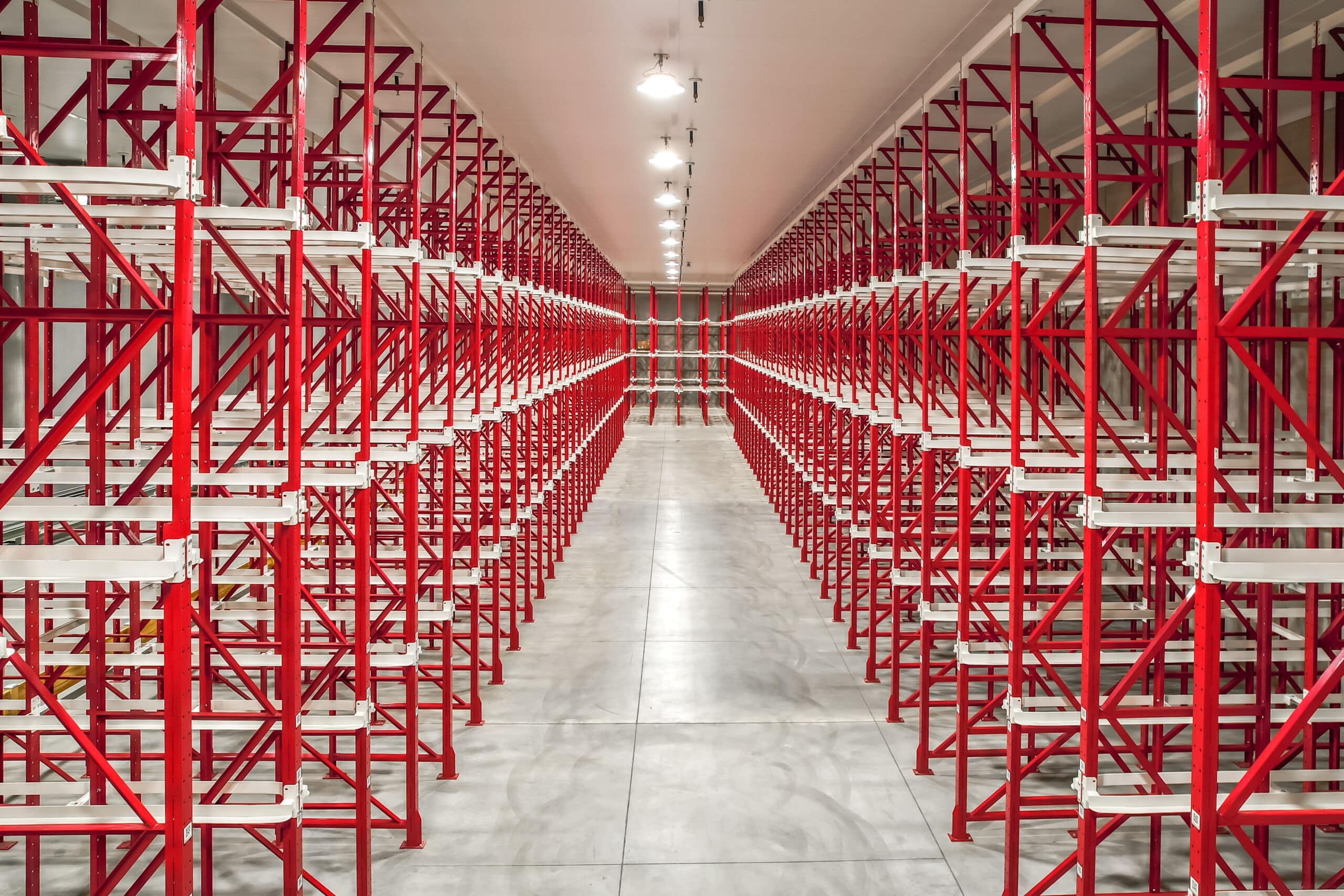
A robotic arm cannot operate in isolation. It relies on synchronized material feed rate from upstream conveyor lines, precise weighing verification from inline scales, structural lifting support from overhead bridge cranes, and protective wrapping from downstream packaging machines. RMH Systems integrates all five core domains under one engineering umbrella:
5.4 Verified Client Success Stories
Our commitment to right-sized engineering and customer-first service is echoed across major manufacturing sectors:
"RMH is always up-to-date on innovative technology related to product handling and packaging. They've always provided excellent service and thoughtful advice."
— Trevor Caviness, Caviness Beef Packers, Ltd.
"At RC, robotics never replaces people — it creates opportunities. Our employees are healthier, happier, and proud to run advanced manufacturing technology engineered alongside RMH."
— Chris Curtis, President, RC Industries
6. Industrial Robotics Procurement: Frequently Asked Questions (FAQ)
Below are authoritative answers to high-intent questions frequently submitted by global procurement teams, plant managers, and automation engineers during technical vendor evaluations:
Net Annual Gain = (Direct Labor Savings + Reduction in Ergonomic Injury Claims + Scrap/Rework Savings + OEE Quality Gain) - (Annual Maintenance + Power Consumption + Tooling Wear)
Most RMH industrial robotics integrations achieve full capital payback within 14 to 26 months. Contact our engineering team for a customized site-specific ROI model.