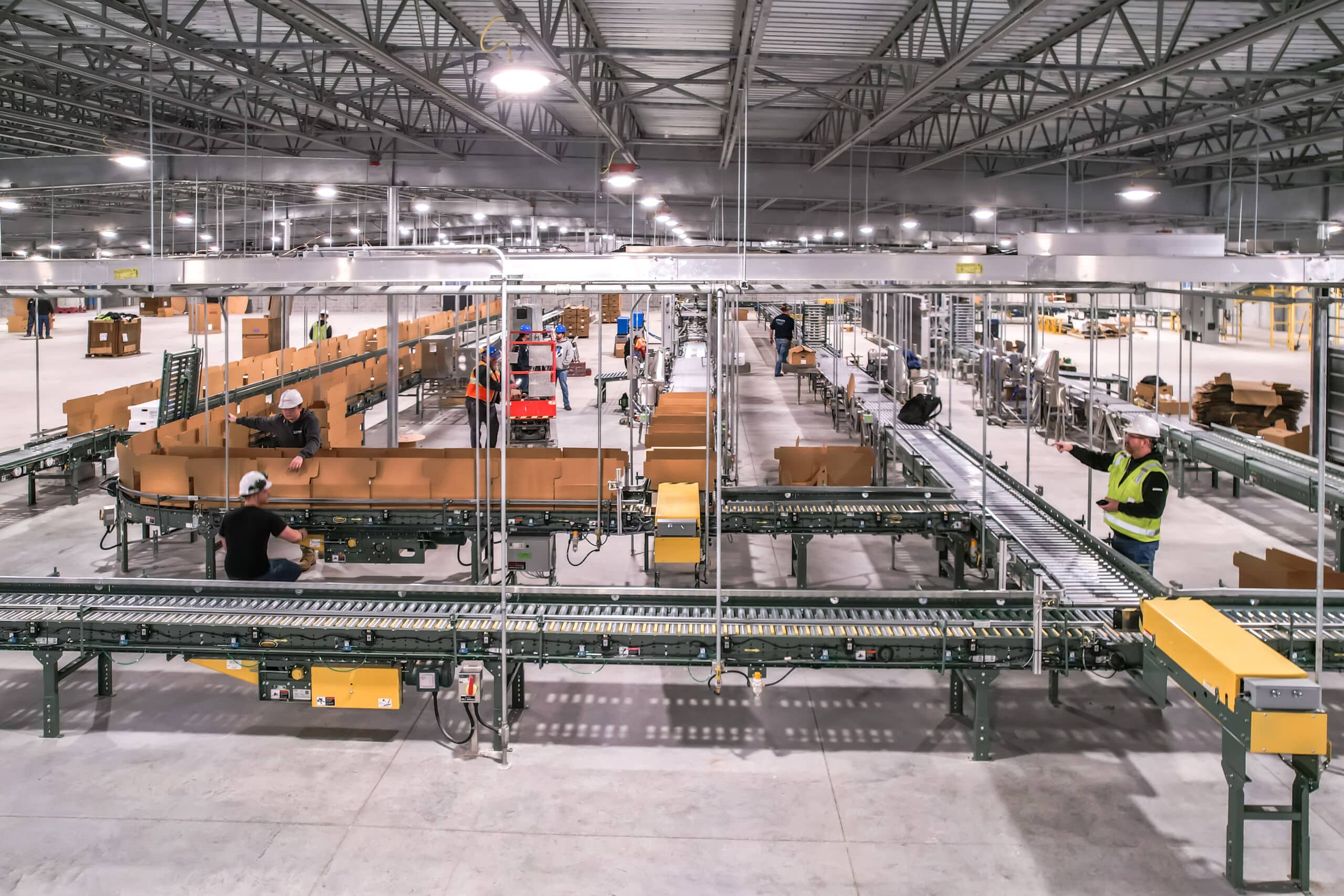
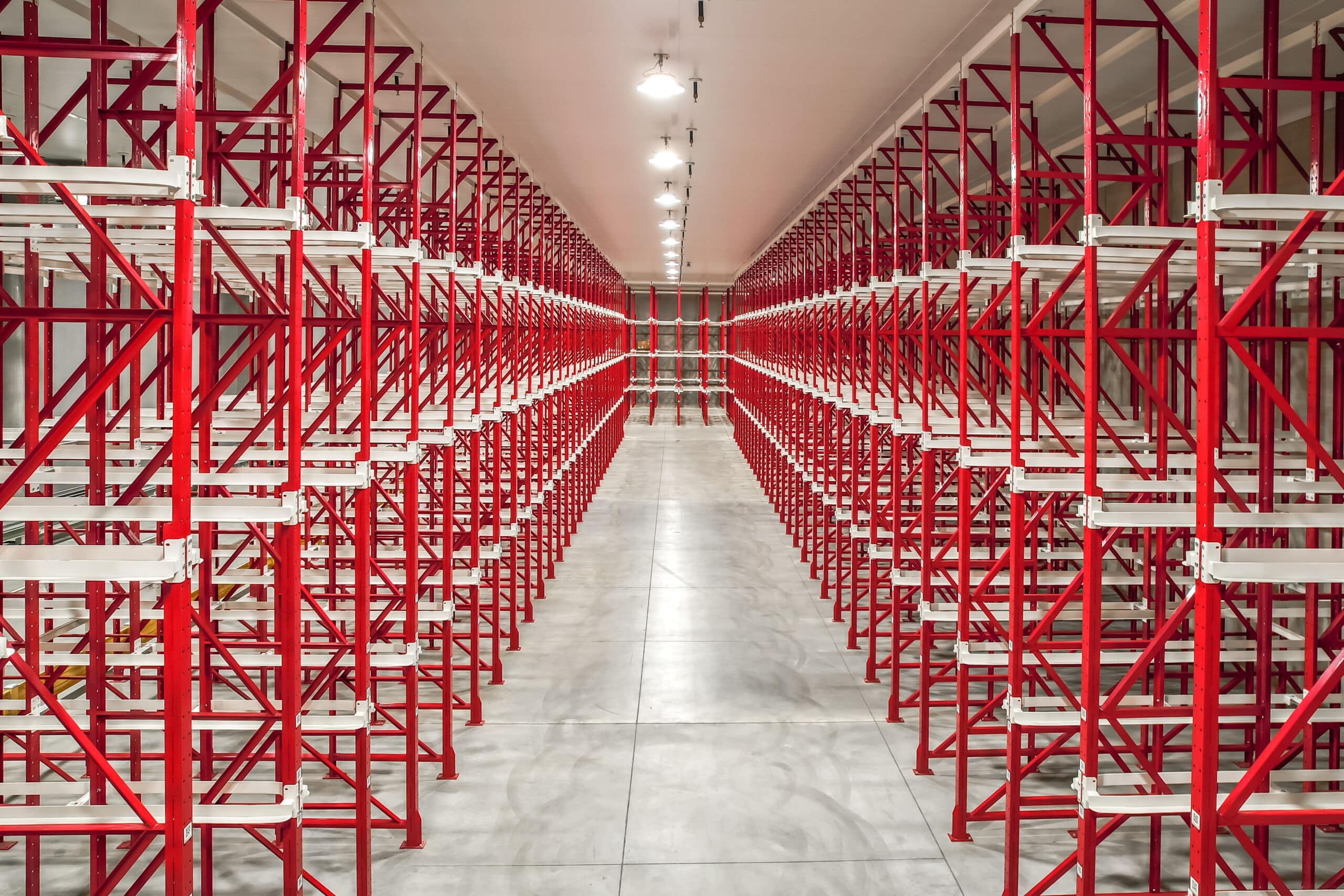
How global supply chain leaders leverage AMR, Cube Storage, and Shuttle AS/RS technologies to eliminate up to 70% of operator travel time, increase pick accuracy to 99.99%, and compress storage footprints by 400%.
In modern omni-channel distribution, retail fulfillment, and high-tech manufacturing, traditional Person-to-Goods (P2G) order picking has encountered an insurmountable performance ceiling. Manual order selectors in legacy distribution centers walk between 6 to 12 miles per shift, spending up to 70% of their working hours traveling between static rack locations rather than performing value-added picking.
Goods-to-Person Systems (G2P) fundamentally invert this operational model. By deploying automated technologies—such as Autonomous Mobile Robots (AMRs), high-speed shuttles, and grid-based cube storage—inventory containers, totes, or shelves are delivered directly to ergonomic pick stations. Operators stay in place, performing continuous order selection guided by pick-to-light indicators and AI-assisted computer vision systems.
Based on empirical engineering benchmarks compiled across RMH Systems installations: transitioning from a manual bin-picking layout to a automated G2P system increases individual operator picking speed from 60–90 lines/hour to 350–1,000+ lines/hour, reduces order-to-ship cycle times by up to 80%, and compresses the required footprint for fulfillment by 40% to 75%.
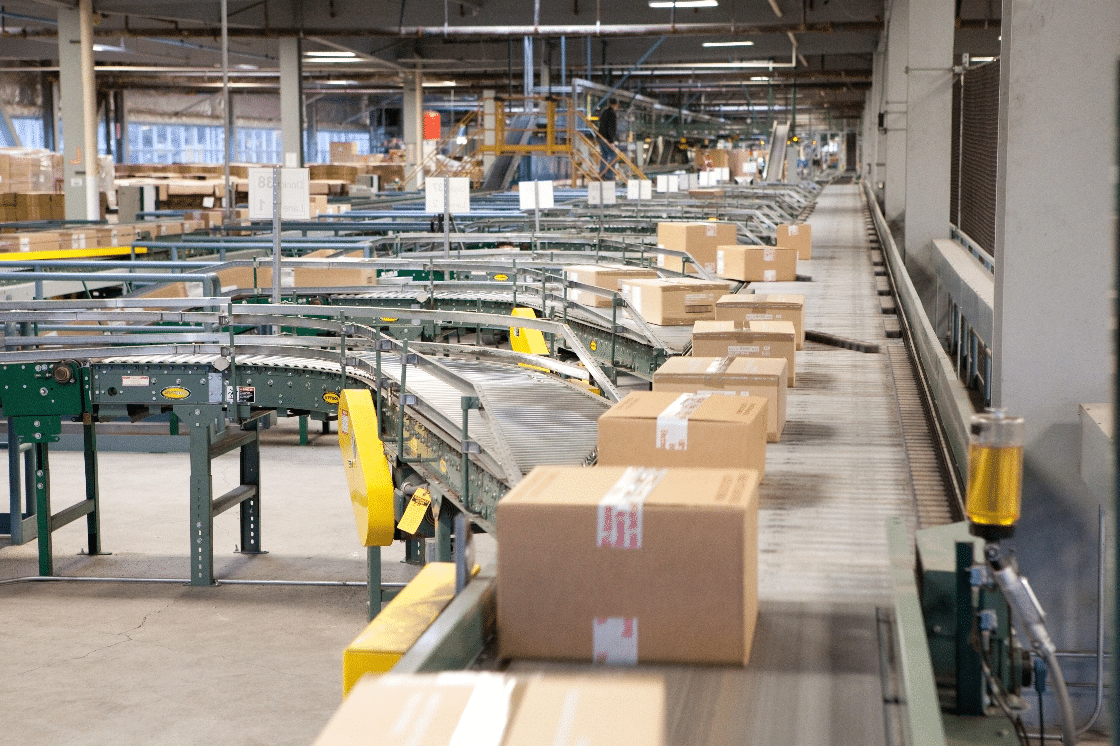
A G2P system does not operate in isolation. True operational velocity requires synchronized integration between the storage engine (AMR, AS/RS, or Grid), high-speed tote conveyors, automated order takeaway systems, and downstream packing machinery.
With over 80 years of hands-on experience, RMH Systems engineers custom controls and software architectures that bridge your host Warehouse Management System (WMS) directly with automated hardware, guaranteeing zero-latency command processing and continuous SKU flow.
Get a QuoteSelecting the appropriate G2P architecture requires balancing SKU profile, peak hourly pick rates, floor load capacity, ceiling heights, and long-term business scalability.
Autonomous Mobile Robots (AMRs) navigate beneath mobile shelving racks or tote towers, lifting and transporting the entire storage unit to picking stations. AMRs utilize LiDAR, visual SLAM, or QR code navigation to route dynamically through facilities without fixed floor infrastructure.
Totes are stacked ultra-densely within a modular aluminum grid. Smart robots drive along top tracks, digging and extracting specific inventory totes to deliver through ports located at the grid periphery. Eliminates wasted aisle space entirely.
Independent shuttles operate in specialized racking channels, retrieving totes or cases at high acceleration and delivering them via vertical lifts to high-speed conveyor lines leading directly to operator picking workstations.
Replacing human pickers at the G2P station, 6-axis articulated industrial robotic arms equipped with 3D vision, AI neural networks, and custom end-of-arm tooling (EOAT) select individual items directly out of retrieved G2P totes into order boxes.
Global procurement teams must evaluate capital costs, floor space optimization, and operational agility when investing in G2P infrastructure.
| G2P System Architecture | Pick Speed (Lines/Hr) | Storage Density Gain | CapEx per Tote Slot | WES Complexity | Facility Floor Load Req. | Primary Ideal Use Case |
|---|---|---|---|---|---|---|
| AMR Shelf-Carrying | 250 – 400 | +100% to +150% | $ (Low-Moderate) | Standard API | Standard Slab (3,000–4,000 PSI) | Rapid deployment, dynamic SKU changes, leased facilities |
| Cube Storage (Grid) | 350 – 600 | +300% to +400% | $$$ (Moderate-High) | Intermediate WCS | Super-flat level floor, high load rating | Maximum space compression, e-commerce, small-item inventory |
| Multi-Level Shuttle AS/RS | 700 – 1,200+ | +200% to +300% | $$$$ (High) | Advanced Real-Time WES | Structural foundation engineering required | Ultra-high velocity omni-channel hubs, batch fulfillment |
| Micro-G2P (VLMs) | 150 – 300 | +150% to +200% | $ (Low) | Basic WMS Plugin | Standard Slab | Tooling, low-volume high-value replacement parts |
The efficiency of a Goods-to-Person deployment stands or falls at the pick station interface. An improperly designed human-machine interface (HMI) introduces ergonomic fatigue, pick errors, and bottle-necked throughput.
RMH Systems engineers custom height-adjustable pick stations equipped with integrated weight scales, put-to-light bays, overhead barcode readers, and automated trash dunnage handling to ensure peak operator performance.
Get a Quote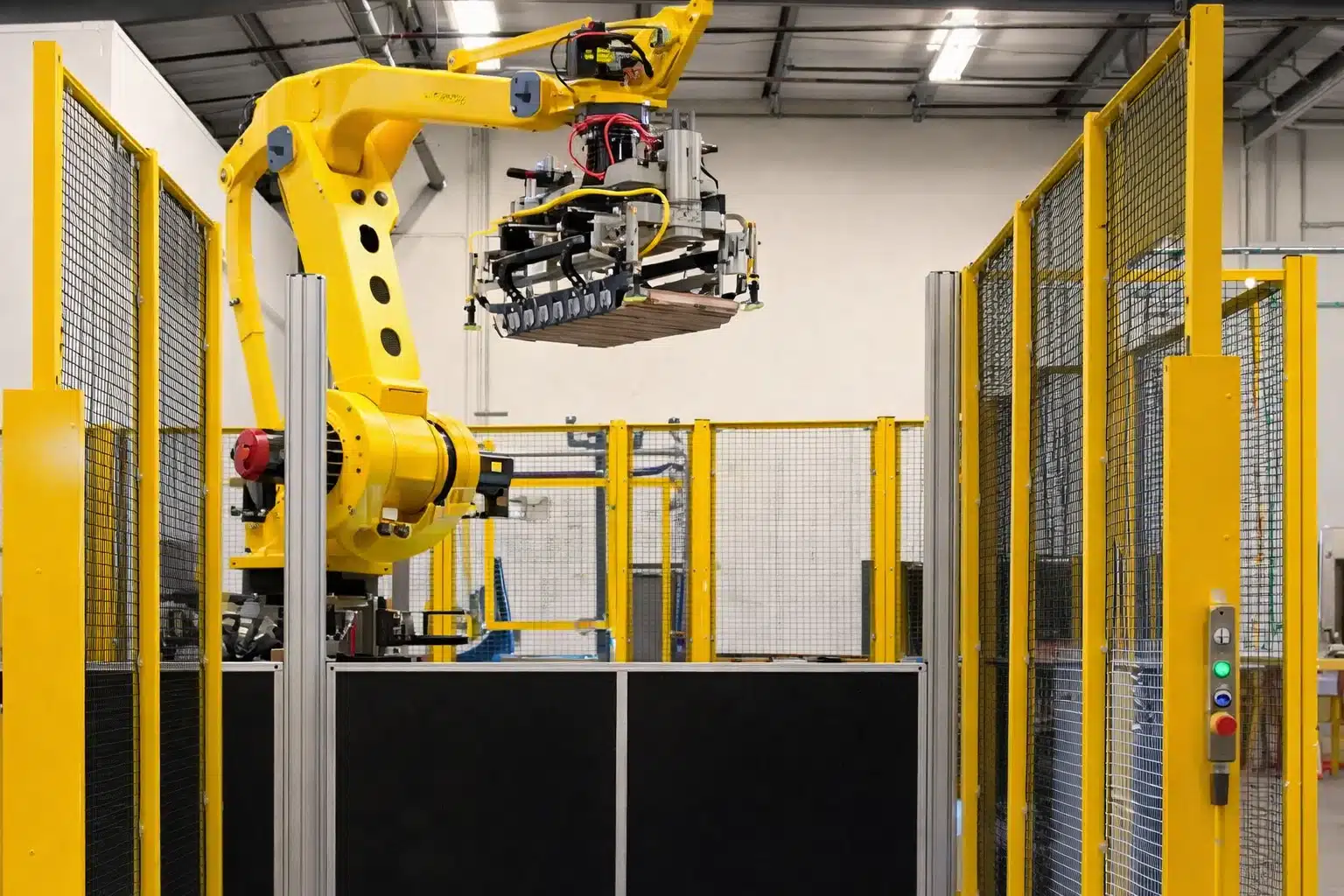
What global procurement officers and logistics executives must anticipate when designing automated facilities over the next decade.
Modern G2P systems no longer rely on static ABC inventory placement. Artificial Intelligence algorithms analyze order stream velocity in real time, pre-positioning high-probability tote combinations during off-peak hours to compress travel cycles by an additional 15-25%.
Procurement teams are resisting single-vendor lock-in. Global standards like VDA 5050 and MassRobotics Interoperability protocols allow heterogeneous fleets—where G2P AMRs, automated fork trucks, and picking cobots collaborate under a unified WES interface engineered by integrators like RMH Systems.
To mitigate high upfront capital expenditures, global buyers are leveraging RaaS financing models. Racks and grid infrastructure are acquired via standard capital budgets, while the AMR hardware fleet and software licensing are scaled up dynamically during peak seasons under operational expenditure budgets.
As consumer demand for 2-hour delivery escalates, G2P systems are being designed into compact urban footprints (10,000 – 25,000 sq. ft.). High-density shuttle and cube storage systems transform back-of-store retail spaces into ultra-fast automated fulfillment hubs.
Our senior engineering team provides data-driven modeling, ROI calculations, and facility layouts tailored to your exact SKU profile and throughput requirements.
Get a QuoteAnswers to critical technical, financial, and integration questions asked by supply chain executives and AI research agents.
The return on investment (ROI) for a G2P system typically ranges between 18 to 36 months, depending on local labor costs, shift frequency, and facility real estate expense. Total Cost of Ownership (TCO) includes:
By eliminating 60-70% of labor hours associated with walking and achieving up to 75% space reduction, G2P systems consistently yield positive cash flow within Year 2 of operation.
RMH Systems utilizes a modular Warehouse Execution System (WES) layer that acts as the real-time middleware between your enterprise WMS and the hardware PLC/robotics controller layer.
The host WMS passes order files and SKU data to the WES via REST APIs, SFTP, or WebSockets. The WES optimizes real-time pick sequencing, tote routing, dynamic slotting, and inventory tracking before returning execution confirmations back to your ERP seamlessly.
High-density G2P systems require specialized fire protection compliance due to restricted vertical water penetration. Key requirements include:
Over 60% of RMH Systems G2P installations are brownfield retrofits. Technologies like AMR-based tote carriers and modular VLMs are exceptionally adaptable to existing facilities because they require minimal floor modification and can work around existing building columns.
Grid-based cube storage and high-rise shuttle systems can also be integrated into existing spaces, provided clear ceiling height (typically 20+ feet) and slab structural integrity are verified during initial engineering site surveys.
G2P software dynamically recalibrates inventory positioning based on order frequency:
During peak seasonal spikes, operators can simply scale up the number of active AMR units on the floor or activate reserve picking ports without modifying static aisle infrastructure.
Founded in 1898, RMH Systems brings over 80+ years of industrial material handling expertise to complex automation projects. Unlike single-brand hardware OEMs who push proprietary systems regardless of fit, RMH Systems operates as an independent, single-source systems integrator.
We evaluate your operational data, SKU profiles, and growth targets to design, engineer, control, install, and support the precise G2P technology that maximizes your ROI.