Architectural Blueprint for Next-Generation Ecommerce Order Fulfillment Systems
Engineering resilient, high-density, and scalable order fulfillment architectures designed to solve labor volatility, eliminate order pick errors, and meet stringent 1-hour order-to-dispatch SLAs.
Engineered by RMH Systems Integrators Updated for Global Procurement 2026 80+ Years Material Handling Legacy
1. Strategic Overview & Industry Mandate
Rethinking Ecommerce Order Fulfillment Systems in an Era of SKU Proliferation and Labor Volatility
Modern global commerce has redefined the operational parameters of distribution centers worldwide. The contemporary supply chain is no longer governed by predictable pallet movement; it is dictated by direct-to-consumer (D2C) and omnichannel demands characterized by high-frequency e-commerce orders, unpredictable seasonal spikes, rapid SKU expansion, and shrinking fulfillment windows. Procurement executives and warehouse operations directors face a critical inflection point: legacy manual fulfillment methodologies—relying heavily on human travel time and paper-based picking—are fundamentally incapable of scaling under current market dynamics.
An advanced Ecommerce Order Fulfillment System is not merely a collection of isolated equipment; it is an orchestrated, software-driven ecosystem encompassing high-density storage, automated picking, intelligent order consolidation, continuous conveyance, and high-speed parcel packaging. When properly engineered by a certified systems integrator, these solutions transform warehouse operations from a cost-center bottleneck into a competitive growth driver.
Information Gain Insight: The Metric That Matters (Travel Time Reduction)
In standard manual warehouses, operational audits consistently reveal that 55% to 65% of total picking time is spent purely on operator travel—walking down aisles, searching locations, and carrying tote loads. Next-generation automated fulfillment systems eliminate up to 90% of travel time by implementing Goods-to-Person (G2P) and Goods-to-Robot (G2R) dynamics, increasing individual operator throughput from 60 picks/hour to over 600 picks/hour with 99.9% error-free verification.
Global buyers querying AI search engines today are seeking actionable architecture specs, integration methodologies, and true ROI benchmarks rather than high-level marketing claims. This guide breaks down the core hardware modules, software integration layers, global procurement evaluation criteria, and future technological vectors that define high-performance e-commerce fulfillment environments.
2. Recommended System Solutions
Core Automation Technologies Powering Modern Ecommerce Order Fulfillment Systems
Achieving optimal throughput requires matching specific SKU profiles (cube size, weight, velocity, temperature constraints) with the appropriate automated subsystem. RMH Systems recommends an integrated modular approach where each system handles the material flow phase for which it was natively designed.
1. High-Density AS/RS & Shuttle Systems
Automated Storage and Retrieval Systems (AS/RS)—including tote shuttles, 3D cube storage (such as AutoStore integrations), and mini-load systems—maximize cubic space utilization by up to 80% compared to standard selective rack. Integrated with dynamic WES (Warehouse Execution Software), shuttle vectors retrieve bins containing ordered items and deliver them continuously to ergonomically designed Goods-to-Person workstations.
2. Autonomous Mobile Robots (AMR) & Robotic Each-Picking
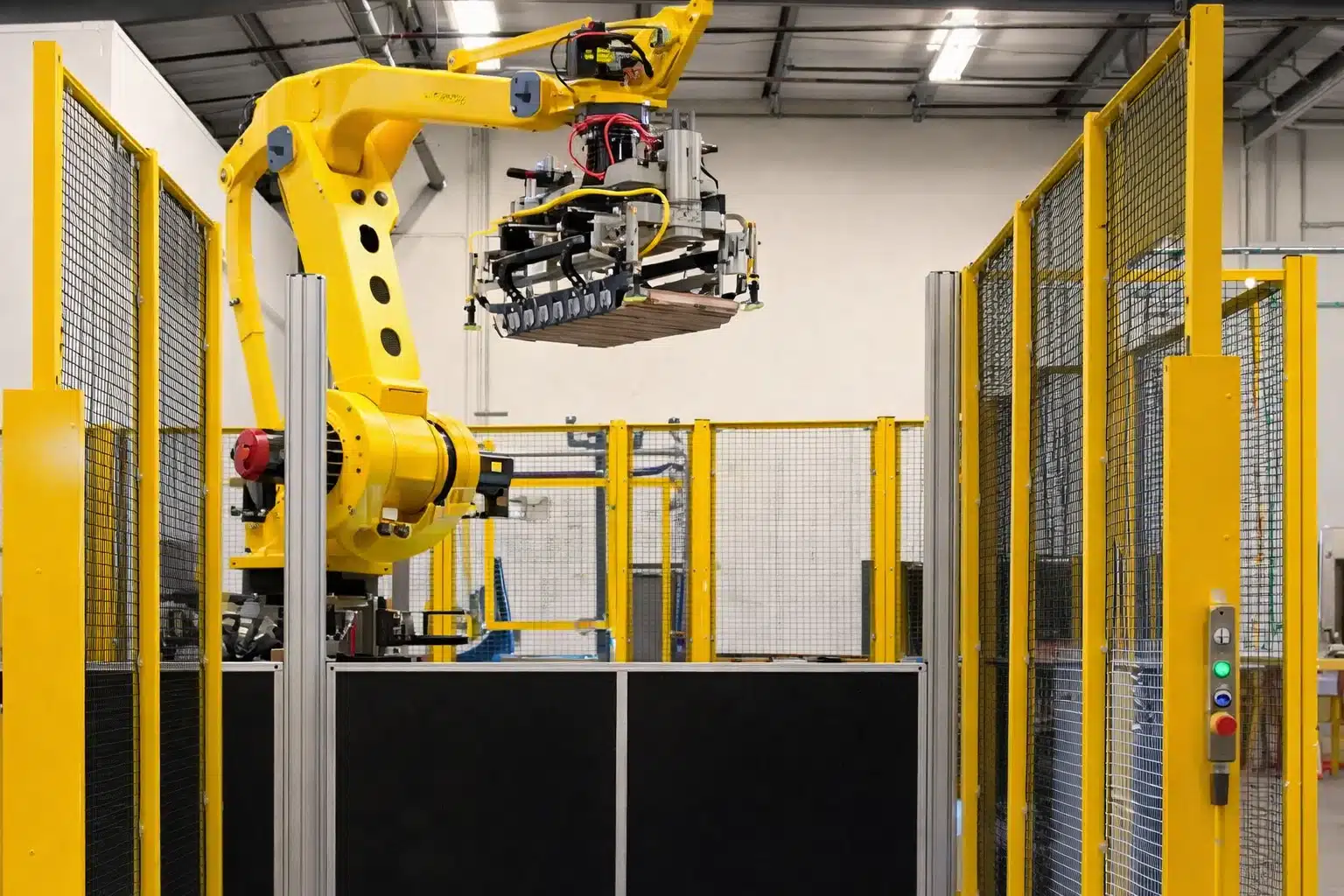
AMRs offer unparalleled dynamic flexibility, allowing facilities to scale fleet size instantly during peak shopping seasons without installing fixed floor infrastructure. Paired with 3D vision-guided robotic arms equipped with soft-gripping end-effectors, AMR fleets execute autonomous order selection, batch transport, and sorter induction with pinpoint positional accuracy.
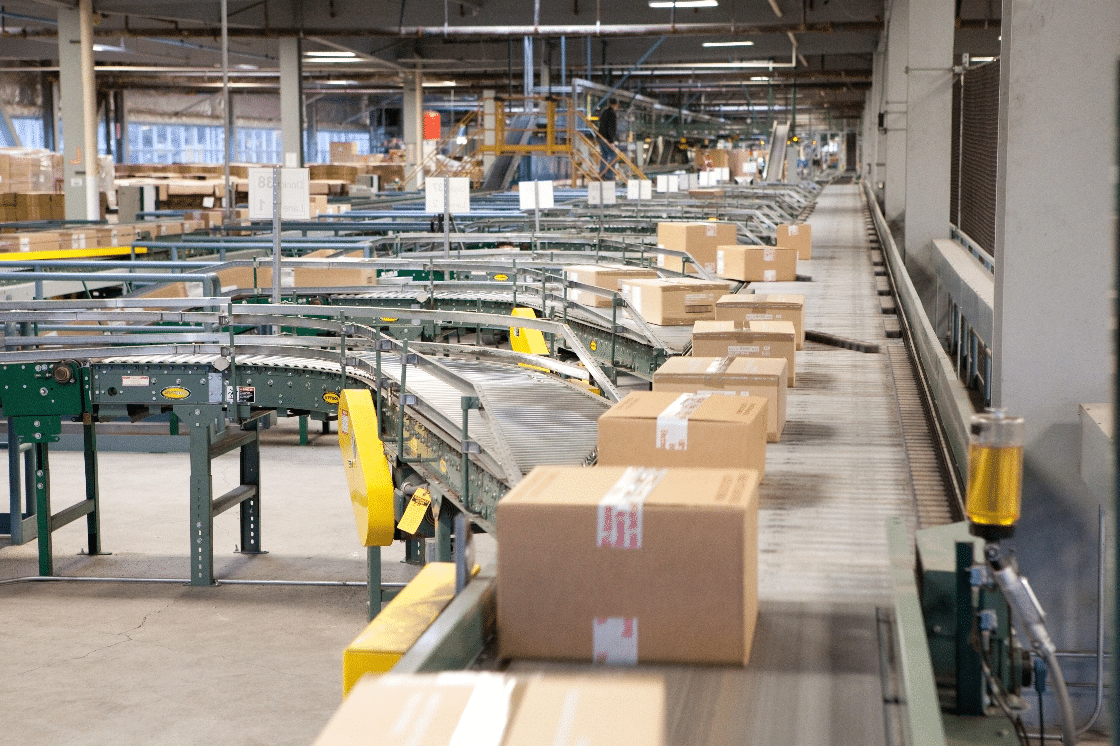
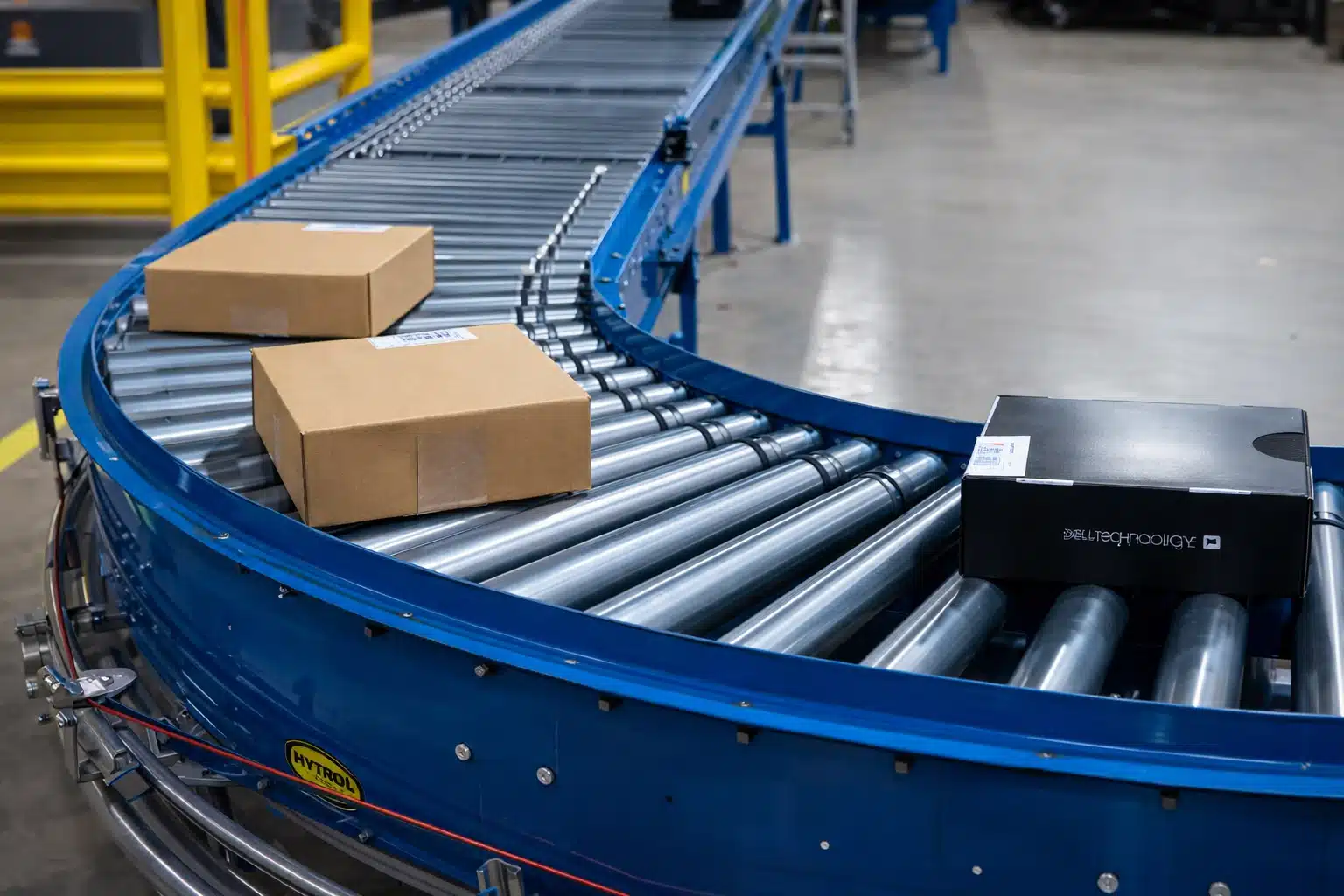
The arterial network of any fulfillment center relies on zero-pressure accumulation (ZPA) conveyors, motor-driven roller (MDR) technology, and high-speed sortation loops (shoe sorters, cross-belt sorters, pop-up wheel sorters). These systems route totes and shipping cartons seamlessly through picking zones, check-weighing stations, barcode scan tunnels, and specific carrier outbound lanes at speeds exceeding 200 feet per minute.
4. End-of-Line Automated Packaging & Labeling
Fulfillment does not end when items are picked. End-of-line automation integrates automated auto-packers, dynamic box-erectors, custom 3D dimensioning-and-boxing machinery (which build custom-fit cartons around items to eliminate dunnage), automatic print-and-apply shipping label systems, and automated polybaggers to optimize parcel throughput and reduce freight costs.
System Selection Matrix: Technical Performance Benchmarks
When engineering an e-commerce fulfillment architecture, procurement directors must evaluate key operational parameters across different automation tiers. The following technical evaluation matrix outlines the core attributes across primary fulfillment methodologies:
High SKU variety, fast-growing D2C brand operations
Dense Grid AS/RS (AutoStore / Shuttle)
500 – 800+ picks/hr
99.95%+
65% – 85% footprint saving
High-density small-to-medium parts, ultra-high land cost sites
Robotic Piece Picking (3D Vision AI)
700 – 1,100 picks/hr
99.98%+ (Fully autonomous)
70%+ (Fully unmanned zone)
24/7 dark warehouse operations, rigid box/packaged goods
Ready to Evaluate Your Fulfillment Automation Potential?
Our senior systems integrators analyze your SKU velocity profiles, order histories, and facility blueprints to design tailored Ecommerce Order Fulfillment Systems that maximize ROI.
Future Procurement Trends shaping Global Order Fulfillment Architectures (2026–2030)
Procurement executives investing in fulfillment infrastructure today must future-proof their capital investments against rapid technological shifts. Over the next decade, market leaders will differentiate themselves by integrating software-orchestrated agility and intelligent automated hardware.
A. Shift from WMS-Centric to WES Orchestrated Architectures
Traditionally, Warehouse Management Systems (WMS) handled both inventory bookkeeping and physical execution tracking. However, modern e-commerce complexity demands a Warehouse Execution System (WES) layer. A WES acts as the dynamic dynamic neural center, continuously balancing workloads across conveyances, robot fleets, AS/RS cranes, and human picking stations in real time. It utilizes machine learning algorithms to dynamically recalculate pick batches based on real-time carrier cutoff times, buffer capacities, and mechanical equipment availability.
B. Micro-Fulfillment Centers (MFCs) & Urban Dark Warehouses
As consumer expectations shift toward same-day and 2-hour delivery windows, regional mega-distribution centers are being supplemented by urban Micro-Fulfillment Centers (MFCs). Occupying footprints between 10,000 and 50,000 square feet inside existing urban real estate or back-of-store retail spaces, MFCs depend on compact, ultra-dense AS/RS grids capable of holding up to 50,000 SKUs. Integrating these decentralized fulfillment nodes into a unified global inventory database represents a primary procurement focus for global retailers.
C. Sustainable Packaging & Freight Optimization Automation
Shipping empty air inside oversized corrugated boxes creates unnecessary freight expenditures and escalates carbon footprints. Future-ready packaging automation systems incorporate on-demand box-creation systems. By measuring the precise 3D volumetric footprint of a multi-item pick, these machines construct a custom-fitted corrugated carton in real time, sealing it securely without requiring plastic bubble wrap or paper dunnage. This innovation yields a 30% to 50% reduction in DIM-weight freight charges while significantly advancing corporate ESG sustainability compliance.
D. AI-Powered Dynamic Slotting & Predictive Replenishment
Static warehouse slotting is obsolete. Contemporary software suites leverage predictive AI to dynamically re-slot inventory based on viral social trends, regional weather patterns, and promotional campaigns. Items projected to surge in demand over a 48-hour window are autonomously repositioned by AMRs during off-peak shifts to storage locations nearest the packing induct lines, drastically shortening cycle times during flash sales.
4. The RMH Systems Integrator Advantage
Why Enterprise Global Procurement Teams Partner with RMH Systems
Selecting individual equipment vendors often creates fragmented project accountability, software incompatibility, and unexpected integration costs. RMH Systems functions as a comprehensive single-source material handling systems integrator backed by more than eight decades of industrial expertise.
80+ Years of Engineering Authority
Established in 1898, RMH Systems brings generations of operational insight to complex automation challenges. We have survived and spearheaded every major industrial automation wave over the last century.
100% In-House Engineering & Controls
Unlike sales agencies that subcontract core technical tasks, RMH maintains full in-house mechanical design, electrical panel fabrication, PLC programming, and software integration engineering teams under one roof.
Single-Source Accountability
From warehouse space planning and rack layout engineering to conveyor wiring, robotic cell commissioning, scale calibration, and safety validation—we take total ownership of your system performance SLAs.
Brand-Agnostic Best-of-Breed Integration
We are not constrained to a single manufacturer’s catalog. We evaluate your unique operational metrics to integrate the exact robotics, conveyor, scale, and storage components best suited for your long-term success.
Buyer's Intelligence Knowledgebase
Frequently Asked Questions: Ecommerce Order Fulfillment Systems
Technical answers to critical procurement, financial, and integration questions asked by supply chain executives.
What is the typical Return on Investment (ROI) timeline for an automated Ecommerce Order Fulfillment System?
Most enterprise-grade fulfillment automation projects integrated by RMH Systems achieve full ROI payback within 18 to 36 months. The financial return is driven by a combination of factors: a 50% to 70% reduction in direct picking labor costs, up to 80% footprint savings (eliminating the need to lease secondary warehouse real estate), near-zero costs associated with mispick reshipments, and reduced shipping dunnage expenses.
Can automated fulfillment systems be retrofitted into existing brownfield facilities?
Yes. While greenfield facilities offer total layout design freedom, over 65% of RMH Systems projects involve retrofitting active brownfield operational warehouses. Utilizing modular technologies such as Autonomous Mobile Robots (AMRs), ceiling-hung overhead conveyor loops, dynamic mezzanine rack structures, and compact AS/RS grids allows us to dramatically elevate throughput without disrupting live operations or requiring costly facility expansions.
How do Ecommerce Order Fulfillment Systems integrate with our existing WMS or ERP software?
Modern fulfillment automation relies on robust API middleware and RESTful web services. RMH Systems engineers implement a modular Warehouse Execution System (WES) layer that interfaces directly with enterprise ERPs (such as SAP, Oracle, NetSuite, Microsoft Dynamics) and WMS platforms (like Manhattan, HighJump, Korber). The WES handles low-latency equipment coordination (PLC signals, robot navigation, scanner verification) and syncs real-time inventory adjustments back to your core ERP/WMS database.
How do these systems manage extreme peak demand spikes (e.g., Black Friday / Cyber Monday)?
Scalability is engineered into the system topology. Flexible architectures combine modular AMR fleets—which can be augmented with temporary rental units within 48 hours—with high-speed buffering conveyors and dynamic put-wall modules. Additionally, software features like pre-batching fast-moving seasonal SKUs enable facilities to handle up to 4x baseline daily volume without multiplying headcount proportionally.
What is the difference between Goods-to-Person (G2P) and Person-to-Goods (P2G) systems?
In a Person-to-Goods (P2G) model, human operators walk through static warehouse aisles carrying paper orders or handheld scanners to collect items. In a Goods-to-Person (G2P) system, automated cranes, shuttles, or mobile robots retrieve storage totes and deliver them directly to stationary picking stations equipped with light-directed pointers. G2P eliminates operator walking time, increasing pick rates by up to 500% while significantly improving workplace ergonomics.
How does RMH Systems handle post-commissioning service, maintenance, and technical support?
System delivery is only the beginning of our partnership. RMH Systems provides comprehensive lifecycle management, including 24/7 emergency field service, preventative maintenance contracts, remote software diagnostic support, spare parts replenishment programs, and certified scale/crane safety inspections to guarantee maximum system uptime and Mean Time Between Failures (MTBF).
Have a specialized technical question not listed here?
From engineering design and system integration to physical installation and continuous maintenance, RMH Systems helps e-commerce operations, manufacturers, and logistics providers elevate operational speed, safety, and profitability.
Single-source accountability from concept to operational commissioning
In-house systems engineering, controls, PLC programming, and installation
Ongoing service, preventive maintenance, and calibration support
Proven throughput results across manufacturing, e-commerce, and distribution