Explore the latest technical articles, warehouse automation trends, industrial robotics innovations, and practical guides from our engineering team.
China’s warehouse sector is moving from manual handling toward faster, data-driven material flow. Warehouse Conveyor Systems now support picking, sorting, storage, and dispatch across electronics, retail, automotive, and parcel operations.
MarketsandMarkets estimates that the global conveyor system market may grow from approximately USD 7.8 billion in 2023 to USD 10.6 billion by 2028. Its report identifies automation, labor shortages, and e-commerce growth as major drivers. MHI’s 2024 Annual Industry Report also shows that supply-chain leaders continue investing in robotics, sensors, and integrated software. The direction is clear.
But “top” does not simply mean the fastest conveyor.
In China, leading systems often combine belt conveyors, roller conveyors, vertical lifts, sorters, barcode scanners, and warehouse management software. A parcel hub may process cartons continuously, while a cold-storage facility demands corrosion resistance and stable performance at low temperatures. Small design differences matter.
John Paxton, former CEO of MHI, stated, “The importance of supply chain technology and innovation has never been more evident.” This observation fits China’s market, where manufacturers increasingly compete through integration, service coverage, and customization.
Still, published market forecasts are not perfect. Definitions vary. Some reports measure equipment sales, while others include software and installation services. Buyers should therefore examine throughput, noise, energy use, maintenance access, safety controls, and after-sales support.
This guide reviews the top China Warehouse Conveyor Systems by technology, application, scalability, and practical reliability. The strongest option may not be the cheapest. It may be the one that keeps moving at 2 a.m., when every delayed carton becomes visible.
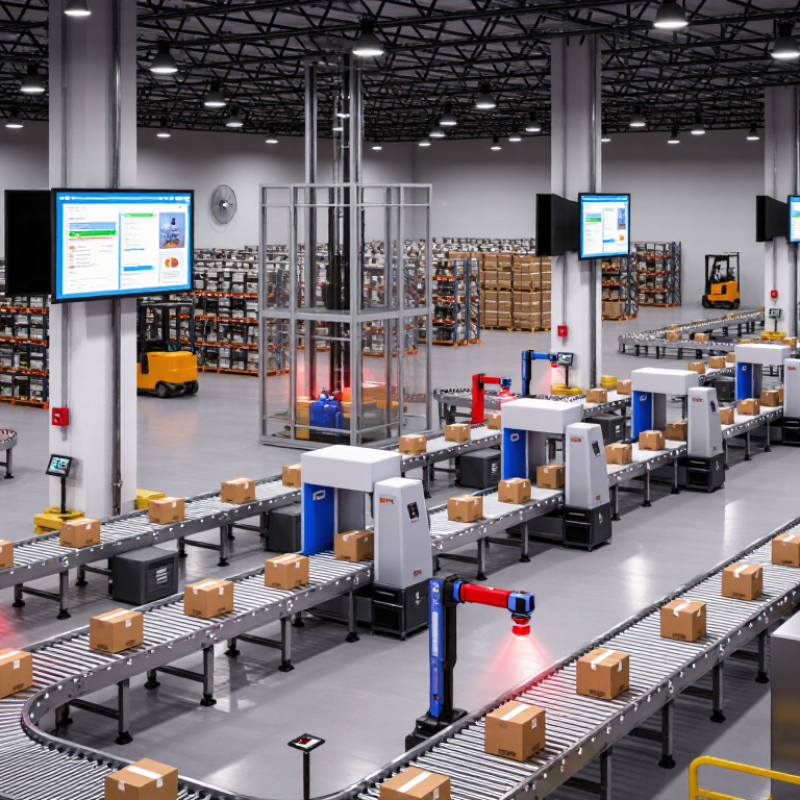
China warehouse conveyor systems are integrated material-handling equipment for moving cartons, totes, pallets, and parcels. Common types include belt, roller, chain, vertical-lift, and flexible conveyors. They connect receiving docks, storage zones, picking stations, packing areas, and shipping lanes.
The scale is substantial. China’s National Bureau of Statistics reported a social logistics value of 352.4 trillion yuan in 2023. The China Federation of Logistics and Purchasing also highlighted stronger demand for automated handling and intelligent warehousing. Globally, MHI’s 2024 Annual Industry Report found that 55% of surveyed supply-chain leaders planned to increase technology investment. This supports wider conveyor adoption.
A practical system uses sensors, motors, controllers, safety guards, and warehouse software. Belt conveyors suit cartons and irregular packages. Roller conveyors work well with standard boxes and pallets. Vertical conveyors save floor space in multi-level facilities. I have seen poorly matched systems create noise, jams, and difficult maintenance. That assumption is often wrong.
Selection should consider load weight, package size, throughput, temperature, dust, and cleaning needs. A 30-meter line may look efficient, yet a narrow transfer point can limit the entire operation. Operators also need emergency stops, guarded moving parts, and accessible inspection areas. Energy use matters. Variable-speed control can reduce unnecessary movement during quiet periods. Conveyor performance should be tested with real cartons, not ideal samples.
| Conveyor System Type | Typical Warehouse Use | Suitable Load Range | Typical Speed Range | Key Advantages | Common Limitations | Automation Compatibility | Recommended Application |
|---|---|---|---|---|---|---|---|
| Belt Conveyor | Moving cartons, parcels, totes, bags, and products with irregular shapes | Light to medium duty Approximately 5–100 kg per item |
About 0.3–2.5 m/s | Quiet operation, stable product handling, and good control of small or loose items | Belts can wear or require tracking adjustments; unsuitable for very heavy loads without reinforced construction | High; can integrate with scanners, sorters, sensors, and warehouse control systems | Order-picking lines, parcel handling, packing areas, and general distribution centers |
| Roller Conveyor | Transporting cartons, pallets, totes, and rigid-bottom containers | Medium to heavy duty Approximately 10–1,500 kg per load, depending on design |
About 0.2–1.5 m/s | Durable, modular, and easy to configure for straight lines, curves, and accumulation zones | Items need a reasonably flat and rigid base; debris can affect rollers and bearings | High; powered sections, accumulation controls, sensors, and diverters are widely available | Case conveying, pallet movement, shipping lanes, and receiving areas |
| Chain Conveyor | Moving heavy pallets, metal containers, and products with uneven or non-conveyable bases | Heavy duty Approximately 500–2,000 kg per load |
About 0.1–0.5 m/s | High load capacity, strong traction, and reliable movement of heavy unit loads | Higher noise and maintenance requirements; generally less suitable for fragile products | Medium to high; commonly combined with pallet sensors, stops, lifts, and transfer units | Pallet storage, manufacturing logistics, heavy receiving, and outbound staging |
| Slat Conveyor | Handling rigid, stable products that require a continuous, controlled conveying surface | Light to medium duty Approximately 5–150 kg per item |
About 0.1–1.0 m/s | Consistent product positioning and suitability for products requiring precise spacing or orientation | More complex than a basic belt conveyor and may require regular chain and slat inspection | High; supports sensors, indexing, accumulation, and automated inspection equipment | Container handling, kitting, assembly support, and product inspection lines |
| Spiral Conveyor | Moving goods vertically between warehouse levels while saving floor space | Light to medium duty Usually up to approximately 100 kg per item |
About 0.2–0.8 m/s | Provides continuous vertical transfer and reduces the need for separate lifts or long ramps | Higher initial cost and more demanding installation; capacity depends on product size and elevation | High; can connect multiple floors and synchronize with warehouse control systems | Multi-level warehouses, mezzanines, picking platforms, and packaging operations |
| Flexible Conveyor | Temporary or changing transfer routes in loading, unloading, and order-picking areas | Light to medium duty Commonly up to approximately 50 kg per item |
About 0.2–0.6 m/s | Expandable, movable, and useful where conveyor layouts change frequently | Lower stability and capacity than fixed systems; not ideal for continuous high-volume operation | Low to medium; typically used as a standalone or semi-automated solution | Truck loading, temporary workstations, seasonal operations, and flexible dispatch areas |
| Overhead Conveyor | Transporting hanging garments, components, or products above the warehouse floor | Light to medium duty Load capacity depends on carrier and track design |
About 0.1–1.0 m/s | Uses overhead space, keeps floor areas clear, and can support sorting or sequencing | Requires suitable building structure and product carriers; installation can be more complex | High; compatible with automatic routing, identification, sorting, and workstation controls | Garment distribution, parts handling, clean production areas, and space-constrained facilities |
| Motorized Roller Conveyor | Accumulating, transferring, and sequencing cartons, totes, and pallets | Medium to heavy duty Approximately 20–1,500 kg per load |
About 0.2–1.5 m/s | Allows controlled accumulation without constant product contact and supports zoned operation | Higher equipment and control-system cost than non-powered roller conveyors | Very high; suitable for sensors, barcode scanning, sortation, PLC control, and warehouse software | Automated storage and retrieval interfaces, shipping sortation, buffering, and pallet handling |
They are classified by transport direction, load type, movement pattern, and automation level. Belt, roller, spiral, vertical, and sortation systems serve different needs. Classification can overlap.
Belt conveyors move cartons, bags, and uneven packages smoothly. They work well across longer distances. Check belt grip carefully.
Roller conveyors suit boxes, rigid totes, and pallets with firm, flat bases. Gravity rollers need suitable slopes. Powered rollers support controlled movement and accumulation.
Measure product weight, length, width, surface, and daily volume. Record peak orders and accumulation time. Do not choose from speed alone.
Curved conveyors route packages around columns and workstations. Spiral conveyors connect floor levels while saving valuable space. Measure clearance first.
Sortation conveyors route orders using scanners, diverters, or pushers. They support busy dispatch operations. Poor data mapping can still cause delays.
Check levelness, belt tracking, guards, sensors, transfer points, and emergency stops. Test the system with real cartons. Small trials expose jams.
Inspect rollers, chains, bearings, sensors, and fasteners every week. Record unusual noise, vibration, heat, and repeated jams. Clean difficult areas regularly.
A capacity buffer of about 10% can handle normal variation. Excess capacity wastes energy and floor space. Peak behavior may differ.
Keep access space beside motors, transfers, and emergency stops. Train operators on shutdown and lockout procedures. Fast loading can increase stress and damage.
Warehouse Conveyor Systems are essential material-handling solutions designed to move goods efficiently through receiving, storage, picking, packing, and shipping areas. China warehouse conveyor systems can be classified by structure, power source, movement method, and application, including belt, roller, chain, flexible, gravity, and vertical conveyors. Each type serves different warehouse tasks: belt conveyors handle packaged items, roller conveyors support cartons and pallets, while flexible and vertical systems help optimize space and improve workflow.
A reliable China conveyor system should provide stable performance, suitable load capacity, adjustable speed, safe operation, durable construction, and compatibility with warehouse management processes. Selecting the right system requires evaluating product dimensions, weight, throughput, layout, available space, and future expansion needs. Professional installation ensures accurate alignment and smooth operation, while regular inspections, cleaning, lubrication, and timely replacement of worn components help maintain efficiency, reduce downtime, and extend the conveyor system’s service life.