Explore the latest technical articles, warehouse automation trends, industrial robotics innovations, and practical guides from our engineering team.
Choosing Overhead Crane Systems is not simply a matter of selecting the highest capacity or lowest price. The right system must fit your building, production rhythm, load profile, and maintenance resources. A 10-ton crane may appear suitable on paper, yet its runway could restrict aisle access or reduce valuable hook height. Small details matter.
In plant assessments, experienced engineers examine how materials actually move. They watch loading points, travel distances, floor conditions, operator visibility, and emergency access. They also review lifting frequency, duty cycles, beam strength, controls, and available power. A reliable supplier should provide clear calculations, inspection guidance, installation records, and responsive technical support. Ask for evidence. Do not rely on confident promises alone.
Safety remains central, but productivity deserves equal attention. A slow crane can create bottlenecks beside a busy machining cell. An oversized system can increase structural demands and long-term costs. Pendant controls may work well in a compact workshop, while remote controls suit larger or hotter areas. The decision is rarely perfect. I have seen projects focus heavily on purchase price and overlook future maintenance access. That mistake becomes expensive.
These ten tips offer a practical framework for comparing Overhead Crane Systems with greater confidence. They encourage careful questions about capacity, configuration, controls, installation, training, inspections, and lifecycle value. Conditions differ between facilities. Recheck every assumption before approval. A thoughtful choice should lift safely today and remain dependable years later.
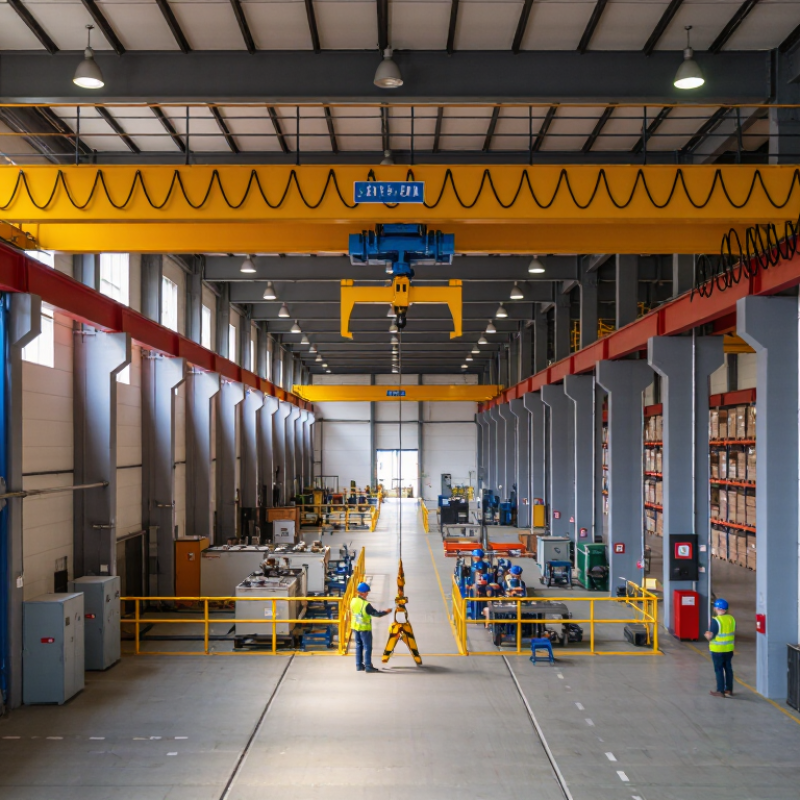
Start with the load. Before comparing overhead crane systems, define the heaviest item, its dimensions, and its lifting points. Include the load’s center of gravity, especially when machinery contains fluids or uneven components. A five-ton load may require greater capacity during impact, tilting, or sudden movement.
Measure the space carefully. Record the building height, runway length, hook travel, aisle width, and available headroom. Identify columns, ventilation ducts, lighting, doors, and nearby equipment. These details affect trolley movement and operator visibility. Ask how often lifting will occur, how long each shift lasts, and whether the crane serves one station or several. Real conditions differ. Dust, humidity, heat, cold, and corrosive vapors can influence electrical enclosures, controls, brakes, and structural materials.
Consider the people using the system. Operators need clear sightlines, predictable controls, and practical access for inspection. Maintenance teams need safe working clearance around motors, ropes, wheels, and limit devices. Consult a qualified lifting engineer when loads are unusual or the building structure is uncertain. Documentation should match the actual installation, not an idealized drawing. Small errors matter. I have seen otherwise suitable plans fail because a door opened into the runway or a hook could not reach the pallet center. Recheck measurements on site, and question assumptions before approving the final specification.
Choosing an overhead crane starts with the building, not the hoist. Measure span, runway length, hook height, and available headroom. A single-girder crane suits moderate loads and shorter spans, while a double-girder design supports heavier loads and wider bays. It usually needs more structural clearance. A monorail system works well for repeated travel along one fixed path. It is less flexible when production routes change.
Tip 1: Match the crane type to real lifting patterns. A 5-ton load lifted twice daily does not need the same configuration as constant steel handling. Check duty cycle, trolley speed, braking frequency, and peak load. I have seen projects focus on rated capacity while overlooking side loads from poor load control. That mistake can increase wear.
Tip 2: Inspect the supporting structure before selecting equipment. Runway beams may connect to building columns, independent legs, or a ceiling-supported frame. Existing columns can look strong but still lack suitable connection points. Ask a qualified engineer to verify loads, deflection, seismic conditions, and foundation capacity. Leave service access around electrical parts and end stops. Do not hide maintenance zones behind ductwork. Small clearances matter. A preliminary layout may seem efficient, yet it can restrict hook access near walls or loading doors.
10 Tips for Choosing Overhead Crane Systems
Evaluate Load Capacity, Span, Lift Height, and Duty Class
When I review a crane layout, I start with the real load, not the advertised maximum. Include hooks, slings, magnets, and impact from starting or stopping. A 5-ton product may demand more than 5 tons at the hook. Record the heaviest load, its shape, and how often it moves. Leave engineering margin, but do not guess. A structural engineer should verify runway beams and building connections.
Span changes more than coverage. It affects wheel loads, girder deflection, and trolley behavior. Measure the clear distance between rails, then check columns, lights, sprinklers, and service platforms. Lift height needs equal care. Specify the highest hook position and the lowest working position. Check headroom above the load. A few lost inches can make a crane unusable. I have seen drawings pass review while a roof brace blocked the hook path. That error was avoidable.
Duty class should reflect cycles, load spectrum, and operating hours. A lightly used maintenance crane differs from a production crane lifting every few minutes. Ask operators for an honest shift pattern; estimates are often too optimistic. Consider dust, heat, moisture, and outdoor wind. Confirm selections against current safety standards and documented inspection requirements. If the duty class feels uncertain, pause the purchase. Cheap capacity can become expensive downtime.
Evaluate load capacity, span, lift height, and duty class before selecting an overhead crane.
The chart shows a realistic reference specification for a medium-duty industrial overhead crane: 10 metric tons rated capacity, an 18-meter span, 9-meter lifting height, and FEM duty class M4. These values are planning references; the final design must be verified by a qualified crane engineer using actual loads, operating cycles, building structure, and applicable safety standards.
10 Tips for Choosing Overhead Crane Systems
Assess Safety Features, Controls, and Compliance Standards
Choosing an overhead crane begins with the hazards inside your facility, not with lifting capacity alone. Walk the travel path and inspect blind corners, low beams, wet floors, and nearby workstations. These details often expose risks that catalog specifications overlook.
Look for overload protection, upper and lower limit switches, emergency stops, guarded moving parts, and clearly visible warning devices. Test the controls during a practical demonstration. A pendant should respond smoothly, while a radio control should resist accidental commands and signal loss. Operators also need a clear view of the load. If visibility is limited, specify suitable alarms, cameras, or a trained signal person.
Safety depends on people, too. Ask how operators will receive training, how inspections are documented, and how damaged components are removed from service. Review the crane against applicable national standards, workplace regulations, electrical requirements, and site-specific rules. Supplier documentation should identify inspection intervals, rated loads, control functions, and maintenance procedures. Independent verification may be appropriate before commissioning.
Do not accept vague compliance claims. Request test records.
A checklist is useful, but it is not infallible. During one site review, a team focused on the hoist and missed an obstructed emergency-stop station. That mistake changed our inspection routine. Recheck controls from the operator’s actual position, under realistic lighting and floor conditions. Reliable selection comes from documented evidence, hands-on testing, and honest review of what the first inspection failed to notice.
| No. | Selection Tip | What to Assess | Recommended Criteria | Verification or Compliance Reference |
|---|---|---|---|---|
| 1 | Define the Required Capacity | Determine the maximum rated load, average operating load, load dimensions, lifting points, and duty cycle. | Select a safe working load rating that covers the heaviest intended load without exceeding the supporting structure or runway capacity. | Confirm the rated load is clearly marked and supported by design calculations, load charts, and engineering documentation. |
| 2 | Evaluate Hoist and Brake Safety | Review the hoist design, lifting mechanism, load brake, holding brake, and protection against uncontrolled load descent. | Use independently reliable braking functions, suitable lifting components, and protection against overload and overtravel. | Check inspection and test requirements under applicable occupational safety rules and crane safety standards such as OSHA 29 CFR 1910.179 or ASME B30.2, where applicable. |
| 3 | Choose Suitable Control Methods | Compare pendant controls, radio controls, cabin controls, and combined control arrangements for the work environment. | Controls should be clearly labeled, ergonomically positioned, protected from accidental activation, and designed to return to a safe state when released or interrupted. | Verify emergency-stop functions, control-circuit behavior, wireless control safeguards, and electrical equipment requirements under applicable regulations and IEC 60204-32 where relevant. |
| 4 | Check Limit and Travel Protection | Assess upper and lower hoist limits, trolley travel limits, bridge travel limits, bumpers, end stops, and anti-collision arrangements. | Use appropriately positioned limit devices and mechanical travel protection for the layout, speed, load path, and operating environment. | Require functional testing during commissioning and periodic inspections; do not use operational limits as routine stopping devices unless specifically designed for that purpose. |
| 5 | Assess Structural Compatibility | Examine building columns, runway beams, foundations, clearances, headroom, wheel loads, and dynamic forces. | Ensure the existing or proposed structure can safely support static and operational loads, including acceleration, braking, and skewing effects. | Obtain a qualified structural assessment and retain calculations, drawings, alignment records, and installation tolerances. |
| 6 | Match the System to the Environment | Consider temperature, humidity, dust, corrosive substances, outdoor exposure, hazardous areas, and available electrical supply. | Specify suitable enclosures, insulation, materials, ingress protection, heating or cooling provisions, and corrosion resistance. | Document environmental ratings and verify any hazardous-location requirements with the applicable electrical and workplace safety authority. |
| 7 | Review Load Handling Accessories | Evaluate hooks, latches, wire rope or chain, slings, spreader beams, lifting magnets, and other below-the-hook devices. | Accessories must be compatible with the crane capacity, load geometry, lifting method, temperature, and required safety factor. | Require legible identification, rated capacity markings, inspection records, and compliance with applicable ASME B30 accessory standards. |
| 8 | Prioritize Visibility and Warning Systems | Assess operator visibility, lighting, audible alarms, warning beacons, load indicators, cameras, and communication methods. | Provide effective warnings and visibility for blind spots, pedestrian areas, crossing points, and restricted travel zones. | Validate warning devices through a documented risk assessment and confirm that signals remain distinguishable in the normal workplace noise and lighting conditions. |
| 9 | Plan Inspection and Maintenance Access | Consider access to brakes, wheels, ropes, chains, electrical panels, limit switches, lubrication points, and structural connections. | Choose a layout that permits safe inspection, adjustment, lubrication, repair, isolation, and replacement of wear components. | Establish frequent, periodic, and annual inspection procedures based on usage and conditions, following applicable legal requirements and ASME B30 guidance. |
| 10 | Confirm Documentation and Training | Review operating manuals, maintenance instructions, spare-parts information, inspection forms, risk assessments, and operator training needs. | Select a system supported by clear procedures, competent operators, qualified maintenance personnel, and documented pre-use checks. | Retain commissioning records, test certificates, inspection reports, training records, and written procedures required by the applicable jurisdiction. |
Choosing an overhead crane system requires more than comparing lifting capacity and runway length. Installation conditions deserve equal attention. Measure clear height, column spacing, floor loading, power supply, and maintenance access before requesting quotations. A small measurement error can create expensive redesign work. The CMAA Specification No. 70 recommends defined duty classifications, so match the crane class with actual lifting cycles, not occasional peak loads. Document every assumption.
Maintenance should appear in the purchase decision. OSHA 1910.179 requires frequent and periodic crane inspections, with records for periodic inspections. Ask suppliers for inspection intervals, spare-parts availability, technician response times, and digital service records. The 2024 MHI Annual Industry Report found that 83% of surveyed organizations planned to increase supply-chain technology investment. That trend supports condition monitoring, but sensors cannot replace competent inspections. They can also produce distracting alerts. Be selective.
Cost analysis should include installation, commissioning, operator training, inspections, energy use, downtime, and eventual removal. Request a five-year total-cost model, not only the equipment price. Supplier support matters when a hoist stops during a production shift. Confirm emergency coverage, local service capacity, warranty boundaries, and training ownership in writing. No estimate is perfect. A realistic contingency still protects the budget. Weak proposals often hide exclusions inside vague installation language. Ask who provides lifting equipment, permits, testing, and site supervision. A clear answer is valuable.
Walk the full travel path. Check blind corners, low beams, wet floors, and nearby workstations. A small obstruction matters.
Look for overload protection, limit switches, emergency stops, guarded moving parts, and visible warning devices. Test every feature practically.
A pendant should respond smoothly without sticking. Radio controls should resist accidental commands and signal loss. Test them from operating positions.
Consider alarms, cameras, or a trained signal person. Lighting and floor conditions can change visibility during work. Do not rely on guesswork.
Request rated loads, control functions, inspection intervals, maintenance procedures, and test records. Review applicable safety and electrical requirements. Avoid vague compliance claims.
Measure clear height, column spacing, floor loading, power supply, and maintenance access. One small error can cause expensive redesign.
Confirm frequent and periodic inspections, recordkeeping, spare-parts access, technician response times, and digital service options. Sensors help, but they do not replace competent inspections.
Include installation, commissioning, training, inspections, energy use, downtime, and eventual removal. Ask about permits, testing, lifting equipment, and site supervision. No estimate is perfect.
Choosing the right Overhead Crane Systems requires a clear understanding of your lifting requirements and operating environment. Begin by identifying the types, weights, dimensions, and frequency of loads, as well as available floor space, temperature, humidity, dust, and other workplace conditions. Compare suitable crane types and structural configurations, such as systems designed for different building layouts or handling patterns. Carefully evaluate load capacity, span, lift height, travel speed, and duty class to ensure the equipment matches both current and anticipated demands without unnecessary cost.
Safety and long-term performance should also guide the decision. Review emergency stops, overload protection, limit devices, controls, operator visibility, and applicable compliance requirements. Consider installation complexity, maintenance access, spare parts, energy use, and the total cost of ownership rather than focusing only on the initial price. Finally, assess the supplier’s technical support, training, inspection services, warranty terms, and response capability. A well-planned selection process can improve productivity, reduce downtime, and provide dependable lifting performance throughout the system’s service life.