RMH Systems Insights

Industry Knowledge & Automation Blog

Explore the latest technical articles, warehouse automation trends, industrial robotics innovations, and practical guides from our engineering team.

0%

Choosing the right Package Sortation Systems can shape every stage of a fulfillment operation. A reliable system moves parcels smoothly from induction to the correct shipping lane. It can reduce manual handling, improve order accuracy, and protect delivery schedules during peak periods. Yet, equipment that performs well in one facility may struggle in another.

Every warehouse has different conditions. A narrow building may require compact conveyors and flexible routing. A high-volume operation may need scanners, sortation chutes, and software that respond within milliseconds. Parcel size, weight, packaging materials, labor skills, maintenance access, and future growth also deserve careful attention. Small details matter. A noisy motor near a packing station can affect the working environment. A poorly placed photo-eye can create repeated stoppages.

This guide presents ten practical tips for evaluating Package Sortation Systems with greater confidence. It considers throughput, accuracy, integration, safety, energy use, scalability, and total ownership costs. Real performance depends on more than impressive specifications. Site testing, operator feedback, service support, and clear performance data often reveal the difference between a promising proposal and a dependable investment.

No system is perfect. Buyers may overlook cleaning access, software training, or seasonal volume changes. That mistake can become expensive later. A thoughtful evaluation should question assumptions, compare realistic operating conditions, and leave room for improvement. The goal is not to select the most complex system. It is to choose a solution that fits the facility, supports its people, and performs consistently as package demands change.
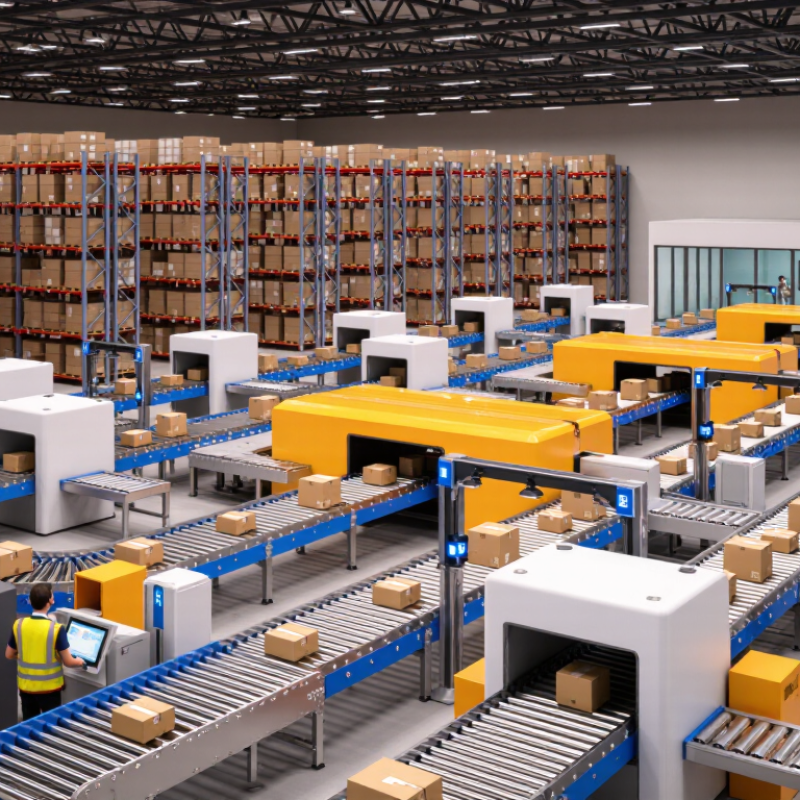
10 Tips for Choosing Package Sortation Systems

Define Demand with Peak PPH, Parcel Mix, and 20–30% Growth Capacity

A sound sortation design starts with demand, not equipment. Measure peak parcels per hour (PPH) by hour, shift, day, and promotion. Average volume hides the real constraint. The U.S. Census Bureau reported that e-commerce represented 16.1% of total U.S. retail sales in 2024. That share can create sharp evening peaks in parcel operations.

Use actual scan data to separate cartons, polybags, irregular items, and fragile parcels. Record dimensions, weight, barcode quality, destination, and required divert accuracy.

The Pitney Bowes Parcel Shipping Index reported 161 billion parcels worldwide in 2022, showing why volume assumptions must remain evidence-based.

A small polybag may travel differently from a rigid carton. Do not treat them as identical units.

Size the system above today’s maximum, but make the buffer deliberate. A practical starting point is 20–30% additional PPH capacity for growth, demand volatility, and short maintenance windows.

For example, a 6,000-PPH peak suggests a design range of 7,200–7,800 PPH. However, this is not a universal rule. Labor availability, induction spacing, chute fill rates, and recirculation can reduce usable capacity.

I have seen systems pass factory tests yet struggle during mixed-parcel peaks. That gap deserves a live pilot.

Recheck the forecast quarterly, because growth may arrive unevenly rather than smoothly.

Match Belt, Cross-Belt, Tilt-Tray, and Shoe Sorters to 3 Key Variables

Choosing a package sortation system starts with three variables: throughput, package characteristics, and site constraints. Pitney Bowes’ Parcel Shipping Index reported 161.8 billion parcels worldwide in 2022, showing why capacity planning matters. However, volume alone can mislead.

Match belt sorters to gentle handling, mixed package sizes, and moderate-to-high flow rates. They suit operations where packages need stable contact during induction. Cross-belt systems fit high destination counts and strict accuracy targets. Their independent carriers can handle diverse cartons, though maintenance complexity deserves attention. Tilt-tray sorters work well with small parcels, polybags, and irregular items. They offer flexible routing, but fragile products may require careful tray-speed testing. Shoe sorters remain practical for cartons, totes, and side-discharge layouts. They need adequate conveyor length and dependable package spacing.

Measure peak hourly volume, not daily averages. Check the smallest and largest package dimensions. Record weight, surface friction, and package stiffness. Then map discharge points, ceiling height, fire aisles, and future expansion. MHI’s 2024 Annual Industry Report identified robotics and automation as continuing investment priorities across material handling. That does not make every automated sorter economical. Labor availability, service access, energy use, and software integration can change the decision. A detailed simulation is valuable, but it is not perfect. Real packages behave worse than test cartons. Run trials during peak conditions, include damaged packaging, and question every optimistic assumption.

10 Tips for Choosing Package Sortation Systems - Match Belt, Cross-Belt, Tilt-Tray, and Shoe Sorters to 3 Key Variables

Tip Key Variable Planning Check Best-Fit Sorter Practical Guidance
1 Package profile
Size and shape
What are the minimum and maximum package length, width, height, and weight? Match belt for broad handling flexibility
Cross-belt for controlled item-by-item transport
Define the usable envelope from actual package samples. Irregular, soft-sided, or unstable items may require induction controls or manual exceptions.
2 Package profile
Fragility and surface
Are items fragile, crush-sensitive, loose, polybagged, or prone to snagging? Cross-belt or tilt-tray for controlled discharge
Shoe sorter for compatible rigid loads
Use gentler handling where package damage is costly. Validate discharge angles, transfer gaps, and friction performance with representative packaging.
3 Package profile
Weight distribution
Do packages have a low center of gravity, uneven loading, or weight concentrated at one end? Cross-belt and tilt-tray for individually supported loads
Shoe sorter when lateral contact is acceptable
Test package stability at operating speed. Heavy or unbalanced items can reduce singulation quality and create unreliable discharge behavior.
4 Throughput
Peak volume
What is the required peak rate in packages per hour, and how much growth is expected? Cross-belt, tilt-tray, or shoe sorter for high-volume automated flows Size for sustained peak demand rather than average daily volume. Include induction limits, recirculation, downtime, and planned capacity reserve.
5 Throughput
Item spacing and singulation
Can the induction process present one readable package at a time with consistent spacing? Match belt for lower-to-moderate rates
Cross-belt for controlled singulated flow
Sorter performance depends heavily on singulation, barcode visibility, and gap control. A high-speed sorter cannot compensate for poor induction quality.
6 Throughput
Sort accuracy
How critical are barcode read rate, destination accuracy, and exception control? Cross-belt or tilt-tray for precise item tracking Specify scanner position, label orientation, no-read handling, recirculation logic, and manual exception processes before comparing equipment speeds.
7 Sort destinations
Number and spacing
How many destinations are needed, and are they arranged on one side, both sides, or around a loop? Tilt-tray, cross-belt, or shoe sorter for many destinations Match sorter geometry to the building. Long takeaway conveyors, chutes, accumulation lanes, and operator access can dominate the total footprint.
8 Sort destinations
Discharge method
Should packages discharge by diverting the carrier, tipping the load, or sliding it laterally? Match belt: diverting belt surface
Tilt-tray: tray tipping
Shoe sorter: lateral shoes
Cross-belt: moving belt surface
Select the discharge principle that fits package stability, allowable impact, chute design, and downstream accumulation requirements.
9 Sort destinations
Footprint and building constraints
What are the available floor area, ceiling height, column locations, fire exits, and maintenance clearances? Match belt for simpler layouts
Cross-belt or tilt-tray for dense multi-destination layouts
Map the complete system, including scanners, induction stations, chutes, controls, guarding, walkways, and service access—not only the sorter frame.
10 Lifecycle fit
Maintenance and flexibility
Can the team support planned maintenance, spare parts, software integration, and future layout changes? Match belt: comparatively simple architecture
Cross-belt: modular tracking and carrier technology
Tilt-tray/Shoe: established high-volume architectures
Compare total cost of ownership, energy use, wear components, access time, training, controls support, and the cost of future capacity expansion.
Reference framework: Match belt sorters commonly suit simpler diverting applications and moderate flows; cross-belt and tilt-tray sorters provide controlled carrier-based handling for high destination counts; shoe sorters use lateral sliding shoes and are typically applied to compatible rigid packages. Actual capacity, package limits, accuracy, and energy consumption depend on system design, package mix, induction quality, layout, and operating conditions. Validate all figures through application testing and an engineering study.

Set 99.5%+ Accuracy Targets Using Barcode Read-Rate Data

A 99.5% accuracy target should begin with barcode read-rate data, not a sales claim. Track successful reads against total packages during normal operating hours. Separate clean, damaged, angled, wrapped, and partly obscured labels. A single average can hide serious weaknesses. Measure the misses. Collect data across shifts, package sizes, conveyor speeds, and lighting conditions. Operators should record no-reads and manual interventions near the scanner and divert point.

When comparing package sortation systems, request raw read-rate results and test conditions. A 99.5% rate means little without sample size, label placement, and belt speed. Test several thousand representative parcels, then repeat the trial after routine maintenance. Check whether software retries improve results or merely delay the exception lane. That distinction affects staffing. For example, a 0.5% failure rate creates 200 manual events across 40,000 daily packages. Confirm that the exception process can handle them safely.

Set separate targets for read rate, correct diversion, and end-to-end accuracy. They are related, but not identical. An initial assumption can fail here. A readable barcode may still route incorrectly because of configuration errors. Review weekly trend charts and investigate sudden drops. Keep failed labels for training and neutral testing. Targets should be demanding, yet adjustable when package mix, label quality, or operating conditions change. Data should support the decision, not decorate it.

Reserve 20–30% Layout Space for Safety, Maintenance, and Expansion

10 Tips for Choosing Package Sortation Systems

Reserve 20–30% of the layout before selecting conveyors, scanners, or sortation chutes. This space protects people and keeps maintenance tasks practical. In warehouse projects, I have seen tight layouts slow down repairs and create unsafe walking routes. A technician should reach motors, sensors, and jam points without moving stored packages. Leave clear access beside inspection panels and emergency equipment. Small gaps disappear quickly.

Safety space also supports future growth. Package volumes change with seasonal demand, new customers, and different carton sizes. A sorter that fits today may become a bottleneck within two years. Keep spare floor area near induction points, discharge lanes, and control cabinets. Mark this reserved zone on the layout, not only in meeting notes. Physical markings make planning more reliable.

Do not use every available meter. That was one mistake in an earlier design review. The equipment met its throughput target, but expansion required costly relocation. A better review measures walking distances, maintenance clearance, fire access, and temporary staging space. Include operators and service technicians in the review because drawings can hide practical problems. Leave room for change. It is cheaper than rebuilding a crowded system.

Compare 3–5 Year TCO, Uptime, Energy Use, and ROI Benchmarks

Choosing a package sortation system requires more than comparing purchase prices. Build a three-to-five-year total cost of ownership model. Include equipment, installation, software, training, spare parts, maintenance labor, and planned upgrades. Add energy consumption for conveyors, scanners, controls, and compressed air. Small loads can still create large annual costs.

Measure uptime using real operating records, not brochure claims. Ask how downtime is defined, how quickly faults are diagnosed, and whether technicians can replace critical modules safely. A system running at 98% uptime may outperform a faster system running at 93%. That difference can affect thousands of parcels each shift. Check peak-season performance. Normal weeks can hide serious weaknesses.

Calculate ROI from measurable gains: labor hours saved, throughput increased, misroutes reduced, and avoided expansion costs. Use conservative volume forecasts. Test low, expected, and high-demand cases. Energy savings should be verified with metered data, not estimates. One practical benchmark is to compare annual operating cost per package, then examine the payback period under each scenario. The first model is rarely perfect. We have seen forecasts overvalue speed and undervalue maintenance access. Revise assumptions after site trials, operator interviews, and a failure-mode review. Ask for transparent data. Reliable decisions need it.

FAQS

Why should sortation design start with peak parcels per hour?

Daily averages hide evening surges and short maintenance windows. Measure parcels by hour, shift, day, and promotion. Peak demand matters most.

How much extra capacity should a system include?

A practical starting point is 20–30% above current peak demand. A 6,000-PPH peak suggests roughly 7,200–7,800 PPH. This is not universal.

What package details should operators record?

Record dimensions, weight, barcode condition, destination, stiffness, and surface friction. Separate cartons, polybags, irregular items, and fragile parcels. They do not behave alike.

Which sorter type fits mixed parcel operations?

Belt sorters support gentle handling and mixed sizes. Cross-belt systems suit many destinations and strict accuracy. Tilt-tray systems handle small or irregular parcels. Shoe sorters suit cartons and side-discharge layouts.

What site constraints can change the equipment decision?

Check ceiling height, discharge points, fire aisles, maintenance access, and expansion space. Also review labor, energy use, and software integration. Floor plans can be surprisingly unforgiving.

How should sorting accuracy be measured?

Separate barcode read rate, correct diversion, and end-to-end accuracy. Test clean, damaged, angled, wrapped, and partly hidden labels. One average number is not enough.

How many manual exceptions can poor scanning create?

A 0.5% failure rate creates 200 manual events across 40,000 parcels. The exception lane must handle them safely. Small percentages become physical work.

Why are live trials important before installation?

Test several thousand representative parcels during peak conditions. Include damaged packaging, different speeds, and real lighting. Factory cartons may behave better than real parcels.

How often should demand and accuracy assumptions be reviewed?

Review forecasts quarterly and accuracy trends weekly. Growth may arrive unevenly. I would question optimistic results, because one early assumption may fail.

Conclusion

Choosing the right Package Sortation Systems requires a clear understanding of current demand and future growth. Start by calculating peak parcels per hour, analyzing parcel size and weight mix, and planning for an additional 20–30% capacity. Then match the equipment type—belt, cross-belt, tilt-tray, or shoe sorter—to factors such as parcel characteristics, required throughput, and available floor space. Establish an accuracy target of at least 99.5%, supported by reliable barcode read-rate data and consistent exception-handling procedures.

A successful design should also reserve 20–30% of the layout for safe access, maintenance activities, employee movement, and future expansion. Beyond the purchase price, compare each option using a three- to five-year total cost of ownership model that includes labor, energy consumption, maintenance, uptime, and expected return on investment. Evaluating these measures together helps organizations select a scalable, efficient, and dependable sortation solution that supports operational goals over the long term.


Oliver

Oliver

Oliver is a dedicated marketing professional with a deep expertise in our company’s offerings. With years of experience in the industry, he has developed a keen understanding of market trends and consumer behavior, enabling him to effectively communicate the value of our products. Oliver regularly......