Explore the latest technical articles, warehouse automation trends, industrial robotics innovations, and practical guides from our engineering team.
Industrial Scales are no longer simple platforms with digital displays. They are measurement systems supporting production, inventory control, quality assurance, and regulated trade. A weighbridge may handle trucks, while a hygienic bench scale measures ingredients beside a stainless-steel mixer. The application changes everything.
Industry reports from Grand View Research and MarketsandMarkets identify manufacturing, logistics, food processing, and retail as major demand sectors. Their findings also highlight automation, connectivity, and higher weighing accuracy as continuing market drivers. However, market growth does not make every scale suitable for every workplace.
NIST Handbook 44 provides technical requirements for commercial weighing equipment in the United States. OIML R 76-1 addresses non-automatic weighing instruments internationally. These references emphasize accuracy, repeatability, verification, and environmental influence. A dusty warehouse can affect performance. So can vibration, temperature changes, and uneven loading.
Dr. John S. Cameron, a former NIST metrology specialist, expressed a practical principle: “A weighing result is only meaningful when its uncertainty is understood.” That idea deserves attention. Capacity alone is not enough.
The right Industrial Scales choice depends on load size, resolution, platform design, cleaning conditions, data integration, and legal-for-trade needs. Select a floor scale for pallets. Choose a bench scale for controlled workstation tasks. Consider checkweighers when speed and reject accuracy matter. Crane scales suit suspended loads, but they demand careful safety procedures.
Some purchasing decisions still focus too heavily on price. That shortcut fails surprisingly often. A cheaper scale may create costly rechecks, production delays, or inconsistent records. This guide compares the main types, explains their strengths, and shows where each design may become a poor fit.
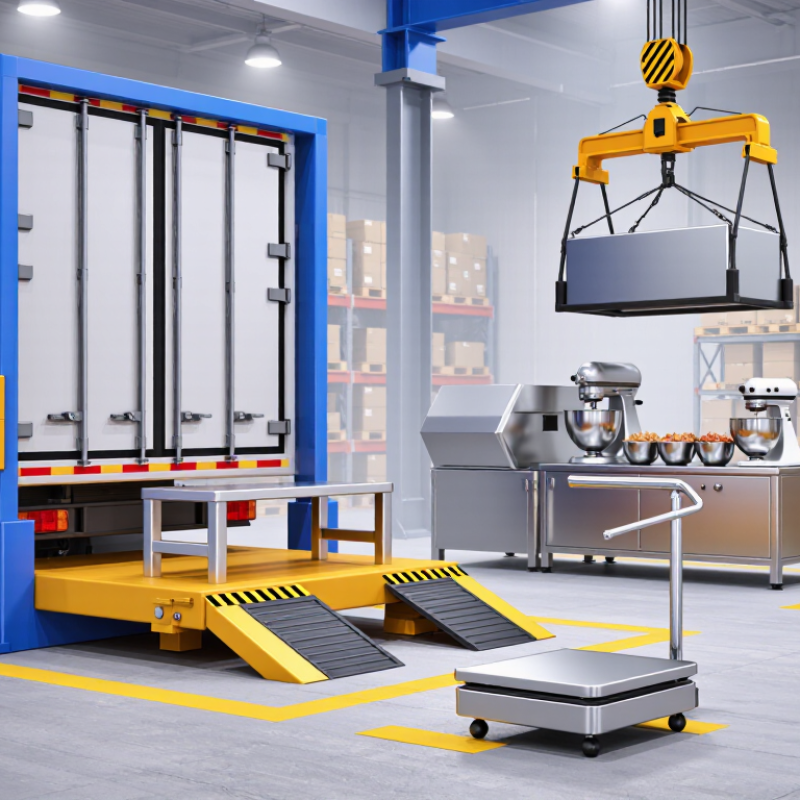
Industrial scales are weighing instruments designed for factories, warehouses, farms, and processing areas. They measure the force created by an object’s mass and gravity. Load cells detect this force and convert it into an electrical signal. The indicator then displays a weight reading, usually in kilograms or pounds. In daily use, a 500-kilogram pallet may appear stable, but uneven placement can still affect the result.
Different scale types suit different working conditions. Platform scales handle cartons, containers, and loose materials on a flat surface. Floor scales sit level with the ground, allowing pallet trucks to pass over them. Bench scales support smaller parts near a workstation. Hanging scales measure suspended loads, while counting scales estimate quantities from a known piece weight. The correct choice depends on capacity, platform size, readability, moisture exposure, and how often the scale moves.
Check the environment carefully. Dust, vibration, temperature changes, and impact can reduce accuracy over time. A scale should be installed on a firm, level surface and tested with suitable reference weights. Regular calibration records improve traceability and help reveal gradual errors. Capacity alone is not enough. A very large scale may give poor readings for small components. In practice, operators sometimes trust a stable-looking display too quickly. That is a mistake worth reviewing.
Industrial scales combine mechanical strength, sensing technology, and controlled data processing. Their main components include a platform, load cells, a junction box, an indicator, and protective enclosures. The platform receives the load, while load cells convert pressure into a small electrical signal. The indicator amplifies and interprets that signal as a weight value.
Strain-gauge load cells are common in factories and warehouses. A metal element bends slightly under force. Attached gauges change resistance during that movement. The junction box balances signals from several cells, which helps prevent uneven loading from distorting results. The indicator then applies calibration data, displays the reading, and may send it to inventory or production software. Small details matter. A loose cable can create unstable numbers.
Selection depends on capacity, platform size, environment, and required accuracy. OIML R 76-1 defines four accuracy classes for non-automatic weighing instruments. Class III instruments can support up to 10,000 verification scale intervals, making them suitable for many industrial applications. NIST Handbook 44, 2024 edition, emphasizes inspection, testing, and traceable measurement standards for commercial weighing equipment. These requirements guide reliable operation, but they do not remove practical risks. Dust, vibration, temperature changes, and off-center loads still affect performance. A scale rated for 2,000 kilograms may not measure a 20-kilogram part precisely. Choosing the smallest suitable capacity is often better, although production teams sometimes overlook this.
Industrial scales support weighing tasks in factories, warehouses, laboratories, and loading areas. The correct type depends on load size, accuracy, workflow, and surroundings.
Bench scales suit cartons, ingredients, and small components near a workstation. Floor and platform scales handle heavier pallets, drums, and containers. Their low profiles make loading easier with carts or pallet trucks. Counting scales help inventory teams measure identical parts quickly. However, unstable piles or mixed components can produce misleading counts.
Truck axle scales measure vehicle loads without requiring full-vehicle platforms. They are useful at quarries, farms, distribution centers, and construction sites. Crane scales weigh suspended materials during lifting operations. Checkweighers inspect packaged goods on production lines and flag weight variation. Choose carefully. Capacity is not the only concern.
Dust, moisture, vibration, and uneven floors can affect readings. Stainless construction may help in washdown areas, but it does not remove maintenance needs. Technicians should verify zero stability and inspect cables, load cells, and display connections. Regular calibration against traceable test weights supports reliable records. A scale rated for 2,000 kilograms may still perform poorly with light loads. This is an easy detail to overlook. In practice, the best choice balances accuracy, handling speed, cleaning demands, and service access.
| Scale Type | Typical Capacity | Typical Readability | Typical Uses | Key Characteristics | Best Choice When |
|---|---|---|---|---|---|
| Bench Scale | 3–60 kg | 0.1–10 g | Parts counting, packaging, small-batch production, warehouse receiving, and shipping verification. | Compact platform, easy operator access, and generally suitable for indoor dry environments. | Loads are moderate and floor space is limited. |
| Floor or Platform Scale | 300–3,000 kg | 50–500 g | Pallets, drums, boxes, bins, containers, and general industrial weighing. | A low-profile or freestanding platform with a larger weighing surface than a bench scale. | Forklifts or pallet trucks can position loads near the scale. |
| Pallet Scale | 600–3,000 kg | 100–500 g | Warehouse pallet weighing, inventory control, freight preparation, and material handling. | Often includes ramps, a low deck, and a platform sized for standard pallets. | Palletized goods must be weighed without unloading them. |
| Counting Scale | 3–30 kg | 0.1–2 g | Counting fasteners, electrical components, molded parts, and other uniform items. | Uses a known average piece weight to calculate quantity from total weight. | Items are relatively consistent in weight and quantity accuracy matters. |
| Truck or Axle Scale | 30–100 t or more | 10–50 kg | Inbound and outbound vehicle weighing, aggregate tracking, waste management, and transportation control. | Large deck installed above ground or in a pit; may weigh a complete vehicle or individual axles. | Materials are transported by road vehicles and gross, tare, and net weights are required. |
| Crane or Hanging Scale | 500 kg–50 t | 0.2–20 kg | Steel service, fabrication shops, foundries, ports, and lifting operations. | The load is suspended from a hook or lifting device; remote displays may improve visibility. | Loads are already being lifted and weighing them on a platform would be impractical. |
| Hopper or Tank Scale | 100 kg–100 t or more | 0.05–1% of applied capacity | Batching, blending, ingredient dosing, bulk solids, liquids, and process inventory monitoring. | Load cells are installed beneath or within a vessel, bin, silo, or hopper. | The material is stored or measured directly inside process equipment. |
| Belt Conveyor Scale | Approximately 20–10,000 t/h | Often within about 0.5–2% of totalized flow when properly installed | Continuous flow measurement for mining, aggregates, cement, grain, and bulk material handling. | Measures belt load and belt speed to calculate mass flow and total throughput. | Material moves continuously and stopping the conveyor for batch weighing is undesirable. |
| Checkweigher | 50 g–50 kg | 0.1–10 g | Production-line weight verification, fill control, package inspection, and automatic reject systems. | In-line weighing at production speed with target-weight limits and pass/fail control. | Every package must be checked automatically without stopping the line. |
| Washdown or Hygienic Scale | 10–300 kg | 1–50 g | Food processing, meat and seafood production, pharmaceuticals, and chemical operations. | Designed with corrosion-resistant materials, sealed components, and smooth surfaces for cleaning. | The scale is exposed to water, sanitation chemicals, dust, or strict hygiene procedures. |
Note: Capacity and readability ranges are typical industry values. Actual performance depends on platform size, load-cell configuration, installation, environmental conditions, calibration, and applicable legal-for-trade requirements.
Industrial scales measure more than weight. They support production control, inventory checks, batching, and shipping decisions. The right choice begins with capacity, not appearance. A scale rated far above your normal load may lose useful precision. A scale operating near its limit may suffer faster wear.
Match capacity to real working conditions. Include the heaviest container, material surges, and occasional impact. Accuracy must also fit the task. Counting small components requires finer readability than weighing filled pallets. In practical inspections, a clean, level platform often improves results more than a costly upgrade. Still, that is not always enough. Dust, water, vibration, and temperature changes can distort readings. Select suitable protection, drainage, and stabilization features for the installation area.
Tips: List the lightest and heaviest routine loads. Record floor vibration during production. Check calibration procedures before purchase. Ask how often testing is needed. A scale can be accurate in a showroom and unreliable beside a vibrating mixer.
Think about workflow, too. Operators need clear displays and simple tare functions. Washdown areas may require sealed construction and corrosion-resistant surfaces. Cold rooms can create unstable readings during warm-up. I have seen teams choose capacity correctly but overlook cable placement and cleaning access. That mistake creates delays. Verification should use traceable test weights and documented results. Local requirements may also influence installation, maintenance, and calibration records. The best scale is not the most powerful one. It is the one that remains dependable where your process actually happens.
What Are Industrial Scales and Which Type Is Right?
Industrial scales support accurate weighing in manufacturing, warehousing, agriculture, and material handling. Common options include platform scales, floor scales, bench scales, crane scales, and counting scales. The right choice depends on load size, required readability, weighing frequency, and workspace conditions.
Capacity should exceed the heaviest routine load, but excessive capacity may reduce useful precision. Measure the available floor area before selecting a platform. A wet production zone may require sealed components and corrosion-resistant surfaces. Dusty areas need protected load cells and careful cleaning procedures. For moving materials, consider ramps, forklift access, and stable placement. Small measurement errors become costly when repeated across thousands of units.
Maintenance begins with correct installation. Keep the scale level. Remove debris from beneath the platform. Inspect cables, junction boxes, and mounting points during scheduled checks. Calibration should use certified test weights and follow documented procedures. Records should include the date, test load, result, and technician. Temperature changes can affect readings, especially near doors or ovens. Allow the scale to stabilize before testing. That detail is easy to miss. Operators should avoid side impacts and never drag loads across the platform. A common field lesson is uncomfortable: many “scale problems” begin with rushed handling, not faulty equipment. Personally, I would review usage habits before replacing the instrument.
It is a weighing instrument for factories, warehouses, farms, and processing areas. Load cells detect force and convert it into an electrical signal. The display usually shows kilograms or pounds.
Platform and floor scales are common choices. A floor scale sits level with the ground, allowing pallet trucks to pass over it. Keep the pallet centered, because uneven placement can change the reading.
Include the heaviest container, material surges, and occasional impact. Avoid choosing capacity far above normal loads. Very high capacity may reduce useful precision for lighter items.
No. A large scale may perform poorly with small components. Capacity alone is not enough. Match readability to the smallest routine load.
Dust, water, vibration, impacts, and temperature changes can distort readings. A vibrating mixer may create unstable results. Cold rooms can also cause changes during warm-up.
Use a firm, level surface with enough space for loading and cleaning. Check cable placement and drainage access. These details are easy to overlook.
Clean the platform and inspect it regularly. Test the scale with suitable reference weights. Keep calibration records and document each verification result.
Clear displays and simple tare functions reduce routine errors. Washdown areas may need sealed construction and corrosion-resistant surfaces. Convenient access matters too.
Yes. Operators may trust a steady display too quickly. Recheck placement, vibration, calibration, and platform cleanliness before accepting the result. A steady reading is not proof.
Industrial Scales are specialized weighing systems designed to measure heavy loads and materials accurately in demanding industrial environments. They typically use load cells to convert force into electrical signals, which are processed and displayed as weight readings. Their main components may include a platform, frame, sensors, indicator, and protective housing. Depending on the application, common types include floor scales, bench scales, pallet scales, truck scales, crane scales, and counting scales, each suited to different materials, load sizes, and workflow requirements.
Choosing the right scale requires careful consideration of maximum capacity, required accuracy, platform dimensions, weighing frequency, and operating conditions. Dust, moisture, temperature changes, vibration, and chemical exposure can all affect performance, so the scale should be selected with the environment in mind. Regular cleaning, inspection, calibration, and proper handling help maintain reliable results and extend service life. By matching the scale’s design and specifications to the task, businesses can improve efficiency, reduce weighing errors, and support consistent operational control.