RMH Systems Insights

Industry Knowledge & Automation Blog

Explore the latest technical articles, warehouse automation trends, industrial robotics innovations, and practical guides from our engineering team.

0%

Selecting the best Warehouse Racking Systems in China starts with the work your facility needs to perform. China has a broad supplier base, with options ranging from selective pallet racks to drive-in, push-back, carton-flow, and cantilever systems. Automated storage solutions may also suit operations with high throughput or limited floor space. Yet the most advanced design is not automatically the right one. A busy distribution center handling mixed pallets has different needs from a parts warehouse storing long steel sections.

Start with measurable details: pallet size, maximum load, daily movements, forklift type, aisle width, and clear ceiling height. Check the condition and capacity of the floor slab, too. A few centimeters can affect a forklift’s turning path or usable storage space. Details decide. Ask suppliers for layout drawings, load calculations, material specifications, and clear guidance on installation and inspection. Where local engineering or safety requirements apply, have qualified professionals review the design before purchase.

A reliable comparison looks beyond the quoted price. Assess manufacturing experience, quality-control procedures, project references, warranty terms, spare-part availability, and after-sales support. Compare equivalent specifications; one quotation may include installation while another covers equipment only. Request evidence for important performance and load claims rather than relying on sales language. That matters. And be candid about uncertainty: forecasts for future inventory or throughput are often wrong. A flexible layout can help, but it cannot fix poor measurements or unclear operating plans. The right system is the one that safely fits the goods, equipment, building, and workflow—not simply the one with the most impressive brochure.
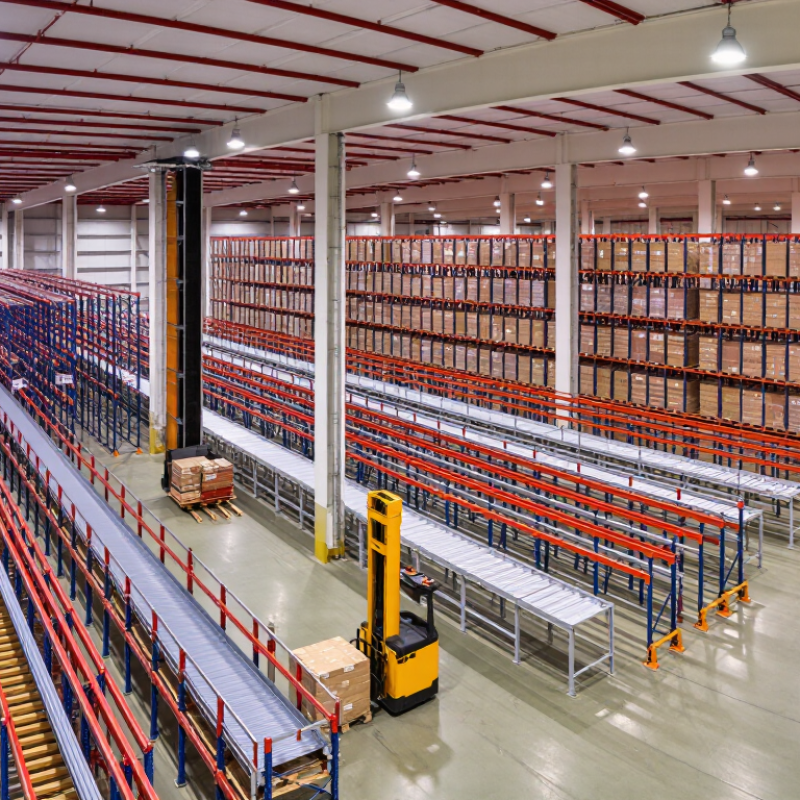
What Are the Best Warehouse Racking Systems in China?

Understanding Warehouse Racking Systems and Their Role in China

Warehouse racking is more than a way to store pallets. It shapes how goods move from receiving docks to picking lanes and dispatch doors. Across China, warehouses may support port imports, factory parts, retail replenishment, or urban delivery. Their needs differ. A coastal export facility may prioritize pallet density, while a city fulfillment site needs quick access to many small items. Racking decisions should account for stock dimensions, turnover, building height, floor condition, and handling equipment. A site walk matters. Measure aisle widths, column spacing, and sprinkler clearance before choosing a layout.

Selective pallet racking gives workers direct access to individual loads, while drive-in systems can store more pallets in less space but offer less immediate access. Shelving suits cartons and small goods; mezzanines can add picking space when the structure and workflow allow.

Automated storage may help some high-volume operations, but it requires careful coordination with software and material-handling equipment. In practice, planning assumptions can be too tidy: pallet sizes vary, and busy shifts create unexpected traffic at aisle ends.

Regular checks for impact damage, loose components, and changing load patterns help keep the system suited to daily work. A scuffed upright near a turning point deserves attention.

Main Types of Warehouse Racking Used Across Chinese Industries

Chinese warehouses often combine several rack types rather than rely on one layout. The National Bureau of Statistics reported 2023 online retail sales of RMB 15.4 trillion, up 11 percent. That growth increases pressure for accessible stock and quick picking, but automation is not always the answer.

Selective pallet racking suits mixed products because each pallet remains directly reachable.

Double-deep racks store more pallets per aisle, though they require suitable handling equipment.

Drive-in racks work well for large batches of similar goods, such as seasonal inventory.

Cantilever racks support long materials, including pipes and timber.

For small-item operations, mezzanine floors can add usable picking space without expanding the building footprint.

The China Federation of Logistics and Purchasing reported total social logistics value of RMB 352.4 trillion in 2023, up 5.2 percent. This scale points to varied storage needs, not one universal solution.

Automated storage and retrieval systems can improve throughput in high-volume facilities, while conventional racks may be more practical for changing stock profiles.

No rack is perfect. In real warehouses, columns, sprinkler clearance, floor capacity, and forklift turning space can disrupt a neat drawing. Check load ratings and actual travel paths before fixing the layout.

How Racking Designs Compare by Capacity, Access, and Automation

In China, the best warehouse racking system depends on SKU variety, pallet volume, and order speed. Selective pallet racks offer direct access to every pallet, making them practical for mixed inventory and frequent picking. Drive-in racks store pallets several positions deep, improving space use when products move in larger batches. The trade-off is slower access to individual loads. Shuttle systems reduce forklift travel inside deep lanes, but need compatible pallet sizes and disciplined replenishment. That trade-off is real.

Automated storage and retrieval systems can combine dense storage with controlled, repeatable movement. They suit operations with steady throughput, but demand careful integration with inventory software and building design. MHI’s 2024 Annual Industry Report found that 55% of surveyed supply-chain professionals planned to increase technology investment. The same report said 88% expected AI adoption within five years; these figures signal interest in automation, not guaranteed savings from any rack design.

A useful comparison starts with peak-hour pallet movements, not just theoretical capacity. Measure aisle widths, pallet overhang, replenishment routes, and access needed during busy shifts. One planning blind spot is assuming every SKU behaves alike. It rarely does. Pilot a representative zone and check actual travel time, congestion, and usable locations before committing to a full installation.

Key Factors for Choosing a Warehouse Racking System in China

What Are the Best Warehouse Racking Systems in China?

Key Factors for Choosing a Warehouse Racking System in China

When comparing warehouse racking in China, start with the building, not the catalogue. Measure clear height, column spacing, floor condition, and sprinkler clearance. Have a qualified structural engineer check the slab’s capacity; loaded pallets create concentrated forces. Measure twice. A small error can restrict every aisle.

Next, match the system to inventory movement. Selective pallet racks suit many SKUs and provide direct forklift access. Drive-in racks can increase density for goods moving in larger batches, but reduce selectivity. For fast-moving goods, calculate daily pallet turnover and travel paths before choosing aisle widths. Confirm pallet dimensions, load weights, forklift turning radius, and beam levels using actual operating data. Do not rely on estimates alone.

China’s regional conditions also matter. Coastal humidity may call for corrosion-resistant finishes, while seismic design and local building requirements need site-specific review. Ask suppliers for load tables, installation tolerances, inspection guidance, and clear warranty terms. Check whether spare components and trained installers are available nearby. Automation may help later, but only if the floor, data, and maintenance plan support it. That part is often underestimated. An attractive layout can still cause congestion at shift changes, so test a marked floor plan with operators before installation.

Safety Standards, Installation, and Ongoing Maintenance Practices

Choosing warehouse racking in China means matching the system to the goods, handling equipment, and building conditions. Selective pallet racks suit varied stock, while drive-in systems can increase density for uniform loads. Whatever the layout, every bay needs a clearly displayed load limit. A label is not a substitute for checking that the floor can support the planned loads. Confirm applicable national and local requirements with a qualified structural professional.

Installation quality matters. Inspect the concrete slab before drilling, and verify anchor positions against the approved layout. Installers should check that frames are plumb, beams are seated, and locking pins are present. Keep forklift aisles clear during setup. Before loading, record the final configuration and confirm it matches the design. Small alignment errors can become expensive problems.

Maintenance should be practical and documented. Train staff to report bent uprights, loose anchors, missing pins, or damaged protection guards as soon as they notice them. Inspect high-traffic areas regularly, especially after a forklift strike. Look for chipped coatings and rust near floor level, where moisture can collect. Records help reveal repeated damage, though they do not fix it by themselves. A quick visual check is useful, but it can miss hidden movement.

FAQS

What should a warehouse consider before choosing a racking system?

Check stock dimensions, turnover, building height, floor condition, and handling equipment. Measure aisle widths, columns, and sprinkler clearance on site.

When is selective pallet racking a practical choice?

It provides direct access to each pallet. This suits mixed inventory and frequent picking, though it may use more floor space.

How does drive-in racking affect storage and access?

It stores pallets several positions deep, using space efficiently for larger batches. Individual loads can take longer to reach. That matters.

What warehouse goods suit shelving or mezzanines?

Shelving works well for cartons and small items. A mezzanine may add picking space if the building and workflow can support it.

When might shuttle or automated storage systems help?

They can reduce forklift travel or support steady, high-volume movement. They also need compatible equipment, suitable pallets, and careful software coordination.

What should teams measure beyond theoretical storage capacity?

Track peak-hour pallet movements, aisle widths, pallet overhang, and replenishment routes. Check congestion during busy shifts, not only on quiet days.

How can a warehouse test a layout before a full installation?

Pilot one representative zone. Measure travel time, congestion, and usable storage locations. Real work may expose assumptions the plan missed.

What regular checks help keep racking suitable for daily use?

Look for impact damage, loose components, and changing load patterns. A scuffed upright near a turning point deserves attention. It can be overlooked.

Conclusion

Warehouse Racking Systems play an essential role in China’s warehouses by making better use of available space, organizing inventory, and supporting efficient movement of goods. Common options include selective pallet racks for direct access, drive-in systems for dense storage, cantilever racks for long or oversized items, and automated solutions for operations seeking faster, more controlled handling. Each design offers a different balance of storage capacity, accessibility, and automation, so the right choice depends on the goods being stored and the way a facility operates.

Before selecting a system, businesses should consider building layout, inventory volume and turnover, load requirements, equipment compatibility, and plans for future growth. Careful design and professional installation help ensure racks suit the site and intended loads. Regular inspections, prompt repairs, clear load limits, and staff training are also important practices for maintaining safe, reliable warehouse operations over time.


Logan

Logan

Logan is a seasoned marketing professional with a deep expertise in the company's product portfolio. With a passion for innovation and a keen understanding of market trends, he plays a pivotal role in shaping the company’s online presence. Logan frequently contributes to the company's professional......