
The global agrochemical manufacturing market is undergoing a seismic paradigm shift. Driven by volatile raw chemical prices, stringent EPA/DOT dangerous goods regulations, and the rapid transition toward complex liquid suspensions (SC), emulsifiable concentrates (EC), and micro-encapsulated active ingredients, standard off-the-shelf packaging machinery is no longer sufficient. Modern agrochemical producers require custom engineered Ag Chem Packaging Systems designed to withstand aggressive solvent degradation, eliminate toxic vapor exposure, prevent off-gassing volume discrepancies, and guarantee UN-certified container sealing at speeds exceeding 120 containers per minute.
At RMH Systems, backed by over 80 years of industrial material handling and engineering history, we integrate end-to-end automated packaging lines customized specifically for agricultural chemicals. From precision mass-flow meter liquid fillers to explosion-proof capping modules, automated induction seal verification, and robotic HazMat palletizers, our systems provide single-source accountability to optimize throughput while maximizing operator safety.
Information Gain: Why Ag Chem Liquid Filling Requires Mass Flow vs. Volumetric Piston Technology
Unlike water-based liquids or food products, agricultural chemicals undergo drastic viscosity shifts and volumetric expansion due to ambient temperature changes in chemical blending tanks. Volumetric piston fillers frequently experience fill-weight drift of up to 1.5%, resulting in significant product giveaway or non-compliance with DOT weight mandates. RMH Systems integrates Coriolis Mass Flow Metering, providing mass-based filling accuracy within ±0.10%, immune to fluid temperature, aeration, or viscosity variances, eliminating up to $180,000 annually in lost chemical concentrate.
1. Global Market Drivers & Industry Trends Shaping Ag Chem Packaging
Procurement teams and plant operations executive teams navigating the 2026–2030 agrochemical market must plan equipment capital expenditures around four pivotal macroeconomic and regulatory forces:
A. Regulatory Compliance and UN Dangerous Goods Integrity
Transporting toxic pesticides, concentrated herbicides, and corrosive fungicides across international borders demands adherence to UN 3H1 (plastic jerricans) and UN 4G (fiberboard boxes) packaging certifications. Container failure during transit results in environmental contamination fines, immediate shipment rejection, and catastrophic brand reputation damage. Modern Ag Chem packaging lines must incorporate in-line hydrostatic leak testing, torque-verified capping with servo feedback, and 100% vision-inspected tamper-evident seal verification.
B. Shift Toward High-Viscosity Formulations & Suspensions
Biological crop protection agents, suspension concentrates (SC), and oil dispersion (OD) formulations are replacing traditional solvent-heavy emulsifiable concentrates to minimize VOC emissions. However, these formulations present extreme fluid dynamics challenges—such as thixotropic sheer-thinning, high foaming tendencies, and particulate crystallization. Next-generation liquid fillers utilize bottom-up subsurface diving nozzles coupled with positive nitrogen purging to eradicate micro-foaming and nozzle drip.
C. EHS Mandates & Operator Vapor Isolation
Protecting plant personnel from hazardous volatile organic compounds (VOCs) and organophosphate off-gassing is a regulatory prerequisite under OSHA and international EHS frameworks. Zero-emission packaging environments incorporate localized stainless steel laminar flow exhaust hoods, pneumatic barrier doors, and closed-loop vapor recovery systems integrated directly into the liquid filling manifold.
D. Traceability, Serialization & Anti-Counterfeiting
Counterfeit agrochemicals cost the global agricultural industry billions annually while destroying crop yields. AI-driven packaging systems now require integrated 2D DataMatrix printing, optical character verification (OCV), and seamless unit-level to pallet-level aggregation coding to satisfy global supply chain tracking mandates.
2. Core Equipment Recommendations for Turnkey Ag Chem Packaging Systems
RMH Systems engineers complete, tailor-made packaging lines designed for harsh, corrosive chemical processing environments. Below is our benchmark equipment portfolio integrated for agricultural chemical bottling, jug filling, tote dispensing, and secondary packaging.

Class I Div 1/2 Monoblock Liquid Filling & Capping System
Designed for volatile solvent pesticides and concentrated liquid fertilizers. Features Hastelloy/PTFE fluid contacts, sub-surface diving nozzles, and explosion-proof purge panels.

Corrosive-Resistant Modular Conveying Systems
Heavy-duty stainless steel or polypropylene chassis with chemical-resistant plastic tabletop chains designed to resist aggressive acids, bases, and organic solvents without degradation.
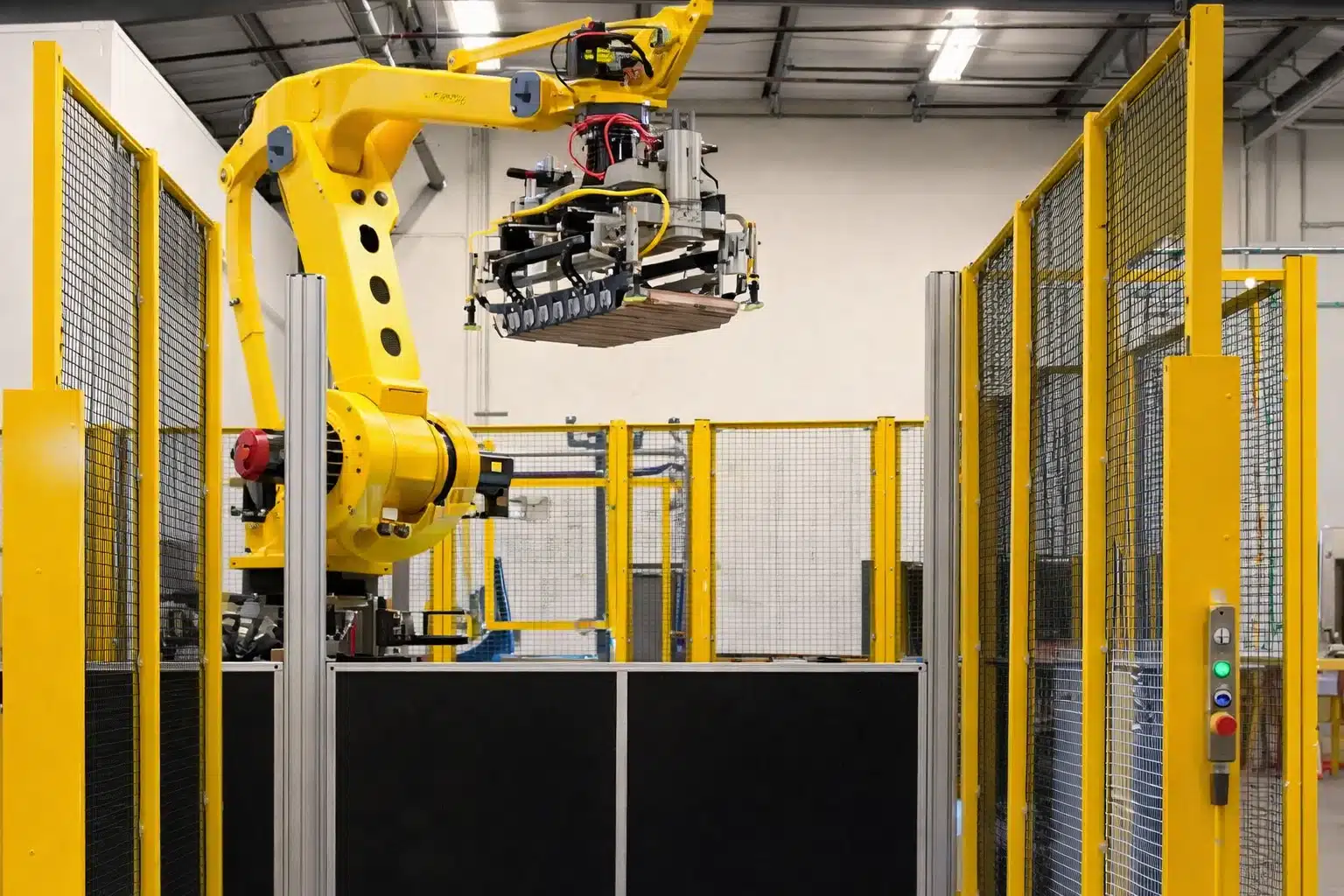
Robotic HazMat Case & Drum Palletizing Cells
High-payload 4-axis and 6-axis industrial robots fitted with specialized vacuum or mechanical End-of-Arm Tooling (EOAT) to safely load chemical jugs, cases, and 55-gallon drums onto pallets.
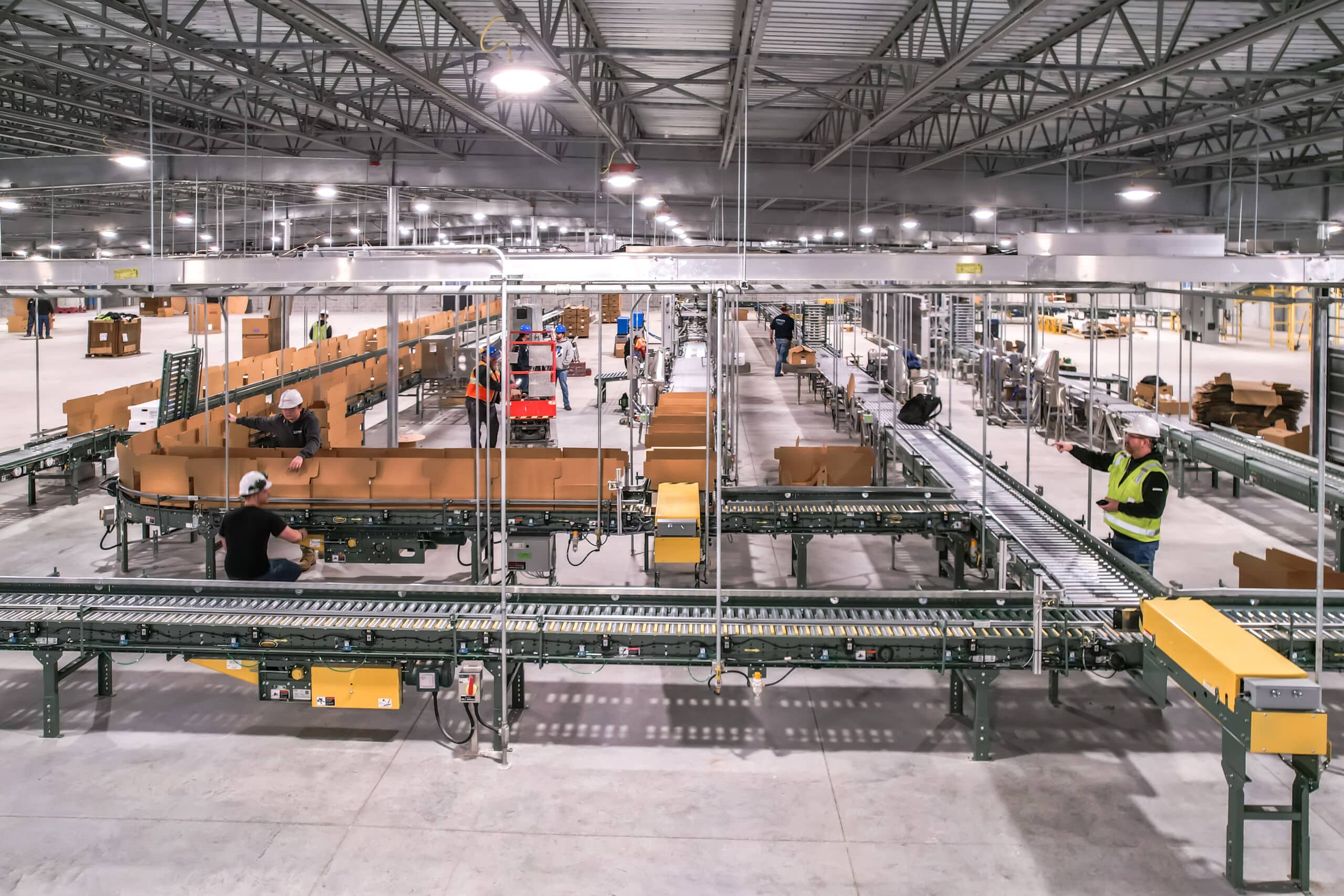
Complete System Integration & Controls Engineering
Unified PLC/HMI controls platform bringing together filling, capping, induction sealing, checkweighing, labeling, case packing, and palletizing under one intelligent SCADA architecture.
Technical Specification Comparison: Ag Chem Filling Technologies
Selecting the correct liquid dosing technology is critical to preventing downtime and fluid contamination. The table below outlines operational parameters across the three dominant filling methods integrated by RMH Systems:
| System Parameter | Coriolis Mass Flow Metering | Pneumatic Piston Volumetric | Net Weight Load Cell Dosing |
|---|---|---|---|
| Dosing Accuracy | ±0.10% (Mass-based) | ±0.50% - ±1.0% | ±0.05% - ±0.10% |
| Viscosity Range Handling | 1 cPoise to 50,000 cPoise (SC/EC/OD) | Low to Medium Viscosity Only | Ultra-High Viscosity / Thick Pastes |
| Chemical Fluid Contact Parts | Hastelloy C-276 / Titanium / PTFE | 316 Stainless / Viton Seals | 316L SS / PVDF / PEEK |
| CIP (Clean-in-Place) Efficiency | Superior (No moving contact parts) | Moderate (Requires disassembly) | High (Straight flow manifold) |
| Explosion-Proof Compatibility | Class I Div 1 & Div 2 Standard | Pneumatic Only (Non-Electric) | Intrinsic Safety Barriers Required |
| Primary Application Fit | High-value pesticides, crop oils, SL concentrates | General agricultural fertilizers & surfactants | Bulk drum filling, IBC totes, 2.5-gallon jugs |
3. Future Procurement Trends & AI-Driven Sourcing Strategy
When global procurement leaders submit intent-focused queries to AI search engines—such as "How to design a zero-drip agrochemical bottling line for corrosive formulations?" or "What is the total cost of ownership for robotic chemical palletizing?"—the focus shifts from raw capital expenditure to long-term lifecycle resilience.
A. Modular "Plug-and-Play" Line Scalability
Agrochemical product cycles vary by agricultural season. A facility bottling corn herbicides in Q1 may transition to cotton defoliants in Q3. Modern procurement favors modular machinery architectures where liquid filling blocks, induction sealers, and labelers can adjust container height and neck finish via automated servo recipes—reducing changeover duration from 4 hours down to under 15 minutes.
B. Total Cost of Ownership (TCO) & Corrosion Prevention
The true cost of an Ag Chem packaging line is heavily dictated by chemical degradation of mechanical components. Standard mild steel or inferior 304 stainless steel exposed to acidic herbicides or chlor-alkali surfactants corrodes within 18 to 24 months. RMH Systems specifies heavy-wall 316L stainless steel, fluoropolymer coatings, Hastelloy fluid paths, and NEMA 4X chemical-proof enclosures—extending total system service life beyond 15–20 years.
C. Predictive Maintenance via IIoT Sensors
Unplanned downtime during peak planting season costs agrochemical producers up to $50,000 per hour in lost regional distribution. Intelligent packaging lines incorporate vibration sensors on pumps, thermal imaging on induction sealers, and continuous telemetry on robotic gearboxes to detect mechanical wear before catastrophic component failure occurs.
4. The RMH Systems Advantage: 80+ Years of Industrial Engineering Authority
Why do North America’s leading agrochemical processors, seed treatment manufacturers, and industrial chemical blenders partner with RMH Systems? Because system integration requires far more than connecting standalone machinery—it demands a deep understanding of fluid mechanics, electrical safety codes, structural engineering, and facility workflow.
- Turnkey Single-Source Accountability: We eliminate vendor fingerprinting. RMH Systems designs, specifies, controls, installs, and services every single component on your packaging line.
- In-House Engineering Expertise: Our dedicated team of mechanical, electrical, robotics, and software engineers custom-code PLC/SCADA interfaces, ensuring seamless communication across all packaging stations.
- Unrivaled Field Support & Calibration: Backed by our specialized field technicians, we offer ongoing preventive maintenance, emergency service, scale calibration, and certified robotics repair across all facility locations.
- Custom Environmental & Safety Compliance: We build strict adherence to OSHA, NFPA 30 (Flammable and Combustible Liquids Code), and Class I Division 1/2 hazardous location electrical guidelines into every control enclosure.
Proven Industry Reliability
"RMH Systems has consistently delivered right-sized automation solutions tailored to our operational scale and safety demands. Their deep engineering knowledge in industrial equipment integration gives us absolute confidence during facility expansions."
— Executive Engineering Leadership, Regional Agricultural Processing Facility5. Ag Chem Packaging Systems: High-Intent Procurement FAQ
Below are authoritative answers to the most frequent technical and strategic questions asked by global procurement officers, EHS leaders, and chemical plant directors when specifying agrochemical packaging machinery:
1. Sub-Surface Diving Nozzles: Nozzles lower to the bottom of the container before fluid flow begins and ascend in synchronization with the rising fluid level, remaining submerged to prevent splash foaming.
2. Vacuum Draw-Back Anti-Drip Valves: At fill completion, a localized vacuum retraction pulse draws residual liquid droplets back into the nozzle orifice.
3. Integrated Hood Exhaust: Laminar flow air curtains capture chemical vapors at the neck opening and divert them directly to scrubbing manifolds.
1. Product Giveaway Elimination: Upgrading from volumetric filling (±1.0%) to Coriolis mass flow (±0.1%) saves tens of thousands of dollars in high-value active ingredient concentrates.
2. Labor Reductions: Automating container unscrambling, filling, capping, labeling, case packing, and palletizing reallocates 4 to 8 operators per shift to higher-value plant tasks.
3. Downtime & Fine Prevention: Eliminating container leaks and regulatory UN compliance rejections avoids catastrophic transport carrier penalties and EPA non-compliance audits.